Online Reporter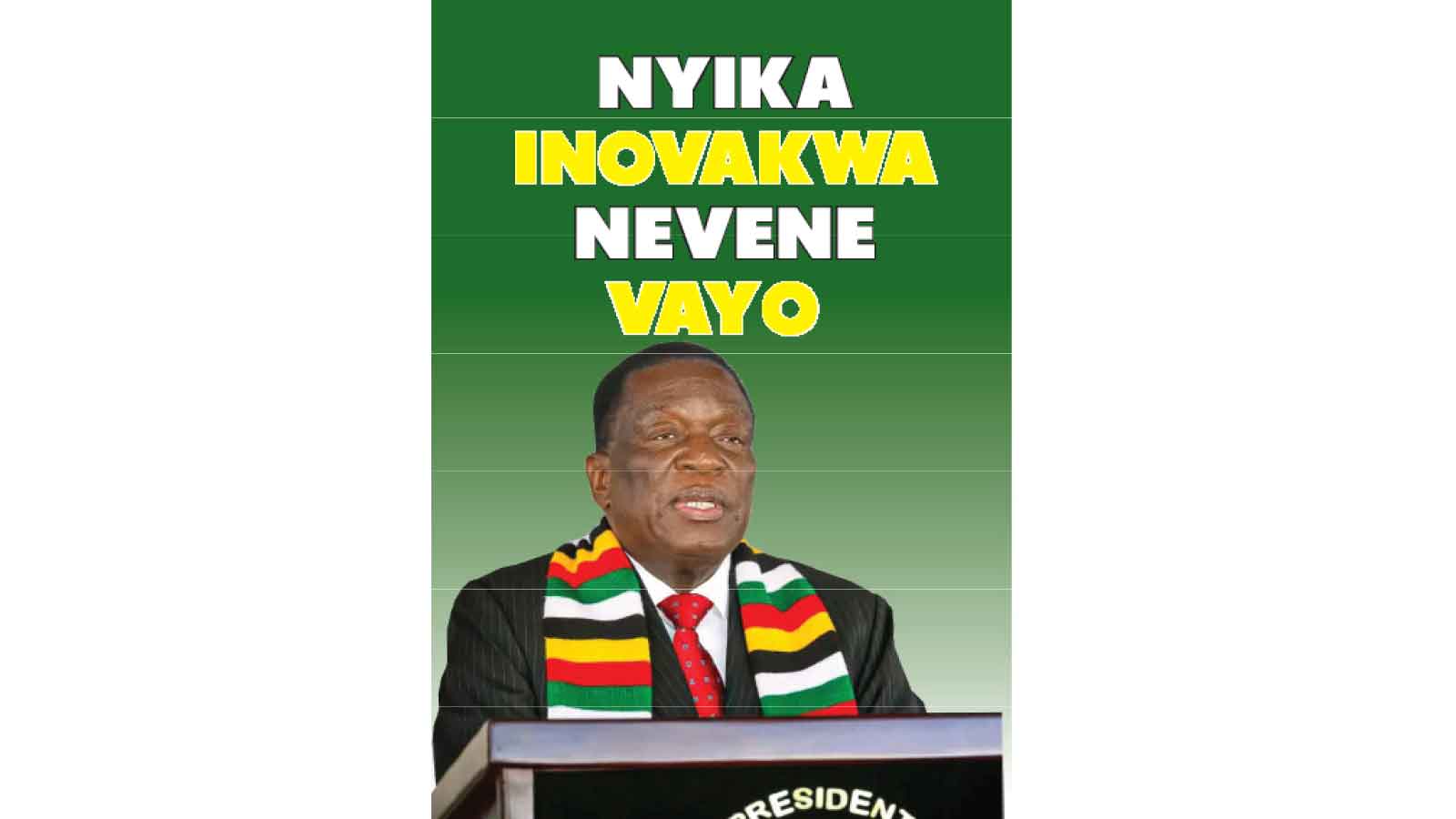
Gibson Mhaka-Zimpapers Politics Hub
THE 39th ordinary session of the African union Assembly held recently in Addis Ababa, Ethiopia, served as a grand stage for President Mnangagwa to export Zimbabwe’s home-grown development philosophy to the rest of the continent.
President Mnangagwa’s participation was not merely a diplomatic routine but a strategic masterstroke in which he pitched Zimbabwe as a living case study for self-reliance under the mantra: “Nyika inovakwa nevene vayo/Ilizwe lakhiwa ngabanikazi balo” (A nation is built by its own people).
This philosophy has found a home within the African Union’s Agenda 2063, the continent’s blueprint for transformation, which advocates for “African solutions to African problems.”
By positioning Zimbabwe as a resilient state that has flourished despite two decades of illegal Western sanctions, the President has provided a practical roadmap for the “Africa We Want.”
Agenda 2063 is rooted in Pan-Africanism and the African Renaissance, focusing on mobilising the continent’s people to take ownership of their own development.
It emphasises self-reliance and the creation of capable, inclusive and accountable institutions.
President Mnangagwa’s mantra is a direct practical application of these aspirations.
Through asserting that Zimbabweans are the primary architects of their own destiny, the President has shifted the national psyche from a state of dependency to one of productivity.
Addressing fellow Heads of State and Government at the African union African Peer Review Mechanism (APRM) session held on the sidelines of the summit, the President was candid about the obstacles placed in Zimbabwe’s path.
“Excellencies, it is regrettable that for over two decades, Zimbabwe’s economic performance has been constrained by harsh unilateral, coercive measures imposed by some Western countries following the Land Reform Programme, which we do not regret,” President Mnangagwa said.
He noted that while these measures were designed to stifle growth, they had instead birthed a new spirit of innovation and self-funding.
“These measures have undermined policy effectiveness, restricted access to investment, technology and international credit markets, and negatively affected ordinary citizens of our country,” he said.
“Zimbabwe deeply appreciates the solidarity shown by SADC and African union member States in calling for the unconditional removal of these unilateral sanctions.”
Case study in resilience
At the heart of President Mnangagwa’s pitch in Addis Ababa was the argument that sanctions, while damaging, are not a death sentence if a nation looks inward.
Under the “Open for Business” mantra and the “Nyika inovakwa nevene vayo/Ilizwe lakhiwa ngabanikazi balo” philosophy, Zimbabwe has embarked on massive infrastructure projects using locally mobilised resources.
“The drive is to modernise, industrialise and grow our economy and accelerate its growth ourselves, the owners of the country,” President Mnangagwa emphasised during his address.
This resilience was validated by the APRM Targeted Review on Economic Governance and Management, which was conducted in Zimbabwe in November last year.
The review team, led by Ambassador Aly El-Hefny, noted that Zimbabwe has made steady progress in industrialisation through Special Economic Zones and Heritage-Based Education 5.0, which has enhanced innovation and production across higher education institutions.
Water security: solving foundational challenges
The 2026 AU theme, “Assuring Sustainable Water Availability and Safe Sanitation Systems to Achieve the Goals of Agenda 2063,” provided the perfect backdrop for President Mnangagwa to showcase Zimbabwe’s domestic successes. His focus on dam construction most notably the Gwayi-Shangani Dam and the Kunzvi Dam serve as a template for other African nations.
These projects, funded primarily through the national budget rather than external loans, prove that African “owners” can solve foundational challenges like water scarcity through localised expertise. This approach aligns with the AU’s push for financial sovereignty, where member states are encouraged to reduce dependency on foreign aid.
Zimbabwe’s ability to modernise its agriculture through climate-resilient programmes and internal funding models positioned the country as a leader in the push for continental economic independence.
Global narrative shift
In leveraging the summit, President Mnangagwa successfully reframed the Zimbabwean narrative. He moved the conversation away from a nation “suffering under sanctions” to a nation “succeeding despite them.”
This shift is critical for the African Renaissance. If Zimbabwe can rebuild its roads, modernise its clinics, and achieve food self-sufficiency while locked out of international credit markets, it serves as a powerful inspiration for an Africa seeking to break the chains of neocolonial dependency.
The President reaffirmed Zimbabwe’s commitment to implement the recommendations of the APRM review, proving that the “Nyika inovakwa nevene vayo/ Ilizwe lakhiwa ngabanikazi balo” philosophy is not just about building roads, but also about building transparent, accountable, and inclusive systems of governance.
As the continent moves toward the 2030 and 2063 milestones, Zimbabwe stands as a testament to the fact that when the “owners” of a country take charge, no amount of external pressure can stop the march toward prosperity.