Chronicle Editor
Cetshwayo Zindabazezwe Mabhena
It is the Bible that awoke me up from what is called a philosophical slumber. A philosophical slumber is deep unawareness of higher and difficult truths. It is a strong sleep. Something much deeper than simple ignorance it is. It cannot be solved by simple acquisition of information and knowledge, no. It requires an awakening of a certain critical and even spiritual consciousness, the development of an inner eye and ear. It can be a waste of time trying to render it in words.
I was very happy in my philosophical slumber, until as a little boy, I got tired of all the books in my father’s library and decided that I will devour the Bible from cover to cover. My father, J W, watched my progress with strange pleasure and elevated pride as he had always entertained the idea that I will, like himself, make a great priest and preacher of the gospel one day soon.
Combining the two exalted offices of an Anglican priest and school headmaster J W had respect for knowledge and ideas that bordered on the fear of ignorance. To witness his seventh child and the most troublesome if not the very black sheep of his family eating the pages of the Bible away was for him a divine experience.
I saw it in is brooding expression that he was experiencing a kind of 40 Days and 40 Nights of his own son. He was sure that I was going to be seized by an enchantment and elevation of the holy word. As I read the days and the nights away JW silently prayed for my elevation and arrival. We were to have very difficult conversations that tested out relationship to the limits.
The Great Depression
The Bible made me deeply sad, angry and sorry to a point of depression and trauma itself. I found that from Genesis to Revelations it was almost always the wrong people that became heroes and beloved of God. The figure of Abraham troubled me a lot. He was the hero of great faith that was willing to kill his own son to please God.
I told JW matter of factly that my hero was Isaac the son who peacefully obeyed the orders of a father that was willing to kill him to curry the favour of a power that he believed in. I called Abraham a power monger and got enraged by the act of pretending that his own wife was his sister to save his skin.
JW was much troubled when I asked what the difference was in actuality between Abraham and a ritual murderer that would slaughter his child for some believed powers.
“I passed through that question on my way to this great Faith, keep walking,” he calmly assured me. The Israelites as a chosen nation were also another worrisome encounter for me. I failed to understand them and told JW so. It defeated my spirit that the very people who saw God attack Pharaoh with Ten Plagues, they who saw the Red Sea open up for them to cross, they whose tummies were filled with Manna from Heaven, why were they so disloyal.
Soon after crossing the sea they built idols that they began to worship and some of them confronted Moses the great deliverer asking him to let them return to Egypt. I had no iota of doubt that if God had chosen the people of Siganda that brought me up and showed them that much favour they were never going to be that ungrateful. The villagers that I knew were not even going to hand over the Son of Man to his enemies that nailed him on the cross. What was the Almighty doing choosing such a difficult, unhappy and thankless people I asked JW?
Not in answer but in response, JW mentioned to me something about human nature and the nature of God. JW and I journeyed through every chapter of the Bible deliberating on the controversies and contestations in the narratives, from Genesis to Revelations. It worried me deeply that chancers and ingrates seemed to triumph with the support of God. In the New Testament I found it disturbing that Saul, who was actually a philosopher, spent many years of his life persecuting the Christians but later found his way back as Paul that came to overtake disciples that Jesus had spent time training for the mission.
Loyalists like Peter, John, James and others had to live in the shadow of a Johnny come late in shape of Paul that dominates the Apostolic Age. These and many other issues troubled my mind and I questioned my father about them. His answer to me was that, “God does not need your defence, and will not be put in a test-tube for your pleasure and satisfaction.” I questioned the truth, the justice and the very existence of God. JW’s answer was that Faith is what remains after all the questions have not been answered and all your doubts have not been settled.
That Faith is belief without evidence was his submission.
The Prophetic Troublers of Israel
I became drawn to the prophets. I was enchanted especially by Amos who actually refused that he was a prophet, “I am neither a prophet nor a prophet’s son but a headman and a dresser of sycamore trees,” he said. He confronted the great religious powers at the Temple and the rulers of the day. I derived unknown pleasure from a dirty shepherd from the desert telling religious and political powers of the day to:
“Listen to this you fat cows of Bashan who are on the Mountain of Samaria. You make it hard for the poor. You crash those in need.” Amos spoke directly to my soul.
The courage of the prophet Jeremiah asking God the question why evil people prosper on God’s own earth gave birth to me anew: “Yet I speak with you about justice. Why does the way of the wicked prosper? Why do all the treacherous thrive?” JW worried about my sanity when I took to shouting out certain prophetic verses unprovoked, alone in the corner that was my study, like a true lunatic. Amos 5 vs 24 was my favourite: “But let justice roll on like a river, righteousness like a never-failing stream!” Amos sounded to me like Malcolm X of some sort, and I loved that sound. My enchantment with the prophets was amplified when I elected to study Divinity at Cyerene Mission.
There I met Njabulo Ndlovu; we called him G. Bond after a certain theologian that he loved to cite. Ndlovu, may his brilliant soul rest in peace, introduced me to Bible commentaries that were written by theologians and philosophers that battled with the questions about the Bible and God that bothered me.
The Peak’s Commentry and Jerome’s Commentry, two voluminous books were the resources that arrested my attention for days and nights.
There was another book by B.W Anderson that had the chapter: “The Prophetic Troublers of Israel.” At the time I did not know it but I had actually gotten myself entangled in the deep philosophical subject of Liberation Theology. Liberation Theology puts investment in the condition of the poor and the oppressed and understands religion and God as champions of justice and liberation.
Up from the Slumber
From one of the Church conferences JW came home with a smile on his face, and a spring on his step, he wore an expression that said, finally I have set you up. He clearly had a trap for me. I suspected he had finally found a way of getting me to enroll for training as an Anglican priest.
“I have someone that you must meet; he is a powerful theologian like you.” JW had not told me before that I was a theologian, G Bond had. When I arrived at his house in Mpopoma I was first struck by the man’s height and next his mind. He was a tall and dark man with a sharp emphatic voice.
There are very few encounters in my academic career that compare to that encounter. The meeting or the conversation did not formally begin, there were no long introductions before we got lost into the Old Testament and the Prophetic Troublers of Israel. It was a set-up of another kind.
The man taught me about metaphors in the Bible, the allegories and the mysteries. And that disbelief and doubt are the foundations of faith because the strongest truths in philosophy and faith are those that survive the fire of critique and question. He spoke about God and the underdog. We dwelt on the optimism of grace, God’s unsolicited and undeserved favour to man.
Critically the man tore the Bible apart and re-assembled it before my eyes. His kindly wife that was simply called NaMduduzi kept interrupting our conversation with goodies that we ignored as we got entranced in the Biblical mysteries that we were slicing through with questions.
The prophetic vocation as a vocation of justice and liberation dominated the themes we handled. Lunga was a moving library of a man. He taught me that some questions about truth and God are actually answers on their own. I walked away from his desk with the heavy insight that in the world things are not what they seem to be and that to ask questions is more important than to answer them in life in general and in philosophy in particular.
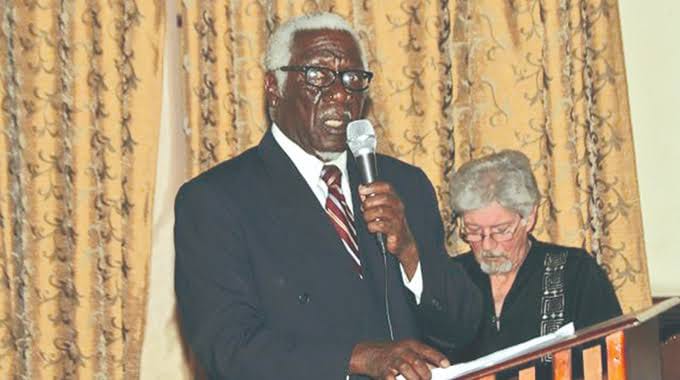
The Right Reverend Bishop Cleopas Lunga is the present Bishop of Matabeleland. JW passed on in 2007. I have not turned out a priest yet but a philosopher, awake from the slumber of the ages, the long night.
Cetshwayo Zindabazezwe Mabhena writes from Gezina in Pretoria, South Africa: [email protected]



 Online Reporter