

 admin
admin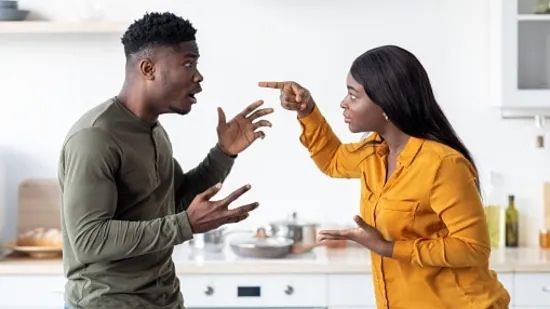
Loice Vavi
Health Matters
When discussions with loved ones turn heated, the energy in the room can feel as though it’s suddenly shifted.
A spirited chat about the news or even the plot of a Television show episode can lead to slamming doors, hurt feelings, and awkward silence.
While it can be healthy to have disagreements, fighting with people you care about can also be damaging and draining especially when the onset of an argument feels as though it came out of nowhere and is headed nowhere good. But, how can you tell the difference between a productive disagreement and a fight that would have been better off not picked?
We can glean some guidance about when to walk away from an argument based on both the nature of the conflict itself and also body language cues.
It is important to be able to differentiate between an argument and a discussion. While a discussion is typically a back-and-forth, open-ended exchange wherein everyone involved feels calm, an argument can feel more threatening. If it feels like you really have to defend yourself, that’s really when you’re arguing.
The energy changes, and you feel like you have to be guarded. When you sense a threat, the limbic system, the part of the brain that includes the amygdala that processes emotions and memories then activates a fight or flight response to regain safety.
That can cue rapid thoughts, a perceived lack of control of your emotions, or heavier or faster breathing.
After you’ve ascertained that your discourse with a loved one has exited the land of friendly discussion and entered the potentially damaging state of arguing or fighting, it might be time to consider removing yourself from the situation. Certain body language signals can help us gauge when to walk away from an argument. You’re not biologically wired to think clearly when you’re arguing.”
Body-language signs that an argument is starting
Reading, recognising, and being able to interpret these cues can help you decide how to proceed, which may involve leaving the conversation. People respond to perceived stress and threats differently, so some people may withdraw or grow quiet when they feel threatened in an argument, while others may show signs of being more aggressive.
The voice may raise, the muscles may tense, there may be some sweating, or the eyes get wider, and sometimes nostrils flare. Other responses read more like retreating.
Some people will take a step back or lean away from you, and they’re trying to get some physical as well as psychological space…. Some people will start playing with their hands.
The voice may raise, the muscles may tense, there may be some sweating, or the eyes get wider, and sometimes nostrils flare.
Since these signs reflect a wide spectrum of behaviours, it’s important to consider them in comparison to the person’s usual behaviour for being able to gauge whether you’re in the midst of an argument. When you get a sense of how they typically are and you see a change in how they act, that’s your a-ha moment that you may be fighting or about to start.
If someone is calm and cool and you notice they’re starting to get agitated, then you know something is up.
But, context matters, so consider, for example, the setting and topic of what’s being discussed before you make your next move. Isolating actions or words without acknowledging the full picture of the situation can lead to confusion and more hurt feelings.
If you are able to misinterpret, you can ascribe meaning to something that doesn’t exist and can damage a healthy relationship. And remember that the other person is doing the same processing and will feed off your reactions and expressions.
The physical signs that you should walk away from an argument with loved ones:
1. A look of contempt
One lip corner comes up just a little bit, as in a smirk, and it indicates moral superiority. When someone feels they know more than you or are above you, they’re not likely to listen to or respect what you have to say.
2. Eyes glaring, lower eyelid and lips tightening, and eyebrows in a straight line
Even if someone tries to hide their anger, you can read subtle signs on their face. The eyebrows come down a little bit and form a straight line and the eyes can glare and the lower eyelid and lips can tighten. Part of a healthy conversation is to express all emotions in a constructive way, so that’s why you have to be careful when you see signs of anger, but someone is trying to pretend they’re not angry.
3. Finger-pointing
Finger-pointing to emphasize a word or feeling, whether it’s directed somewhere in the distance or at your face, is a gesture that can signal rising anger levels. Finger-pointing is a way of showing aggression…it can make people defensive.
This can kick-start a cycle of communication that’s not so effective for guiding effective and emotionally safe conversation.
4. Eye-rolling
Eye-rolling should be read in context, as it can indicate both annoyance and tiredness.
That said, it’s a gesture that’s universally considered rude, and someone who does it, likely knows you can see it.
It’s pretty obvious when you roll your eyes, and that’s something that the majority of parents teach their kids not to do.
5. Slumped shoulders
Slumped shoulders signal exhaustion, and fighting when you’re tired isn’t productive.lt’s a silent disconnection, they’re still there but that doesn’t mean anything is going in.
6. Turning hips, feet, or shoulders away from you to disconnect
Subtle shifts away from you can indicate that a person is trying to disconnect. It doesn’t have to be a big, obvious turn with their back facing you.
Watch the direction hips, feet, and shoulders point because, generally, we face the person to whom we are listening or speaking.
These actions signal someone is done with the conversation and is trying to create physical space or find a way out.
Unresolved arguments give strain on relationships. Discover a moment when all turmoil has gone. Restart the conversation in a calm manner. If both of you cannot see eye to eye engage a relationship expert to allow you implore effective communication skills.
For more information contact ;
[email protected] or 0772224231.



 Online Reporter