admin
admin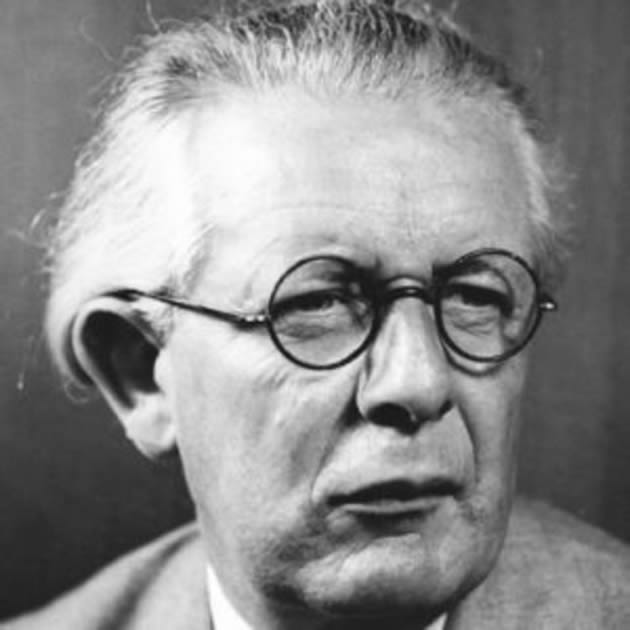
Knowledge Mushohwe
The late Jean Piaget, a Swiss developmental psychologist and philosopher, was best known for studies that led to what is now known as the cognitive development theory.
Piaget theorised that a child’s mental models, or cognitive structures, are based on the child’s activities.
He theorised that it is only through engagement that children can make sense of things around them.
Free, unstructured play is healthy and, in fact, essential for helping children reach important social, emotional, and cognitive developmental milestones.
Piaget’s theory is based on the idea that the developing child builds cognitive structures known as mental maps or schemes for understanding and responding to physical experiences.
Because Piaget’s theory has been influential in constructivist models of learning, it may help understand the early development of a young artist.
Four critical points that summarise the main teaching implications drawn from Piaget’s cognitive development theory may help develop a child with a keen eye for imagination and creativity.
Firstly, the theory emphasises focus on the process of children’s thinking, not just its products.
In addition to checking the correctness of a child’s artistic output, teachers or guardians must understand the processes children use to get to the final product.
Appropriate learning experiences build on children’s current level of cognitive functioning, and only when teachers appreciate children’s methods of arriving at particular conclusions are they in a position to provide such experiences.
The end product is just as important as the process involved in creating it in art because the progression from idea to a physical creative product exposes the workings of the brain, step by step.
Secondly, the theory recognizes the crucial role of children’s self-initiated, active involvement in learning activities.
In a Piagetian classroom the presentation of ready-made knowledge is deemphasised, and children are encouraged to discover for themselves through spontaneous interaction with the environment.
For example, the use of colouring books, according to the Piaget theory, is strongly discouraged as it limits a child’s creativity.
Straitjacket mentality can only make children like zombies with no minds or initiatives of their own.
Therefore, instead of teaching didactically, teachers may provide a rich variety of activities that permit children to act directly on the physical world.
Thirdly, Piaget’s theory discourages practices aimed at making children adult-like in their thinking.
What works in an A level art class cannot work for a kindergarten class because the mentalities of the two sets of students are markedly different.
Zimbabwean high school art classes teach ‘observation’, the drawing of a detailed analysis of an object with relatively detailed texture, ‘still life, a drawing or painting featuring an arrangement of inanimate, everyday objects, whether natural or manufactured objects, including flowers, food, books, bottles and crockery.
A third course named ‘Image Comp’, short for Imagination of Composition, asks A level students to develop works based on their imagination.
Younger children cannot be given similar exercises, according to Piaget, because their minds are still small and unable to fully handle such big tasks.
Psychologists and educators in the United States wrongly seem more interested in what techniques could be used to accelerate children’s progress through the stages.
But Piaget was of the firm belief that premature teaching could be worse than no teaching at all, because it leads to superficial acceptance of adult formulas rather than true cognitive understanding.
Lastly, the theory urges acceptance of individual differences in developmental progress.
Piaget’s theory assumes that all children go through the same developmental sequence but that they do so at different rates.
Therefore, teachers must make a special effort to arrange classroom activities for individuals and small groups of children rather than for the total class group.
In addition, because individual differences are expected, assessment of children’s educational progress should be made in terms of each child’s own previous course of development, not in terms of normative standards provided by the performances of same-age peers.
In kindergarten art class, there are no two identical artists.
Every single one of the little children creatively express themselves in a different way.
It is therefore important that art teachers and guardians of young artists see the children as different and consequently in need of particular attention.
Some students may have problems in developing shapes, and others would have challenges in moulding form.
For others, shading in to give the impression of texture may prove to be difficult. One student in my primary school art class was colour blind but no one noticed this for more than a year.
This was only because no teacher or guardian gave him special attention so as to understand why his banana drawings were coloured blue.
It was seen as incompetence when in fact the problem was more straight forward.
Piaget’s cognitive development theory urges individuality in the thought process of young artists.
This is good because, without doubt, what makes any artist good, young or old, is his or her uniqueness.



 Online Reporter