Online Reporter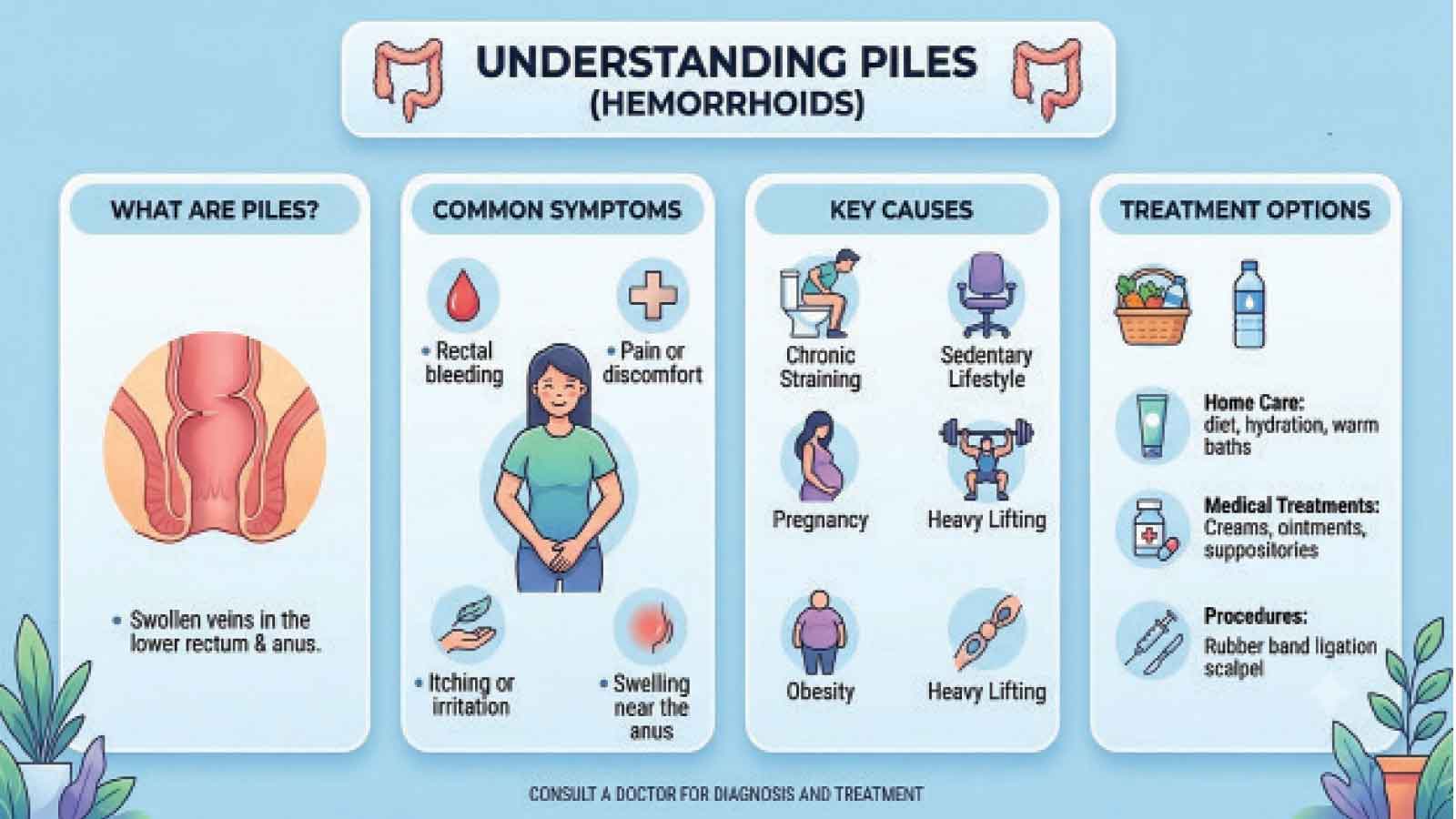
Rumbidzayi Zinyuke
Health Buzz
There is a certain kind of discomfort many people silently endure.
It begins with an itch that refuses to go away, followed by pain when sitting for long periods, and sometimes the alarming sight of bright red blood in your stool.
Embarrassment often takes over.
Rather than seeking medical help, many convince themselves it will disappear on its own or resort to unproven home remedies.
Yet for millions of people around the world, these seemingly minor symptoms point to a common but often overlooked condition, haemorrhoids, commonly known as piles.
Although piles are rarely life-threatening, health experts warn that delaying treatment can significantly affect a person’s quality of life and, in some cases, mask more serious illnesses such as colorectal cancer.
Haemorrhoids are swollen blood vessels that develop inside the rectum or around the anus. They occur when excessive pressure is placed on the veins in the lower rectum, causing them to swell and become inflamed.
While anyone can develop piles, the condition becomes more common with age and is frequently associated with chronic constipation, prolonged sitting, obesity, pregnancy and repeated straining during bowel movements.
Globally, haemorrhoids are among the most common anorectal disorders. Studies estimate that between four and five percent of the world’s population experiences symptomatic haemorrhoids at any given time, while nearly half of all adults over the age of 50 will develop the condition during their lifetime.
In the United States alone, more than 10 million people are estimated to suffer from haemorrhoids each year, making it one of the leading reasons for visits to colorectal clinics.
In Zimbabwe, there are no comprehensive national statistics specifically tracking haemorrhoids, largely because many people do not seek medical attention due to stigma or self-medication.
However, surgeons and general practitioners report that piles are among the common conditions seen in adults experiencing chronic constipation, pregnant women and individuals with sedentary lifestyles.
The rise in non-communicable diseases and changing lifestyles has also contributed to growing risk factors.
Diets low in fibre but high in processed foods, coupled with reduced physical activity, have resulted in more people experiencing constipation, one of the leading contributors to haemorrhoids.
Symptoms vary depending on the type and severity of the condition.
Internal haemorrhoids develop inside the rectum and are usually painless, although they may cause bleeding during bowel movements. External haemorrhoids occur under the skin around the anus and often cause pain, swelling, itching and discomfort. In some cases, a blood clot can form within an external haemorrhoid, leading to severe pain and requiring urgent medical attention.
One of the greatest challenges surrounding haemorrhoids is that many people mistake rectal bleeding as simply being caused by piles.
While haemorrhoids are a common cause of bleeding, doctors caution that blood in the stool should never be ignored, particularly among older adults or those with a family history of colorectal cancer.
Persistent bleeding, unexplained weight loss, changes in bowel habits or severe abdominal pain require immediate medical evaluation to rule out more serious diseases.
Fortunately, most cases of haemorrhoids can be managed without surgery, especially when diagnosed early. The cornerstone of treatment is addressing constipation and reducing pressure on the affected veins.
Experts recommend increasing dietary fibre by eating more fruits, vegetables, whole grains and legumes. Fibre softens stools, making them easier to pass and reducing the need to strain during bowel movements.
Drinking plenty of water also helps stools and supports healthy digestion.
Regular physical activity plays an equally important role. Exercise stimulates bowel function, helps prevent constipation, lowers blood pressure and contributes to maintaining a healthy weight. Losing excess weight can significantly reduce pressure on the pelvic veins and lower the risk of both developing haemorrhoids and experiencing recurrences.
For people already experiencing symptoms, pharmacies stock several topical treatments, including creams, ointments and suppositories that can help relieve pain, itching and inflammation.
Doctors may also prescribe tablets or other medications to ease discomfort and improve bowel movements while lifestyle changes take effect.
When conservative treatment fails or the haemorrhoids become more severe, several minimally invasive procedures are available.
One of the most commonly used is rubber band ligation, also known as banding. During this procedure, a tight elastic band is placed around the base of the haemorrhoid, cutting off its blood supply. Within about a week, the haemorrhoid shrivels and falls off naturally.
The procedure is relatively quick, does not usually require hospital admission and has become a preferred option for many patients with persistent internal haemorrhoids.
More advanced cases may require surgery. Haemorrhoidectomy, performed under general anaesthetic, involves surgically removing the swollen tissue. Although recovery may take longer than minimally invasive procedures, surgery remains highly effective for large or recurrent haemorrhoids that do not respond to other treatments.
Health experts also encourage people to adopt simple daily habits that reduce strain during bowel movements. Responding promptly to the urge to use the toilet, avoiding prolonged sitting on the toilet and limiting excessive straining can all help protect the veins around the rectum.
Perhaps the greatest barrier to treatment remains embarrassment.
Conversations about bowel health continue to be viewed as uncomfortable in many communities, leading countless people to suffer in silence.
Yet haemorrhoids are a medical condition like any other, and seeking help early often prevents unnecessary pain, complications and more invasive treatment.
As Zimbabwe continues promoting healthier lifestyles to combat non-communicable diseases, greater awareness of common digestive and colorectal conditions is equally important.
Piles may be common, but they should never be considered normal.
Early attention to symptoms, healthy lifestyle choices and timely medical care remain the best defence against a condition that is both preventable and highly treatable.
Feedback: [email protected]