admin
admin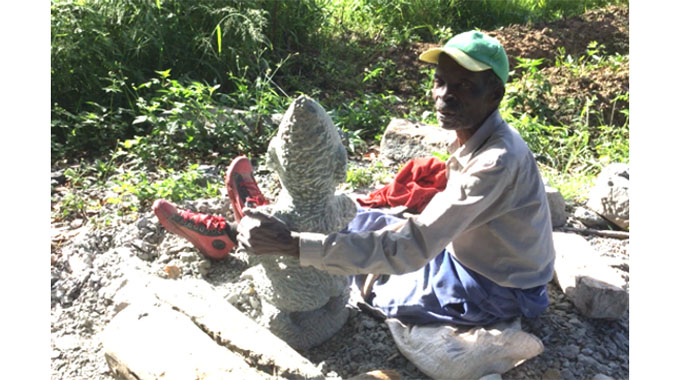
Timothy Akuda-Correspondent
Josiah Manzi, one of the pioneers of Tengenenge and the stone sculpture movement, has died.
He was 89.
His death comes after leading an art career for five decades.
His long-time friend and promoter Norbert Simons, who founded the World Art House in The Netherlands, said of his death,
“This is sad news. He was a great artist and a man who stood behind the scenes. Very loyal to the community and a family man. He was not a talker, but his sculptures talked a great deal about him.”
Manzi was born in 1933 and he originally came from Malawi.
His parents moved to Zimbabwe in 1918 and his father was the first to have contact with Tengenenge when he worked as a builder and would occasionally carve masks from wood.
In 1967, Manzi became one of the few people who joined the art community in carving stone sculptures with contemporaries like Enos Gunja, Bernard Matemera, Fanizani Akuda and others forming what later became known as the first generation.
Just like most of these early sculptors, Josiah started as a farm worker and later balancing between farming and sculpture.
His work was immense and carried some deep spiritual connotations reminding one of the ‘nyau’ tradition which has its origins in Malawi and Zambia.
One of those works is featured in the prestigious Dubai Expo which is currently running and ends on the 31st of March.
Manzi also participated in different international exhibitions and some of his works can be found in different museums around the globe.
During the pick of the war in 1979, most artists left Tengenenge to find safety and shelter in Harare and other places but Josiah and his family were the only ones who remained. His loyalty to the community remains immeasurable.
To date the number of pioneers of this sculpture movement has drastically dwindled with a few remaining members being Sylvester Mubayi, Edward Chiwawa, Enos Gunja and Ephraim Chaurika.
In Manzi, the movement and the international art scene has lost a great artist and a humble pioneer.



 Online Reporter