Chronicle Editor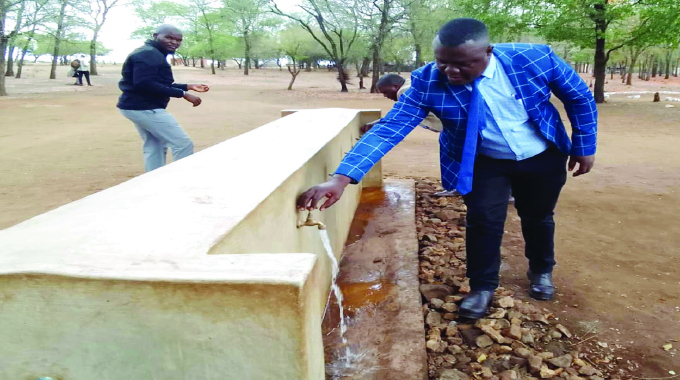
Lingani Nyika recently in Mwenezi
THE introduction of a piped water scheme in the Gudomutovhoti community in Mwenezi, Masvingo Province, is poised to change the lives of over 800 households and thousands of livestock, ushering in a new era of empowerment for women as they embrace the transformative power of clean, accessible water.
The Zimbabwe Red Cross Society supported by the International Federation of Red Cross (IFRC) is implementing the “Zero Hunger Project” focused on enhancing food security and livelihoods, health and nutrition and water, sanitation and hygiene.
Gudomutovhoti community in Ward 14 under Chief Neshuro is one of the beneficiary dry areas prone to erratic rainfall and water challenges, especially in the face of climate change.
The scheme has an 8 000-litre per hour water pumping capacity, three water storage tanks installed at the borehole to support farming, connected to Takura Primary School, and the centre of the community with a pipeline network measuring 2km laid out.
Ward 14 residents have expressed gratitude to the Red Cross for its efforts to improve livelihoods and address their needs.
“With the land we have, we can now grow a variety of nutritious foods and fruits, which has improved the overall health of our community,” said Mrs Dambudzo Mahachi.
“This has been particularly beneficial for women, as they can dedicate time to working in the gardens to provide essential relish and other produce for their families.”
Mrs Sairai Siboni said: “The easy accessibility of water has helped reduce cases of abuse and rape that previously occurred when children had to travel to fetch water.”
Another villager said: “The solar-powered piped water system has greatly improved our lives as it provides easy access to water, eliminating the need to travel long distances. The improved water access has relieved the burden on school children and parents.”
Councillor Admire Matutu said the project has enhanced water access for parts of the Mwenezi community, particularly benefiting women, and hoped the programme will be extended to address water challenges across the district.
“This project provides easy access to water for the community, especially in Gudomutovhoti, benefiting women who often handle water-related chores,” he said. “The two solar-powered boreholes in Gudomutovhoti and Zvomupungu are helpful, and the community wishes to see this programme extended to other areas in Mwenezi facing similar water issues, such as Chinyu, Ranoti and Mangoti.”
There is now accessibility to clean water for more than 1000 cattle, 300 donkeys, 1 000 goats and 100 sheep.
In an interview, ZRCS secretary general Mr Elias Hwenga said their organisation was committed to addressing human hardships countrywide.
“Our mandate is to alleviate human suffering wherever it occurs. In Zimbabwe we responded to a call for assistance in as far as responding to hunger is concerned, based on assessments like the ZimVac report where Mwenezi was identified as a vulnerable, arid district with water and health issues,” said Mr Hwenge
“We sourced funding through the IFRC’s Zero Hunger initiative and targeted 850 households (4 250 direct beneficiaries), as well as children suffering from malnutrition (25,8 percent of the population).
“Guided by the NDS1 and 2, we prioritise water as a critical element, ensuring no one and no place is left behind,” he said.
Through their Zero Hunger initiative, ZRCS has previously provided cash voucher assistance to vulnerable households, implemented WASH interventions, including rehabilitating 15 boreholes, solarising one borehole, and establishing disability-friendly latrines and menstrual hygiene support in three schools where they distributed handwashing stations and menstrual hygiene kits to promote good hygiene practices.
Speaking at the same event, ZRCS national president Mr Edson Mlambo said the project was set to benefit the community’s livelihoods.
“This intervention will reduce the distance to access water. In addition to households accessing clean portable water closer to their homes, livestock will have access to enough drinking water, reducing the need to travel long distances to nearby dams,” said Mr Mlambo.
“The nutrition garden established as part of the scheme will improve household nutrition by providing a sustainable source of vegetables and legumes.”
Infrastructure Planning and Environmental management director in the Provincial Affairs and Devolution Minister’s office, Mr Clorence Matewe, presided over the commissioning of the solar-powered water scheme and said the community-driven initiative in Mwenezi should empower local businesses.
“The aim of this project is to benefit the entire Mwenezi community by enabling businesses to sell garden produce,” he said, adding that “such projects support the achievement of Vision 2030.”
Mr Matewe applauded the Government’s development drive, which prioritises universal access to clean water as a vital step in disease prevention and socio-economic progress. —@NyikaLingani



 Online Reporter