Online Reporter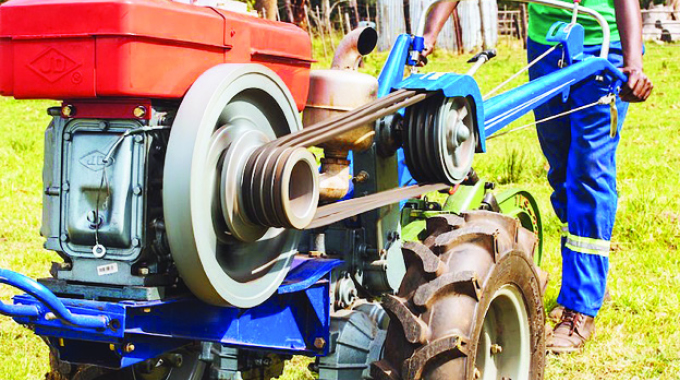
Obert Chifamba
Agri-Insight
WINDS of modernisation sweeping across the country’s agriculture sector will essentially come with numerous benefits that extend beyond individual farms, positively impacting economies, communities and the environment.
And besides enhancing productivity and food security, this revolution will also foster economic growth, strengthen communities and promote environmental sustainability, which naturally leads to a more resilient agricultural landscape.
It is, however, vital that this modernisation process should seriously appreciate the unique circumstances of smallholder farmers, who represent the biggest portion of the agricultural workforce worldwide.
This exposé explores the reasons why agricultural modernisation should also be tailored to the needs of smallholder farmers.
The crux of the matter is that modernising agriculture will not only enhance productivity and food security, but will also foster economic growth, strengthen communities and promote environmental sustainability, which can promote a more resilient agricultural landscape that benefits society as a whole.
It does not require rocket science for anyone to appreciate that agricultural modernisation is not merely about adopting new technologies, but the creation of a holistic approach that empowers everyone.
By considering their needs and challenges in the execution of the process, the country can foster a more sustainable, equitable, and resilient agricultural system that benefits everyone.
This means that by incorporating smallholder farmers’ interests in the modernisation efforts, the country will be laying the foundation for a more food secure future and healthier economy.
On the one hand, tailoring modernisation efforts to smallholder needs promotes inclusive economic growth, reducing poverty and inequality. When smallholder farmers thrive, entire communities benefit.
It is refreshing to note that some engineering companies have since started making implements that are affordable for smallholder farmers, and also usable in their small hectarages. There are small tractors in the market that this group of farmers is now able to access, while more research is also taking place to make operations easier even for programmes like Pfumvudza/Intwasa, which is fast re-shaping the country’s production landscape for the better.
This should also extend even to providers of irrigation equipment. Smallholder farmers also need to irrigate their crop at some point, given that rainfall patterns have become erratic and highly unpredictable because of climate change problems.
This group of farmers cannot afford the much-fancied centre pivot and even the simple sprinkler version. There is need for more research on the feasibility of adopting simpler and more affordable irrigation facilities to cater for these farmers. Some farmers situated in the country’s arid regions agonisingly watch their crops wilt from moisture stress every year yet there will be water bodies just a few metres from their fields, which they cannot tap into and draw the water for use.
Siya and Bindamombe dams in Masvingo are some of the standout examples in which the water has been unused for decades yet farmers in surrounding villages record crop failure due to drought.
The country’s current push to achieve an upper middle income economy by 2030 can also benefit a lot from this process of tailoring technology to suit smallholder farmers’ situation. The bulk of present day farmers are literate and can easily adopt modern techniques such as agro-ecology, precision farming, and organic practices that enhance sustainability. This not only boosts productivity but also protects the environment.
This is also one way of building resilience among this important group of farmers. Integrating their perspectives into modernisation strategies will enable them to adapt to climate change and market fluctuations.
Of course, it will also be necessary to train or re-orient them on the use of resources focused on enhancing resilience.
It is also a given fact that the development of technologies that are accessible and affordable for smallholder farmers helps foster innovation, while encouraging local solutions that are culturally and contextually appropriate.
This will also lead to the birth of stronger local economies. When smallholder farmers succeed, they can invest back into their communities, creating a positive feedback loop of development.
The good thing is that the Government is pulling out all stops to get equipment manufacturers to produce implements that suit the requirements of this farmer category. It is also implementing policies that specifically address the needs of smallholder farmers, providing access to resources, markets, and technology.
The icing on the cake will be through investing in research and development to ensure there is continuous focus on developing agricultural innovations suitable for smallholder contexts and ensuring they meet local needs and challenges. Once this is done effectively, it will become necessary to both train and educate the farmers on the modern farming techniques, business management and climate adaptation strategies.
It is also important for farmers to have collaborative arrangements that foster partnerships with private sector and non-governmental organisations (NGOs) to create a more integrated agricultural ecosystem.
While this is happening, it is also important for the Government to invest in rural infrastructure, such as roads and storage facilities, to improve market access and reduce post-harvest losses.
Subsequently, this will promote increased productivity and ensure a stable and sufficient food supply, reducing the risk of shortages.
The other important thing about modernising agriculture is that it often promotes crop diversification, which enhances nutritional security while automation and mechanisation reduce labour costs and time, making production more efficient.
Modern agriculture can create new job opportunities in the production processes, value addition and distribution sectors while the high yields and better market access associated with the practice lead to increased incomes for farmers. One other positive thing is that modern practices often promote efficient use of resources and reduce waste and environmental impacts.
On the field, they also support sustainable practices, such as crop rotation and integrated pest management while allowing the farmer to adopt to climate change by providing tools for better water management and crop selection.
The other advantage with modernising agricultural production is that it often leads to enhanced quality control measures, resulting in higher-quality food products while reducing the use of harmful chemicals thereby improving food safety too. It can also help mitigate the impacts of extreme weather events.
Additionally, it helps enhance access to markets and improves supply chain services. With modern logistics and transportation systems, there is improved access to markets with farmers usually acting in clusters. The beauty about such arrangements is that they feed into the country’s current push to commercialise all farming activities.
Modernisation of agriculture also presents farmers with e-commerce opportunities, as they will be able to use digital platforms to reach consumers directly, expanding their market reach. They will also be able to follow developments on ongoing research and innovation initiatives on farming.
This also improves their access to information and training helps, which enables them to adopt best practices and new technologies.