Online Reporter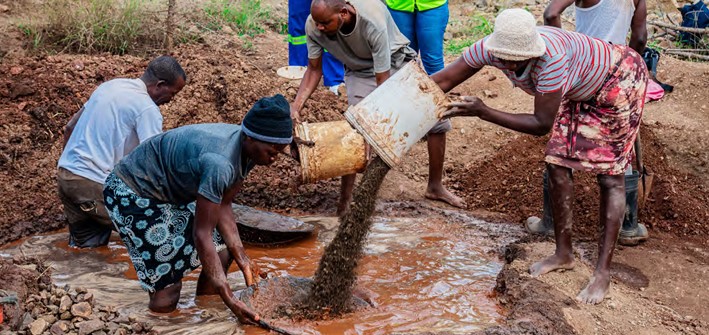
Nqobile Bhebhe [email protected]
The PlanetGOLD Zimbabwe project has developed a six-pronged roadmap to reform the formalisation of the artisanal and small-scale gold mining (ASGM) sector, seeking to shift the country from punitive enforcement towards an inclusive development model that promotes compliance, investment and sustainable production.
The Guide to Reforming Formalisation of the Artisanal and Small-Scale Gold Mining Sector in Zimbabwe argues that formalisation should not be treated as a once-off legislative intervention, but as a structured transition process that recognises the realities of a sector supporting hundreds of thousands of livelihoods.
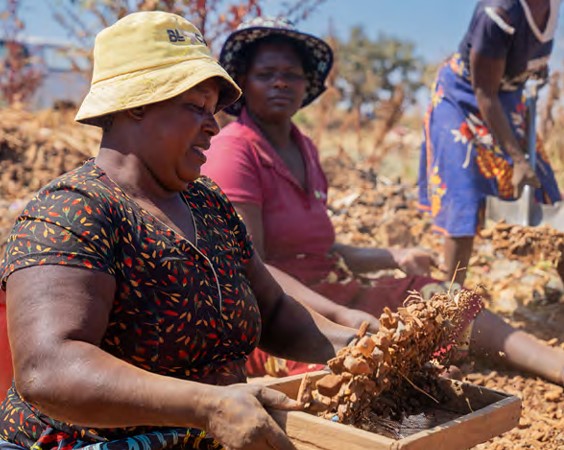
The roadmap is anchored on principles of proportionality, human rights, gender responsiveness, environmental stewardship, transparency, progressive compliance and evidence-based policy design.
Under data-driven legal reform, the guide calls for mining legislation to reflect actual ASGM production levels, livelihood dependency and sector dynamics.
It proposes differentiated licensing and transitional safeguards aimed at preventing the criminalisation of miners while encouraging progressive compliance with regulatory requirements.
The framework also identifies capacity building and technical training as key to improving productivity and raising operating standards.
It places emphasis on strengthening geological literacy, technical mining skills, environmental management and formal associations, while reducing harmful practices such as unsafe mercury use.
Access to finance is identified as another critical pillar, with the framework proposing expanded concessionary credit, guarantee schemes and structured financial products to enable miners to invest in appropriate technologies and reduce reliance on informal sources of capital.
“Access to finance constitutes a decisive structural lever in the formalisation of the ASGM sector in Zimbabwe. While licensing, compliance, and enforcement mechanisms are central components of regulation, they cannot achieve meaningful formalization in the absence of affordable and structured financial inclusion,” PlanetGOLD said.

The project said empirical evidence from Zimbabwe’s ASGM landscape showed that limited access to formal credit forced miners to rely on informal financiers, gold buyers, equipment sponsors and middlemen who advance capital in exchange for discounted gold or exclusive purchasing arrangements.
The guide identifies market integration and regulatory coherence as another critical pillar, calling for the alignment of gold marketing policies with criminal provisions on the possession of gold.
It also proposes reforms to monitoring and enforcement, advocating a shift from enforcement-led suppression towards risk-based and graduated compliance mechanisms.
“Shifting from enforcement-led suppression toward risk-based, graduated compliance mechanisms that prioritise education, improvement, and accountability. Collectively, these steps position ASGM formalisation as a development strategy, not a punitive framework,” the project said.
The framework comes as Zimbabwe continues efforts to harness the contribution of artisanal and small-scale miners to national gold production while improving environmental, safety, financial and regulatory standards across the sector.
PlanetGOLD said formalisation could help bring miners into the formal economy by creating incentives for compliance rather than relying predominantly on punitive measures.
“By aligning legal reform, institutional strengthening, financial systems, and market access, Zimbabwe can create incentives for miners to enter and remain within the formal economy. This Guide therefore serves both as an introduction and an operational blueprint: a structured pathway toward a transparent, inclusive, environmentally responsible, and economically resilient ASGM sector that contributes sustainably to national development.”