Online Reporter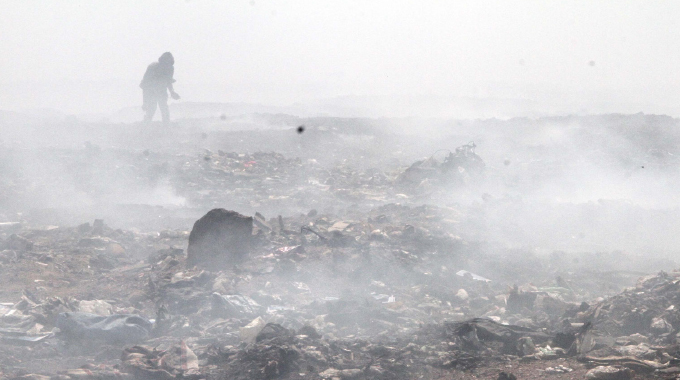
Pheobe Nyika
NOVEMBER 8 marked World Town Planning Day and Zimbabwe joined over 30 nations across four continents in commemorating this day, which is on its 76th anniversary this year.
Every year on November 8, countries around the globe celebrate good planning practices and the crucial role planning plays in improving people’s lives through the creation of vibrant spaces where people can live, work and play together.
Planning provides pathways to prosperity for all. This special day recognises the collaboration between spatial planners and communities in developing healthy, resilient, inclusive and sustainable settlements.
This year’s World Town Planning Day was celebrated under the theme, “With Planning, We Can”.
This day offers local authorities, public entities, private town planning consultancies and communities an opportunity to showcase projects and initiatives that have positively impacted cities, towns, local boards and rural district councils.

This year’s theme speaks directly to the reality that both our past and future are our collective responsibility. The deliberate use of the word “We” emphasises unity and inclusivity.
“We” as an individual family unit; “We” Zimbabweans; “We” Africans; “We” Europeans; “We” Chinese — together form a greater “We”: Humanity, living on this planet, Earth.
“We” also includes every gender and age group — “We” men, “We” women, “We” girls, and “We” boys. Beyond that, “We” includes all sectors of society: “We” politicians, “We” property developers, “We” local authorities, “We” business people, “We” nursing mothers, “We” vendors, “We” planners and “We” communities.
The list of possible “We-s” is endless, but each of us belongs to one locally, which expands globally to a united “We” humanity.
Unfortunately, “We” humanity have been the perpetrators of many of the challenges confronting the built environment today — climate change, biodiversity loss, environmental degradation, pollution, poverty, inequality and global health crises, among others.
Each of us, through poor planning and everyday choices, has contributed in one way or another to these global problems. No activity is too small to make an impact.
We have contributed to climate change through our dependence on motorised transport that relies on fossil fuels, our use of non-renewable energy sources and industrial processes that emit greenhouse gases.
Everyone wants to own and drive a car daily, causing congestion in many settlements. The more congestion, the greater the emissions. As an individual car owner who does not share rides, I too have contributed to global warming.
Yet, we could choose to walk where distances are short or use public transport more regularly.
Studies reveal that the construction industry contributes about 20 percent of greenhouse gas emissions globally.
While spatial and administrative boundaries can be drawn and respected, the effects of climate change know no borders. Pollution does not spare those who do not own cars — it affects us all. Whatever “We” do, or fail to do, we all bear the consequences collectively.
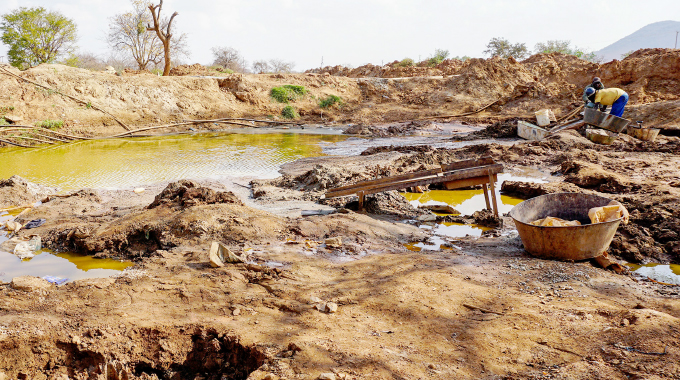
“We” property developers and home seekers are modifying the environment as we create human settlements. “We” miners, through our activities, contribute to environmental degradation, resource depletion and habitat destruction. When “We” indiscriminately clear land for agriculture, the damage intensifies.
Bringing it closer to home, “We” often do not challenge the improper disposal of waste — industrial waste, household refuse, or even the rampant dumping of disposable diapers. “We” nursing mothers throw soiled diapers into the environment — Mother Earth — while “We” husbands, sisters, brothers, neighbours, local authorities and politicians fail to enforce environmental protection practices.
Some even speak of how discarded diapers are used to make illicit homemade drugs. This shows how our negligence creates ripple effects in society.
“We” industrialists discharge toxic waste into rivers, soil and air, yet the polluted air we emit is the same air “We” breathe. No one can clean their own air before breathing it in. Pulmonary diseases and cancers do not discriminate.
Air pollution travels across regions, affecting everyone — just as the smell of a neighbour’s braai cannot be contained within their yard.
“We” local authorities, too, are guilty of designing car-dependent communities and neglecting public green spaces, sports and recreation facilities. This encourages sedentary lifestyles and increases rates of obesity, cardiovascular diseases and certain cancers. Limited access to nature also contributes to stress, anxiety and depression, as studies have shown. Overcrowded and unsanitary living conditions that “We” local authorities have allowed to persist, facilitate the spread of infectious diseases.
The point I wish to emphasise is this: We are our own enemies — enemies of humanity’s existence. But the power to change lies within us.
This year’s theme, “With Planning, We Can”, is a global call to collective action — a reminder that planning our future must be a shared effort. The theme underscores the importance of collaboration, inclusivity and participation in planning processes.
Planning allocates space for competing land uses, ensuring the provision of adequate housing, work-places and institutional facilities. It helps mitigate and adapt to climate change, promotes sustainable urban growth and fosters well-balanced, resilient communities.
As a nation, Zimbabwe has made remarkable progress in spatial planning. All 92 local authorities responded to President Mnangagwa’s “Call to Action” blueprint, which directed them to prepare Spatial Master Plans for their respective jurisdictions, as guided by law.
These adopted Master Plans are currently under Ministerial consideration, and once approved, they will guide development across all local authorities.
The Spatial Master Plans aim to transform the sustainable development vision of both central government and local authorities into reality, using space as a key resource for growth. Stakeholder engagement was a central pillar—each local authority consulted with communities, neighbouring districts and relevant stakeholders to ensure inclusivity and harmony across borders.
These Master Plans set short, medium, and long-term objectives, aligning collective visions with rational organisation of resources. They guide infrastructure investment, balance growth with environmental protection and ensure equitable distribution of economic opportunities.
The plans reflect the philosophy of “leaving no one and no place behind.” They capture the needs and aspirations of all social and economic groups, outlining projects to be implemented within the next 15 to 20 years — including schools, clinics, roads, transport systems, dip tanks, churches, energy and industrial infrastructure and recreational facilities.
Climate change mitigation and adaptation are integral components of every plan.
These efforts support the Inclusive Growth, Infrastructure Development and Social Development pillars, as well as cross-cutting themes.
By implementing these Master Plans, we move closer to achieving Vision 2030: Towards a Prosperous and Empowered Upper Middle-Income Society by 2030.
Indeed, “With Planning, We Can” realise this vision as a nation.
Let us remember that planning is a pathway to prosperity — for every household, every business, every community and our nation as a whole.
With Planning, We Can.
n Pheobe Nyika works as a Town Planner at City of Masvingo. She has 24 years experience in town planning, having also worked in Government for nearly two decades.