admin
admin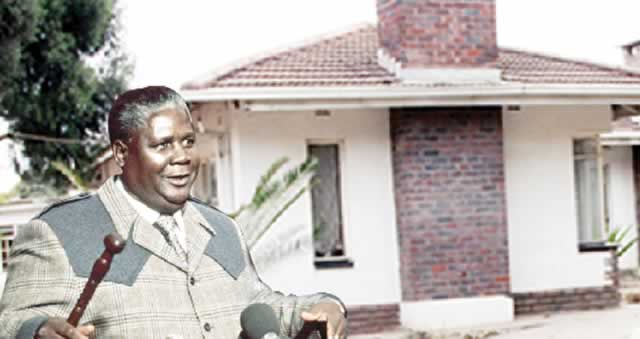

Yoliswa Dube
NUMBER 8115 Vilakazi Street, Orlando West, Soweto, South Africa, is one of the most famous houses on the African continent.
At the corner of Vilakazi and Ngakane streets, visitors will find the house that South Africa’s revolutionary icon Nelson Mandela and his family called home from 1946 to the 1990s.
Mandela lived in the house with his first wife, Evelyn Mase and after their divorce, with his second wife, Winnie Madikizela-Mandela.
The four-roomed home now houses various memorabilia, arts and crafts, honourary doctorates conferred on Mandela and picture collections of the Mandela family.
It is a product of township tourism — for visitors who are looking for more than just wildlife and a nature experience.
Soweto — an acronym for South-Western Townships — provides visitors with a unique cultural experience.
It is the largest black residential area in South Africa, a product of the apartheid government’s policy of segregation.
Soweto has a rich political history and was a site of the struggle for freedom in South Africa.
Back home, the concept of township tourism suffered a still birth after it was launched in October 2012 in Harare’s Highfield Township.
The initial idea was that of promoting historical and cultural tourism in local communities through the marketing of significant landmarks.
Now, there is talk of reviving the idea and turning it into a viable tourism strategy.
For starters, chief executive officer of the Joshua Mqabuko Nkomo Trust Jabulani Hadebe said plans were in the pipeline to turn the late Vice President Joshua Nkomo’s Pelandaba house into a museum.
“Father Zimbabwe’s revolutionary house will be turned into a museum because many significant events happened while the late Vice President was resident there. Apart from it being a family house, many other things happened while Umdala (Cde Nkomo) lived there. At the moment, Cde Nkomo’s son Sibangilizwe lives there,” said Hadebe.
He said the government through the National Museums and Monuments of Zimbabwe (NMMZ) had since engaged Cde Nkomo’s family to discuss the idea of turning the house into a museum.
“Plans are in the pipeline to turn the house into a museum, more or less like Mandela’s Vilakazi Street home. But with this Pelandaba house, the issue has been that of space. Unlike the Matsheumhlophe house, which has more space to display more artifacts, there is less space there. I personally think that house should’ve been made a museum a long time ago because that’s where Cde Nkomo lived during the liberation struggle and even after the country attained its independence,” said Hadebe.
Although the exact date of when the house would be unveiled as a museum is unknown, Hadebe said, the house would be open to members of the public just like the Joshua Mqabuko Nkomo Museum in Matsheumhlophe.
“The museum will operate more or less as the Mandela one in Soweto,” said Hadebe.
Highfield, being the home of the liberation struggle, was a key location in the establishment of the township tourism project.
Bulawayo would be a gold mine for this form of tourism with townships of Makokoba, Pelandaba, Luveve, Tshabalala, Pumula and Mpopoma being cultural treasure troves.
One of Cde Nkomo’s neighbours, Nesisa Masuku, said it would be a noble idea turning the late revolutionary leader’s home into a national heritage site.
“It would make us happy, as his neighbours, to share the experience with any other person who would visit the museum.
“As it is, it’s already enough of an honour just knowing Cde Nkomo lived just next door to me, what more when the house becomes a tourist attraction,” said Masuku.
She said the establishment of such a monument would be fundamental in educating children about the country’s history and preserving Cde Nkomo’s memory.
“It’s important that our children grow up with an appreciation of the country’s history. Such museums will always be a constant reminder of where we came from as a country and the people that dedicated their lives to liberate us,” said Masuku.
Another of Chibwechitedza’s neighbours, Thabani Moyo, echoed Masuku’s sentiments saying the project would liven up the suburb.
“We can never contest such noble ideas. This is what this suburb needs, something different which also serves a crucial role. It’ll be exciting to have an opportunity to see some things that we had never had the chance to see,” said Moyo
According to a recent study, despite Zimbabwe’s heavy reliance on natural and heritage resources, the new breed of tourist wants to have a more intimate relationship with the communities in the countries they visit.
It is no longer the thrill of seeing the Big Five, but rather “to meet real people, witness how they live and experience their current state of development and cultural heritage”.
It is now accepted that mass tourism is no longer competitive since discerning “cultural” tourists have been known to be higher spenders hence the need to repackage tourism products in order to cater for this new kind of tourist.
Culture-based tourism such as township tours are a better alternative to the traditional nature-based tourism because it has been found to be more sustainable, it cannot be substituted and is participatory particularly for the communities being visited.
Tourists, the study showed, are searching for unique experiences that are personalised and offer high quality service delivery with local residents also benefitting.
Zimbabwe Tourism Authority (ZTA) chief executive officer Karikoga Kaseke said township tourism is big business which also offers tourists other tourism opportunities.
“Township tourism in Zimbabwe is being based on history, especially nationalist movement history. Firstly, it requires that the nationalists or their families hand over the houses to us but that process hasn’t happened,” said Kaseke.
The ZTA boss said the necessary procedures were being taken to ensure the project takes off successfully.
“We’re using various channels to ensure that these houses are unveiled to us because for this project to take place we need to secure the houses as well as have the NMMZ declare them as monuments,” he said.
Kaseke said the launch of the township tourism project back in 2012 was premature.
“That launch was premature, we should’ve done it after we’d secured the houses, we launched an intention not a project,” he said.
Kaseke said Mandela’s Vilakazi Street home had raked in significant revenue into neighbouring South Africa.
“We’re not the pioneers of this thing (township tourism). South Africa has done really well with Soweto. It’s big business and people are flocking the neighbouring country just to visit Vilakazi Street. Aside from the actual history, there’re other tourism opportunities to look at such as township life in general. If South Africa has done well, we can also do it successfully and boost tourism in the country,” he said.
Township tourism emerged in the 90s in metropolitan cities of developing countries where tourists were encouraged to visit disadvantaged areas of the cities and see how local people lived.
The concept became popular in Brazil, India and South Africa where they are packaged as authentic, interactive and educational in nature.
Culture is the dominant attraction of township tourism.
Tourism is recognised as a key driver of the economy in Zimbabwe and has been targeted as strategic in the country’s drive for economic growth and development.


 Online Reporter