Lovemore Dube
PLAYER unrest at Highlanders, which has punctuated Benjani Mwaruwari and Zenzo Moyo’s respective tenures as coach and manager, is not new at the Bulawayo giants.
Previous disputes have triggered splits that resulted in the club losing key players.
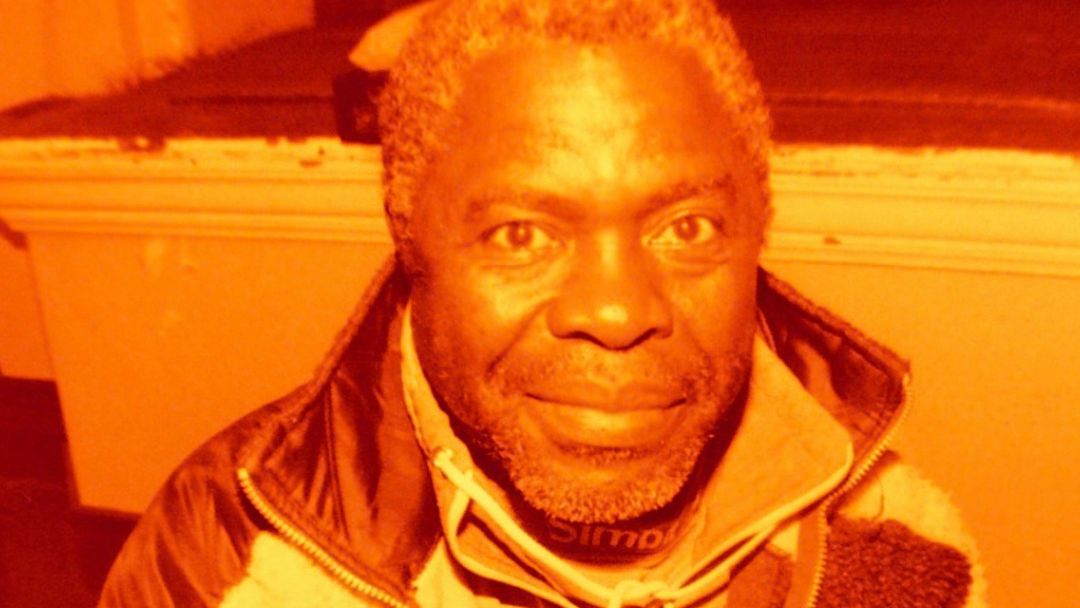
In January 2017, one of Zimbabwe’s most decorated football personalities, Barry Daka, explained how senior players left Highlanders to form Olympics.
Despite the loss, the club remained resilient and rebuilt, proving that Bosso is bigger than individual egos.
Highlanders lost a bulk of their first-team players to a splinter club in 1976.
“Money is always the root of all evil in society. It is not true that we were reluctant to go and play in Division One after Highlanders said the club would quit the Rhodesia National Football League to form the South Zone Division One League.
“That was far from it. There were simmering tensions before the club made that decision to go to a lower league. These were all around remuneration and that problem had surfaced in 1974,” said Daka.
Highlanders quit the national league in 1976 after the association awarded Dynamos a walkover following a disputed match in Bulawayo.
It had rained throughout the week, rendering Barbourfields Stadium unplayable. Although the Rhodesia National Football League (RNFL) had been informed, Dynamos travelled to Bulawayo while Bosso did not turn up.
Dynamos needed a win to pip Highlanders by a point and were awarded the walkover, handing them the championship.
Highlanders protested by leaving the national league and launching the South Zone League.
Daka said players were also unhappy with their meagre allowances. While their counterparts in Harare could earn as much as $40, Bosso players were getting just $10.
Players also went through the off-season without earning anything, with most unemployed and struggling to support their families.
“It was hard for most players to survive. I had a job as a sports assistant at Bulawayo City Council so I was able from time to time to assist teammates like Isaac Mafaro.
“So when we got to the end of 1976 we were not happy with the remuneration issue. The breakaway idea had been simmering for a long time and when they said they were going to the lower division we resolved we would stay in the premier division as Highlanders Olympics with the same colours,” said Daka.
The former attacking midfielder said the rebels’ plan to retain the Highlanders name was rejected by club officials, who also threatened them.
Among the players who remained with the rebel team were Daka, Stanley Nyika, Isaac Mafaro, Itai Chieza, Peter Zimuto, Chutika Tembo and Ephraim Moloi.
Daka admitted the dream of self-governance soon became a nightmare as crowds dwindled and the club struggled financially.
“The realities of the ill-timed decision began to show and haunt the players and one by one they started deserting Olympics with Itai Chieza joining Saints, Nyika and Mafaro going to Harare,
Tembo back to Hwange as we were now in a worse of financial position,” said Daka.
Daka soldiered on as coach and player and later assembled a formidable Olympics side.
In 1982, they won the Rothmans Shield, a tournament for lower-division clubs, earning Daka the Coach of the Year accolade. In 1983, Olympics again won the tournament after beating Caps
United 2-1 in the final.
“It was a good group of players that was able to conduct a post mortem of a match on their own. What you simply had to do was to introduce a topic and leave the rest to the boys. They were business minded and dreamt big.
“If resources had permitted we would have had a club house, club office, camping house and training ground of our own so when I moved to Highlanders it was among the things I discussed with one executive member Jahalamajaha Dlamini,” said Daka.
Daka’s career started at Mzilikazi and Makokoba youth clubs in the 1960s. He tasted glory with Hwange in 1970 when he scored in their 6-2 Castle Cup win over Salisbury Callies.
He won another Castle Cup with Hwange in 1973, beating Dynamos 7-6.
At the end of that year, Hwange coach Jack Meagher moved to Harare and tried to lure Daka to the capital.
“I could not go to Harare because of family commitments in Bulawayo. I had long left Bata and was part of the sports department at the Colliery where I coached youngsters like Matshona Sibanda and Benson Soko at Lwendulu.
“Meagher left with Posani Sibanda and striker Stephen Chuma who was later to switch to defence. Guys like Twyman Ncube had already left for Harare by then.
“I was excited with re-joining Highlanders whom I had left with a crop of young players I had grown up with and was involved along when we won promotion in 1970. I was excited I was coming as a Castle Cup winner and they had just won the Chibuku Trophy,” said Daka.
In 1974 and 1975, Daka helped Highlanders win regional league championships while reaching the semi-finals of most tournaments.
He later enjoyed a hugely successful coaching spell at Highlanders, guiding the club to almost every piece of silverware contested in the country from the early 1980s to 1994.
“I had a successful stint with Highlanders. There is no single tournament contested between 1984 and 1995 that I did not win as a coach. I was involved with national teams too, taking a team to
Libya for the Pan African Youth Championships in 1982 as Paul Moyo’s assistant and guiding Zimbabwe to silver with Wieslaw Grawboski and the late Lovemore Nyabeze in the 1995 All-Africa Games,” said Daka.
He also enjoyed success in Botswana, winning a league title with a Francistown-based side and being named Botswana Coach of the Year.
Daka regards his 1986-88 Highlanders squad as the best team he ever worked with and admires the Dynamos teams of 1969-82 and Caps United’s 1979-83 side.
“These were great sides. They played good football to win my praises,” said the veteran gaffer.
His best XI would line up in a 4-3-3 formation, with the late Posani Sibanda in goal, Fanuel Ncube and Dumisani at full-back, Alexander Maseko and Amos Rendo in central defence, and Willard
Khumalo, Tutani Moyo and Tito Paketh in midfield.
Madinda Ndlovu would be on the right wing, the late Adam in the centre and Peter Ndlovu on the left.