admin
admin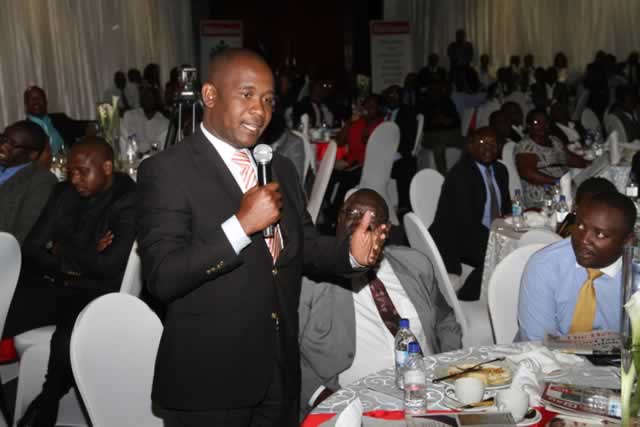
My Two Cents Happiness Zengeni
Two important questions were raised during The Herald Business breakfast meetings held in the last couple of days.
None of the questions got an answer. Not because they were not meaningful but I doubt Finance and Economic Development Minister Patrick Chinamasa would have had a clear-cut answer for them. He would have become emotional.
The first question, though slightly edited by this writer came out during the Zim-Sino Relations breakfast meeting.
“Minister on one hand you speak of lessening Government debt and entering instead into agreements where the investors take the risk. This is with a view of creating capacity for infrastructure development. This is a prudent approach. Why then is the Government underwriting parastatal loans? Does this mean privatisation is no longer a priority?”
Obviously this was after Minister Chinamasa had announced that Government had taken over TelOne’s $360 million debt, the same way they are doing to Reserve Bank of Zimbabwe’s $1,3 billion.
Naturally anyone would be concerned. Minister Chinamasa would say “clean up everyone else except us”. He has his reasons but the truth is Zimbabwe is being pulled in all sorts of directions and indeed paying the price as the economy slides deeper into a nightmare for citizens.
The total debt stock has risen exponentially since last year and Government keeps adding to it. Whatever happened to parastatal reforms which would introduce efficiency and allow firms such as TelOne to be able to cover their own obligations? Was it a matter of just raising dust? Privatise the parastatals if you have to.
Government has to be disciplined enough to know the consequences of piling up debt in its books. I can bet that even if the parastatals debt is to be cleaned up, it will take some time to get them to work efficiently.
The second questioned why Zimbabwe cannot clear the International Monetary Fund’s arrears when they could pay a slightly higher amount to pay part of its debt to China. Politics vs Economics maybe?
If the debt service record remains poor it will continue to result in an equally poor sovereign risk rating. Paying down part of our debts to regain our good credit standing as a nation is a long term economic solution but they cannot do it at the expense of short term political expediency.
IMF head of mission Domineco Fanizza said the country needs the support of the international financial community to change its economic fortunes. He said the country also required support from the external community if objectives set out in the Zim-Asset were to be achieved.
But Zimbabwe has since 2002 not been able to access concessional funding from the IMF, World Bank, AfDB and indeed all lenders under the Paris Club due to arrears.
Minister Chinamasa admitted this week that it was important that Zimbabwe normalised relations with the IMF, which would open access to other lenders since what the IMF says resonates across the world and most of the institutions do not want to deal with countries or borrowers blacklisted by the IMF.
Further, Zimbabwe is implementing reform programmes supervised by IMF staff, to establish a track record that would justify future support from the Bretton Woods institution.
Normal relations with IMF would also open avenues for a new level of co-operation, where the institution would help Zimbabwe get support for rescheduling of its debts. Minister Chinamasa said Zimbabwe started defaulting on payments due to increased obligations at the start of the land reform programme.
But the IMF says Zimbabwe’s arrears with the fund total about $142 million.
The amount is huge as far as the country’s capacity to mobilise resources is concerned, but small if considered in terms of potential benefits that would accrue in the short to medium term. It is no secret that Government is short of resources, but in light of how important clearing the arrears is, sacrifice needs to be made to deal with them
Only a couple of weeks back Minister Chinamasa said Treasury made sacrifices to clear long standing debts to Chinese companies, which Government had guaranteed, just to get Chinese institutions to extend fresh funding support to key infrastructure projects in Zimbabwe.
Some of the debts pertain to identifiable beneficiaries that, ordinarily, Government should have strongly gone after. They after all, individually benefited from the funding facilities extended by the Chinese institutions.
If the Government could be that benevolent, as to carry the debts of institutions and individuals who should have paid back after benefiting from Government guaranteed schemes, Minister Chinamasa should also find it worth the while to find, difficult as it may, fiscal space to settle the arrears with IMF to normalise the relations.
If the minister could pay $180 million in part payment of arrears to Chinese institutions to unlock fresh support at a time this is needed the most, surely Minister Chinamasa can also afford to make significant payments to clear at least the $142 million that Fanizza said was in arrears with multi-lateral lender, the IMF. But then again we have to strike a balance between politics and the economy!



 Online Reporter