admin
admin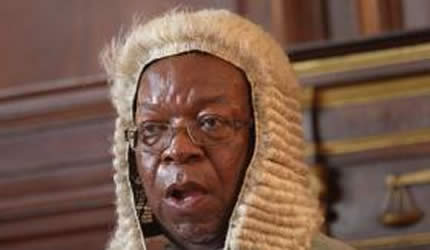
consolidate them into a single case and agree on the timeline for hearing.
He will today meet the lawyers in chambers to discuss the way forward and possibly hear the case on Friday, the day Nomination Courts sit countrywide to accept names of candidates contesting in the elections.
Justice and Legal Affairs Minister Patrick Chinamasa had approached the court seeking an extension of the poll date beyond July 31 on behalf of Government after he was tasked to do so by the extraordinary summit of Sadc Heads of State and Government in Maputo, Mozambique, recently.
This followed an MDC formation lobby for poll extension to accommodate the parties’ demands for reforms.
However, the court felt that since MDC-T leader Mr Morgan Tsvangirai, who is Prime Minister in the inclusive Government, and his MDC counterpart Prof Welshman Ncube brought counter-applications raising certain issues revolving on the extension of the poll date, it was prudent to consolidate the cases together with two others.
The other cases amalgamated into Minister Chinamasa’s were that of Mr Nixon Nyikadzino and MDC-T’s Strategic Electoral Litigation bid involving a Bulawayo woman Ms Maria Phiri, who are both seeking an extension of the election date arguing that the timeline for elections was short and violates their voting rights.
Earlier, Minister Chinamasa’ lawyer Advocate Fred Gijima had opposed having Mr Tsvangirai and Prof Ncube’s counter-applications heard together with his client’s application.
He argued that he had not perused the applications that were filed out of time and that he needed time to file his opposing papers.
“I have problems with both counter-applications because they do not deal with issues being raised in the present case,” said Adv Gijima, adding that he also needed to seek instructions from his client on both matters.
The court agreed with Adv Gijima that he should be afforded sufficient time as well as other respondents cited in the case to respond to the counter-applications.
Chief Justice Chidyausiku said consolidating the cases would assist the court to dispose of the matters once and for all.
“It’s an issue of the best way forward to deal with the cases. We have a busy schedule and the earliest is Friday if parties agree,” Chief Justice Chidyausiku said.
The court also noted that President Mugabe, who issued a proclamation prescribing the dates for elections and realigned the electoral laws using Presidential Powers (Temporary Measures) Act also needed to respond to both counter- applications and could not be ambushed.
Mr Jealousy Mawarire of the Centre for Elections and Democracy, who obtained the court order compelling President Mugabe to proclaim dates and hold the harmonised elections by July 31, is opposing Minister Chinamasa’s application for extension which he wants dismissed with costs.
He argues that President Mugabe’s proclamation put a lid on the Order of the court.
“This court is not a theatre for drama of political players who are willing to hold the nation at ransom as they continue to rule us beyond their constitutionally mandated electoral terms,” says Mr Mawarire.
Related Stories…
- Tsvangirai wants poll date proclamation nullified
- 6 poll hearings set for Wednesday
- Poll date hearing set for next Wednesday
- Poll date case urgent, says Govt
- ‘No legal basis for poll date extension’
- Constitutional Court judgment on polls
“I, therefore, have no doubt that most of our law-abiding citizens of our constitutional democracy desire a situation where our courts, particularly this court as the apex Constitutional court, apply the law without fear or favour in accordance with the Constitution without any regard to anybody’s political expediency.”
Meanwhile, the Constitutional Court granted an application by businessman Mr Mutumwa Mawere seeking an order compelling Registrar-General Mr Tobaiwa Mudede to give him identity documents and a Zimbabwean passport to enable him to vote in the harmonised elections.
The RG’s lawyers conceded that in terms of the new Constitution of Zimbabwe there was no reason to deny Mr Mawere the relief he sought.
It was also a bad day for Zimbabwe Development Party leader Mr Kisinoti Mkwazhe, who wanted US$1,5 million to fund his party.
The court dismissed Mr Mkwazhe’s application without giving reasons, but they will be made available in due course.
Mr Mkwazhe had argued that his party, which was formed in February 2008, was denied funding on the basis that it did not garner five percent of the House of Assembly seats as provided for by the Political Parties Finance Act.
He said the main political parties were deliberately not willing to have Parliament change the law because they wanted to protect their interests.
This he said violated his party’s right to participate in the elections and gave bigger political parties an unfair advantage over smaller ones.
The court also heard the case of another Zimbabwean based in South Africa, Mr Tavengwa Bukaibenyu, seeking an order allowing all Zimbabweans in the Diaspora to vote in the election the same way some diplomats and Government officials based in foreign countries do and reserved judgment to a later date.
Mr. Bukaibenyu is seeking to nullify Sections 23 and 71 of the Electoral Act, saying they are unconstitutional. Through his lawyer Adv David Ochieng, Mr. Bukaibenyu, argued that under the law only Zimbabweans resident in the country can vote while those in the Diaspora are barred.


 Online Reporter