admin
admin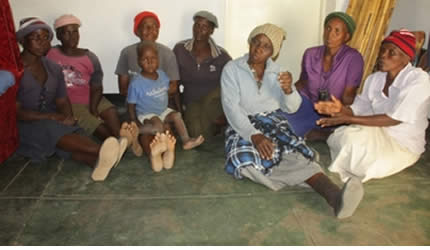
does not have privacy.
The 14 women and their husband Kambeni Kaiboni (89) were relocated to Arda Transau from the Chiadzwa area to pave way for formal diamond mining activities in 2011 where they share one house.
Diamond mining companies among them Mbada Diamonds, Marange Resources, Diamond Mining Company and Anjin — who are in joint venture partnerships with ZMDC — now operate in the Marange area.
Kaiboni and his 14 wives who have 80 children and over 20 grandchildren are members of the Johane Marange apostolic sect.
The wives from the eldest are; Mirriam Kambeni, Esther, Patricia, Cecilia, Magarate, Lucia, Vesta, Doreen, Lucia II, Evelyn, Cathrine, Idah, Erika and Mary.
Problems began when the family was relocated to Arda Transau where they were allocated one seven roomed house which is not enough for each family and its belongings.
Kaiboni requires 14 bedrooms for his wives and several other rooms for the the children some of whom are also married.
The shortage of rooms has made it increasingly difficult for the father of the house to make his rounds around his wives.
“The truth is since we moved from Chiadzwa on February 21, 2011, not one woman has had quality time with the husband as there are not enough rooms for this purpose.
“We all sleep in small rooms with our grown up sons and daughters-in-law.
“How then do you take off your clothes and become intimate while your children are watching? As women we do not even feel comfortable taking off our clothes in each others’ presence,” said one of the wives.
“We stayed in Bocha under Chief Gamunorwa where we had built our houses that were sufficient for each woman and her children. We had 14 kitchen huts meaning each woman had hers. We also had 14 three bedroomed houses with a large verandah and each wife had her own granary.
“We no longer have a husband, we only dream and fantasise about being with him,” said yet another wife.
Idah Kambeni (53) who is wife number nine in this polygamous union said she no longer knew how it felt like to be with her husband and does not know if she will ever have time with him.
“Imagine, since the beginning of 2011 none of us has had time with our husband. I do not know if any one of us secretly goes to have quality time with him in the bushes, because as far as I am concerned no one has been intimate with him in this house. We miss our husband yet he is the one we came here for.
“Is it proper to tell your daughter-in-law to go outside and give us time to become intimate?
“You just long for him and stare at what you want from him,” revealed Idah.
Evelyne , who is wife number 12 said she was just waiting for things to normalise so that she could have quality time with their husband.
Lucia, wife number 10, concurred with the statement.
She said while wives were married so that they stay with their husband, they are also supposed to enjoy conjugal rights, which they are being denied.
Another wife, Cathrine, poured her heart out adding that some of the wives had returned to their homes.
“Some of our sisters-in-law are not here, they stay with their relatives at Arda. Can we really be called relatives when we are staying like that?”asked Catherine.
The other wife Cecilia, lamented spending more than two years without being intimate with her husband.
‘’We love our husband but can you really follow the husband to the toilet so that you enjoy quality time with him? What would the children say when they see this?”she complained.
The news crew, however, failed to talk to the women’s husband who was said to be attending a funeral in Bocha communal lands.
Asked if their situation was not the same with other polygamous marriages where the man would go for sometime without visiting some of the wives, the women said they were sexually satisfied before they were relocated
“Our husband used to give each person a chance and we were all satisfied. A woman would wait for her turn. The children we have are testimony of what life was like. If we were not satisfied, would we have had all these children?”another wife responded.
The women dismissed suggestions that with such a polygamous union some would end up straying.
The family also complained that they did not have access to agricultural land.
“We are not involved in any agricultural activities because we do not have the land or gardens like we used to. We would grow our crops but are now working for other villagers in return for food. Our children have since stopped going to school.
“Sometimes we are forced to work at the local school as payment of the children’s fees.
“We have had to sell all our livestock for the children to go to school,”the seventh wife Vesta said.
Villagers interviewed said the women had strong personalities as weaker ones could have strayed after staying for so long without conjugal rights.



 Online Reporter