

 Online Reporter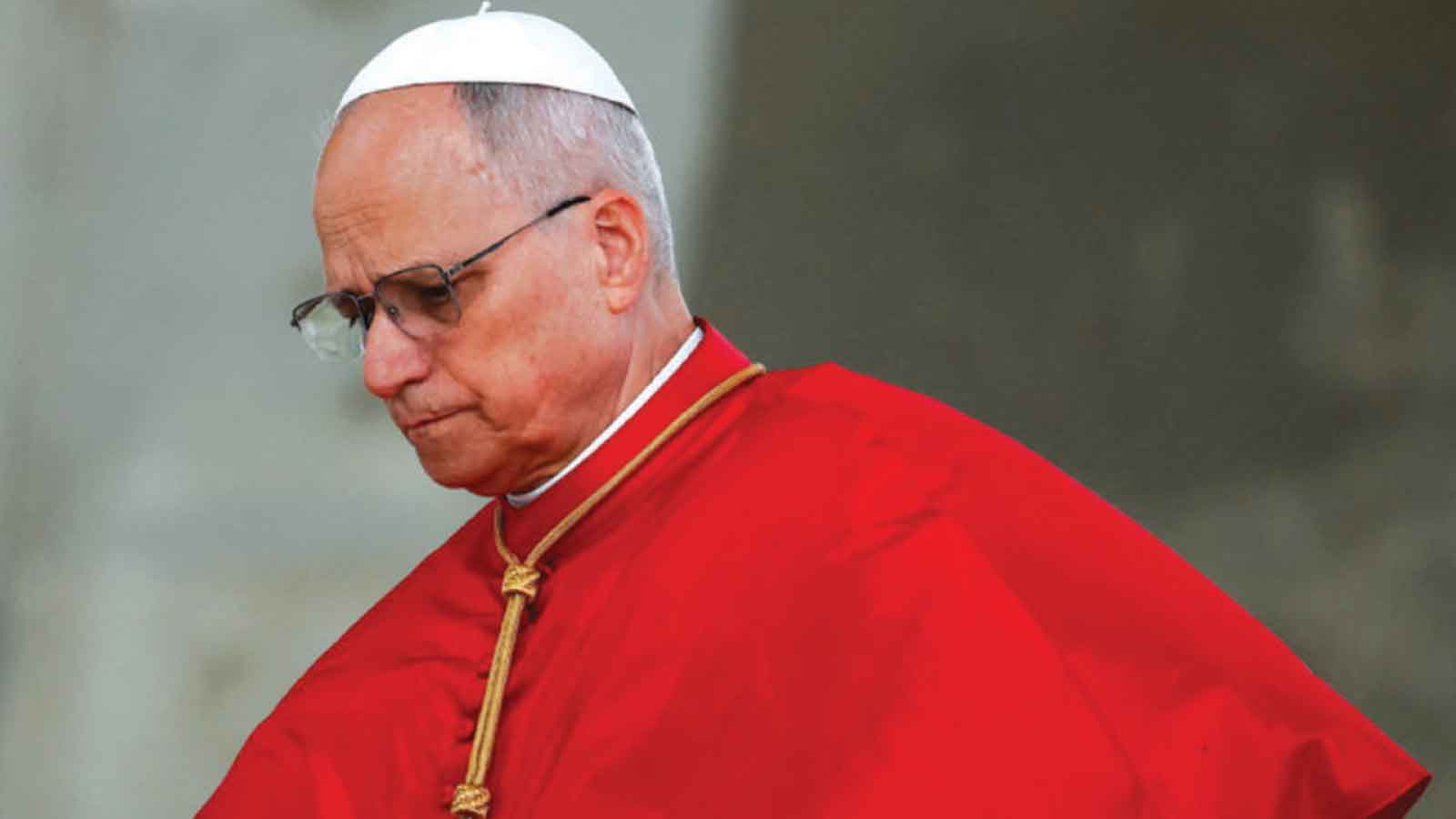
THE world today is experiencing devastating wars. In light of this, Pope Leo XIV the leader of the Roman Catholic Church, called for a stop to the wars, including the Middle East’s US -Israel -Iran War which has entered its second month. However, the Pope’s message especially one he made during a Prayer Vigil for Peace in Vatican was not taken lightly by United States President Donald Trump and his Vice James David Vance who unleashed vitriol on the Pope. In the interview below, Zimpapers Politics Hub Senior Politics Reporter, Richard Muponde (RM), sought the voice of the Catholic Church in Zimbabwe when he engaged the Right Reverend Bishop Raymond Mupandesekwa (BRM), who is the President of the Zimbabwe Catholics Bishops Conference (ZCBC). Below are excerpts from the interview
RM: Bishop, United States President Donald Trump issued statements on X attacking Pope Leo XIV after he called for world peace. What is your reaction to the tone and substance of President Trump’s remarks?
BRM: We have taken note of the recent public statements made by President Trump, particularly those shared on his official X account, and we must express our deep concern at both the tone and the substance of these remarks.
The Holy Father occupies a unique moral and spiritual office that transcends political boundaries and any commentary directed at him must reflect due respect for that role. Our concern is not merely diplomatic; it is rooted in the understanding that language matters, especially when it risks undermining the moral authority of a global spiritual leader whose mission is peace and unity.
RM: The US Vice President JD Vance also suggested that the Pope should exercise caution when addressing public policy. Do you agree with that position?
BRM: While such remarks may arise from a desire to distinguish roles, they risk creating a false separation that does not reflect the teaching of the Church. It is erroneous to suggest that the Holy Father should limit himself to “theology” in a narrow sense. In Catholic teaching, moral theology is not abstract or detached from life; it is concerned with how human beings ought to act in the world. Therefore, when the Pope speaks on matters of justice, peace, governance, and human dignity, he is not engaging in partisan politics but fulfilling his mandate to proclaim the Gospel and guide consciences in truth.
RM: Can you elaborate on the Pope’s role in global moral and political discourse?
BRM: The office of the Pope is not a political function, nor can it be reduced to one. The Holy Father exercises a ministry of teaching that necessarily touches on the moral dimensions of human life. The Church has both the right and the duty to proclaim moral principles, even in matters that concern the social and political order, especially where human dignity and the common good are at stake.
The human person is not divided into separate moral spheres; the same conscience that guides one’s faith also informs one’s responsibilities in public life.
RM: The ongoing US-Israel-Iran conflict has entered its second month. How does the Church interpret the invocation of “Just War Theory” in this context?
BRM: It is important to clarify that the Catholic tradition on just war is not a blanket justification for the use of force. Rather, it is a demanding moral framework that begins with a presumption against war and permits it only under strict and carefully discerned conditions. It does not declare that God is automatically “on the side” of those who wield the sword. Instead, it requires that any use of force be morally justified, proportionate, and directed towards the defence of life and the restoration of peace.
RM: So, is it correct to use “Just War Theory” to justify ongoing military actions in this conflict?
BRM: No, it is a serious misapplication of this tradition to invoke it as a general defence of military action without establishing whether the fundamental moral conditions have been met. Catholic teaching is clear that a war of aggression is morally illegitimate and can never be justified, regardless of political arguments advanced in its support. Even in situations of self-defence, the use of force must remain subject to strict ethical constraints, including proportionality and the protection of innocent life.
RM: The Pope recently made strong remarks during a Prayer Vigil for Peace in The Vatican. What is your interpretation of his message?
BRM: The Holy Father’s message was deeply rooted in the Gospel. He reminded humanity that “war divides; hope unites… Arrogance tramples upon others; love lifts up… Enough of the display of power! Enough of war!” He appealed to world leaders with urgency: “Stop! It is time for peace! Sit at the table of dialogue and mediation.” These are not political statements; they are a faithful expression of the Church’s teaching on peace, justice, and the sanctity of human life. In speaking this way, the Pope was not exceeding his mandate, he was precisely exercising it.
RM: President Trump also raised concerns about human rights violations, including the killing of unarmed protesters. How does the Church respond to that?
BRM: The Church unequivocally condemns such actions. The taking of innocent life, under any circumstances, is morally unacceptable and stands in direct contradiction to the dignity of the human person. However, the recognition of one injustice cannot be used to justify another. The existence of grave wrongdoing in one context does not provide moral legitimacy for the escalation of violence elsewhere. As Scripture teaches, “Do not be overcome by evil, but overcome evil with good.”
RM: Some critics argue that the Pope’s remarks may alienate certain global powers, particularly the United States. Is that a concern?
BRM: The Catholic Church is universal, transcending nations, cultures, and political systems. Her unity is founded on Christ and sustained through communion, not political alignment. While such statements may cause concern among the faithful, the Church remains open to dialogue and continues to pray for all leaders, that they may act with wisdom, humility, and a commitment to the common good.
RM: There have also been concerns about the misuse of religion in political discourse. What is your position on this?
BRM: We strongly caution against the misuse of Scripture or religious language to justify political positions without moral scrutiny. The Word of God must never be selectively applied to defend violence, domination, or the suffering of the innocent. History reminds us that such distortions of faith have led to grave injustice, and they must be firmly rejected.
RM: Finally, what message would you like to send to world leaders amid this escalating conflict?
BRM: Leadership carries with it a grave moral responsibility. Public discourse must be marked by truth, respect, and a genuine concern for the well-being of all. Language that fosters division or hostility undermines the foundations of peace. We reaffirm our unwavering solidarity with the Holy Father and invite all people of goodwill to remain united in prayer for the Church and for all world leaders, that they may be guided by wisdom and grace in the service of peace and the common good.
RM: Any last words?
BRM: Let us continue to pray for peace, for blessed are the peacemakers, for they shall be called children of God.



