Chronicle Editor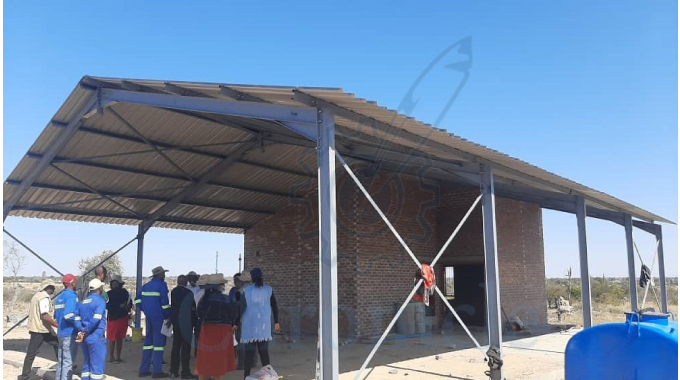
Midlands Bureau Chief
SMALLHOLDER farmers often incur heavy post-harvest losses as they often fail to transport their produce to the market on time.
Farmers from irrigation schemes in Lower Gweru which include Insukamini, Mkoba, Mambanjeni and London farm have not been spared from this challenge over the years.
There are more than 400 farmers benefitting from Insukamini, Mkoba, Mambanjeni and London irrigation schemes in Lower Gweru whose livelihoods had been affected by losing potential revenue from post harvest losses.
The farmers specialise in fresh produce such as maize meal, tomatoes, onions, potatoes and green vegetables which are all perishable.
These goods need a ready market and when the farmers fail to send them in time due to various reasons, they end up throwing them away, which is a loss.
The farmers have one common market which is in Gweru although they also have locals buying their produce.
They have been having post harvest losses at their irrigation schemes due to delays in sending their produce to Gweru.
United Nations World Food Programme statistics show that despite the surge in global food production, one-third of all food produced for human consumption is lost or wasted.
Post-harvest food loss is a leading cause of food insecurity for many people across the country.
For the Sustainable Development Goals’ ambitious target to achieve zero hunger by 2030 to be a reality, there shouldn’t be food lost or wasted.
However, some of the products end up going bad like tomatoes when there is too much heat or are not sold as soon as they arrive at the market.
The farmers’ fortunes are expected to change as Government, through the Smallholder Irrigation Revitalisation Programme, has invested in an over US$55 000 state-of-the art post harvest and cooling facility that will benefit four irrigation schemes in Lower Gweru.
They will be allowed to bring fresh produce and also grade it before taking it to a market.
The facility will be fitted with a cooling system and is close to completion as the superstructure is complete.
Chief Director in the Ministry of Lands, Agriculture, Fisheries and Rural Development, Professor Obert Jiri visited Insukamini Irrigation Scheme in Lower Gweru on Sunday, which is being rehabilitated under the Smallholder Irrigation Revitalisation Programme.
In addition to the infrastructure rehabilitation at the scheme, SIRP is also constructing a multi purpose post harvest centre.
It has a dry grains centre and a 60 tonne walk in cooler with digital scales as well as a multi crop thresher.
“This is meant to stem post harvest losses at Insukamini Irrigation Scheme, Mkoba Irrigation Scheme, Mambajeni and London Farm irrigation schemes,” said Prof Jiri.
He said for example Insukamini which has about 126 farmers has continuously incurred high post harvest losses.
“This facility is at Insukamini but will benefit all the other irrigation schemes.
This will help farmers sort, grade, cool and store their produce until they reach the final consumer,” he said.
The crop produce pack shed is sitting on a 300 square metre area.
“As Government we are advocating for revival of irrigation schemes such as Insukamini across the country.
We are also working with partners such as SIRP to ensure that nothing is lost before it reaches the consumers plate.
There is need to make sure we have maximum profit from the field to the tables so as to make farming a business for these farmers,” he said.
Prof Jiri said Government was pleased with the level of committement and expertise that the SIRP programme had brought to irrigation schemes they were working with in the country.
“It’s unfortunate that the last two years were affected by the Covid-19 pandemic but SIRP, I can say, has managed to do about 98 percent of targets aimed at reviving some irrigation schemes in the country.
Besides reviving the irrigation schemes, SIRP trained farmers on new farming skills to make farming a business.
Government was also working with SIRP so that these irrigation schemes play a role in supporting the agriculture sector,” said Prof Jiri.
He said irrigation schemes are there to work hand in hand with other Government programmes such as Pfumvudza/Intwasa towards making the country secure the food security status.
“Because of Pfumvudza/Intwasa programme, we are sure that areas that were hit by drought will be fed from those areas that managed to get something.
So these irrigation schemes are aimed at countering effects of climate change and therefore the need to make them work for the benefit of the farmer and the nation at large,” he said.
Prof Jiri said Government is working on creating rural industries and move towards Vision 2030 in the rural areas.
“We need irrigation schemes to develop products for export as well as the local market.
This post harvest and cooling facility will create employment for youths and stem rural urban migration.
Sustainability in maintenance of the facility is important for irrigation schemes.
The pack shed is important as it guards against post-harvest loss,” he said.
Prof Jiri toured Insukamini and Mayorca irrigation schemes in Zhombe among seven other schemes in Manicaland and Masvingo as he is familiarising himself with SIRP project.
SIRP Programme Co-ordinator Mr Odreck Mukorera said at Insukamini irrigation scheme farmers have improved on packaging using crates for packing tomatoes and green pepper.
“The post harvest and cooling facility is being set up at a budget of US$55 369.
That’s for cooling and grading of fresh produce from the irrigation schemes until farmers find a market for them,” he said.
Mr Mukorera said SIRP provided two solar driers and materials to construct 33 solar driers to prevent post harvest losses.
“A total of six youths were also trained on this solar driers concept where we want to value add the fresh produce before it goes bad,” he said.
A beneficiary of the solar driers making training Mr Vincent Nhindi said there is no longer reason for him and his family to throw away excess food such as cabbages.
“In a family of four for example, we cut a cabbage and there is excess, we use the solar drier to dry it and add value.
That dried cabbage can be used later or sold.
That can be done to tomatoes and fruits at home.
We also maintain the nutritional value of the fresh produce,” he said.
Mr Nhindi said they are selling solar driers for US$10.
“This is a must for everyone as it stores food and maintains the nutrients,” he said.
Mrs Molene Majasi, Insukamini irrigation scheme chairperson commended SIRP and the Government for the post harvest and cooling facility which she said will go a long way in preserving their harvest before they take it to the market.
“Over the years you would find farmers throwing away be it bad tomatoes, onions, carrots you name it.
We didn’t have anywhere to store them and keep them chilled till we took them to a market in Gweru, especially.
Our produce was also at the mercy of changing weather conditions but now we are happy with this facility here,” she said.
Mrs Majasi said youth had also been trained in making solar driers — a move that is also resulting in employment creation and food preservation.
“These youths who have benefitted from SIRP training are hard working.
We work with them at the irrigation schemes and their knowledge will benefit all of us,” she said.



 Online Reporter