Online Reporter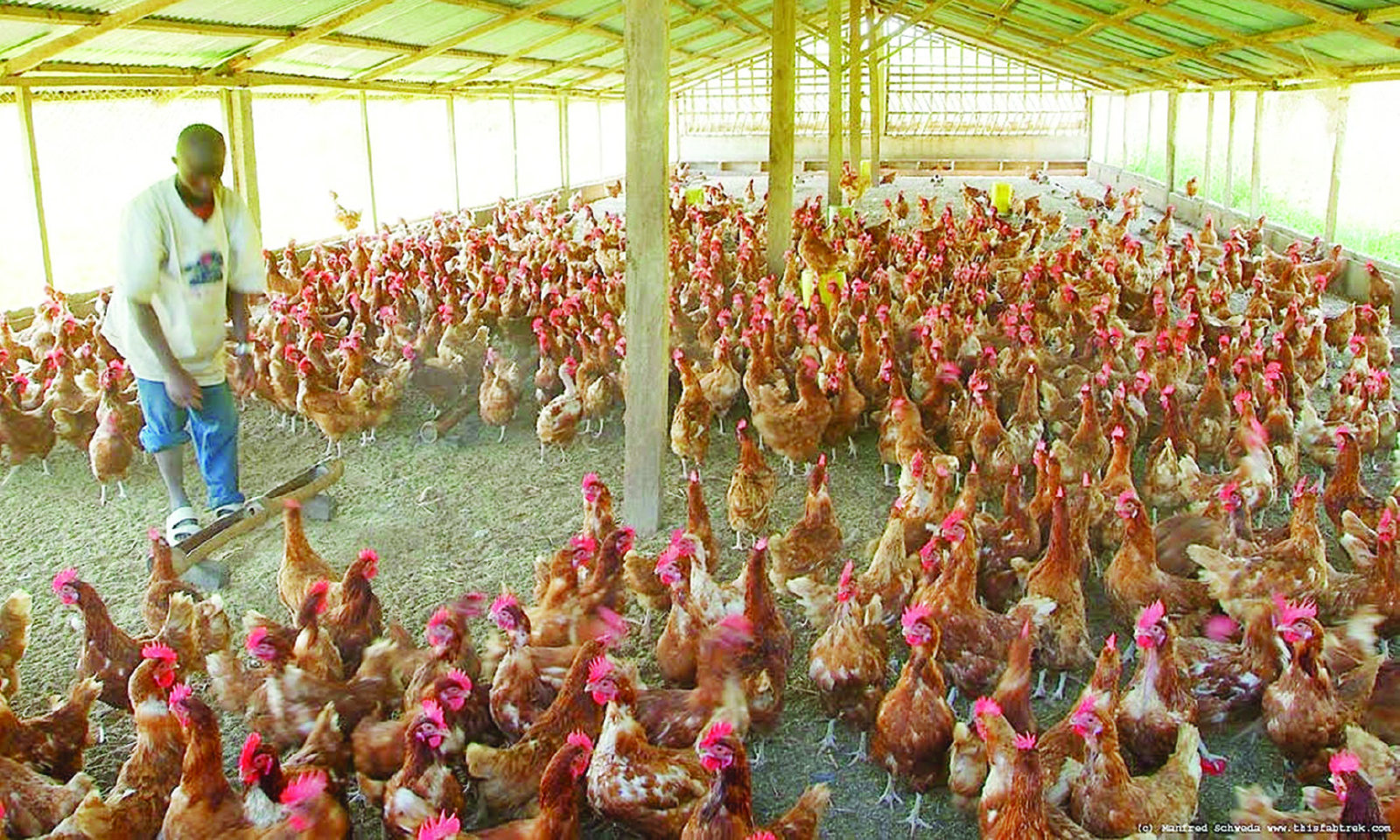
Edgar Vhera
Specialist Writer – Agribusiness
THE poultry sector has emerged as the largest consumer of stock feeds, accounting for 72 percent of the total feed use in 2024.
This trend underlines the growing preference for white meat over red meat among consumers.
Other livestock sectors, including piggery, dairy and beef, collectively consumed the remaining 28 percent.
The Stock Feed Manufacturers Association’s (SMA) annual report for 2024 shows that 896 147 tonnes of feed worth US$504 million was produced with the poultry section consuming 75 percent of the consignment by value.
The total feed production grew two percent from 882 574 tonnes in 2023 to 896 147 tonnes last year, while in value terms it dropped three percent from US$517 131 500 to US$503 783 724 despite the threat of the El Nino-induced drought.
The poultry sector consumed 644 426 tonnes of the feed worth US$380 046 971, an average price of US$590 per tonne. Both the tonnage and value of poultry feeds declined by 3 and 10 percent, respectively.
The cheaper feeds were offset by higher prices for day-old chicks witnessed in 2024 compared to 2023, as well as general low consumer disposable income, added the report.
The road runner section experienced a whopping 96 percent growth in feed demand and an equally high 93 percent surge in value in 2024 as compared to 2023.
The second round of Crops, Livestock and Fisheries Assessment (CLAFA-2) 2024/2025 summer season report showed that broiler meat production decreased by two percent from 209 808 tonnes in 2023 to 205 880 tonnes in 2024.
“Large-scale producers contributed 20 percent of the broiler meat produced, with their small-scale counterparts supplying the balance of 80 percent.
“Zimbabwe’s per capita broiler meat consumption was 12,9 kilogrammes in 2024, a decrease from 13,6kg in 2023,” said the report.
Commercial table egg production increased significantly from 2020 (59,2 million dozen) to a peak in 2023 (96, 99 million dozen), then declined by 11 percent in 2024 (86,61 million dozen). Table egg consumption per capita is approximately 66 eggs, excluding eggs from indigenous chickens.
“Generally, the El Niño-induced drought led to a decline in indigenous chicken populations, as households disposed of them for food and income.
“Production and productivity also decreased due to poor nutrition, as grains for supplementation were scarce,” said the CLAFA-2 report.
The report said the post-El Niño period in Manicaland Province was not severe and did not affect small stock, including indigenous chickens, resulting in farmers not culling in response to the El Niño-induced drought.
There was a massive promotion of indigenous chicken through the Presidential Poultry Scheme and development partners, resulting in an average of four clutches per year.
“These are improved indigenous breeds under better management.
‘‘However, there was a 15 percent decrease in indigenous chicken production from 21 394 764 in 2023 to 18 095 637 in 2024,” continued the report.
The CLAFA report indicated that indigenous chicken offtake was around 72, 65 percent in 2024 while the volume of indigenous chickens consumed was 15 545 tonnes.
With an approximated total market value of US$46, 64 million for indigenous chickens this reflects the economic importance of this sub-sector in rural livelihoods and food systems.
“It demonstrates significant income-generating potential, especially for smallholder farmers, though indigenous chicken mortality in 2024 was high at 25 percent. The major cause of the mortalities was diseases,” noted CLAFA -2.
Meanwhile, the CLAFA-2 report also indicated that poultry distribution for 2025 under the Presidential Rural Poultry Scheme is ongoing.
The scheme is targeting 1,8 million households, with each benefiting home getting a package of ten four-week-old chicks and a vitamin stress mix sachet.
Since its inception, 2 007 611 chicks have been distributed to 200 761 households.