

 admin
admin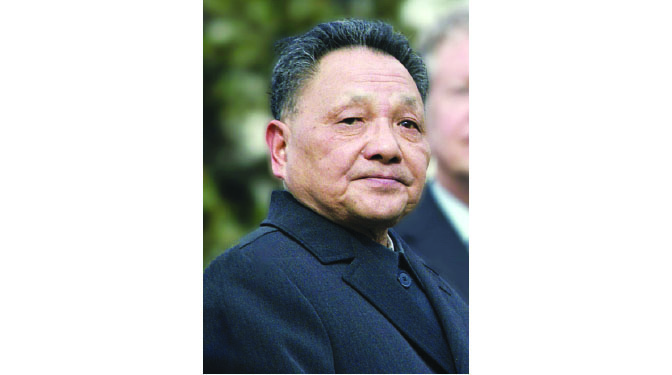

Lovemore Chikova China-Africa Focus
Reports that China managed to beat its annual target last year by lifting 12,4 million people out of poverty shows that the Asian country’s policies in that area are effective. A report released by the Chinese government last week indicated that the fight against poverty is being won in China. In fact, the Asian country is following a strict poverty alleviation programme that is set to ensure that nearly 50 million people who are still in that situation are relieved by 2020.
The poverty alleviation programme is being carried out under the Second Ten-Year Poverty Reduction Programme (2011-2020).
State Council Leading Group Office of Poverty Alleviation and Development spokesperson Su Guoxia was quoted by the Chinese news agency Xinhua last week as attributing the achievement to a deliberate effort.
“The progress was partly due to large financial resources, amounting to more than 230 billion yuan ($34,33 billion), earmarked by the central and local budgets,” Su said.
“More than 30 million poor people from more than 900 counties benefited from these resources.”
African countries are wallowing in poverty and that is a fact which cannot be denied.
The big lesson they can learn from the Chinese experience in poverty reduction is setting the right priorities and appropriate allocation of funds.
There is need for setting targets in poverty alleviation and ensuring that they are achieved.
For instance, China’s financial institutions issued 818,1 billion yuan ($122,2 billion) of loans to aid the anti-poverty drive and outstanding loans now total 2,49 trillion yuan ($372 billion).
The Xinhua report indicated that about 8,01 million households received micro-credit in 2016, worth a total of 283,3 billion yuan ($42,3 billion).
Su said that more financial resources would be added to tackle poverty this year to ensure the Chinese government meets its annual target to reduce poverty by 10 million people. The Asian country has made it clear it will have eradicated poverty in the country by 2020 for China to become a “moderately prosperous society.”
The task at hand is to lift 10 million people out of poverty each year from 2016 to 2020 under the Second Ten-Year Poverty Reduction Programme (2011-2020).
By the end of 2016, there were 45 million people living in poverty in China, many in areas without roads, clean drinking water or power.
This is also the same situation which applies to many Africa countries at the moment.
Many people on the continent struggle to access basic necessities of life like those mentioned above. But China has travelled a long journey for it to start talking about the little figure left for it to clear poverty.
The country embarked on a deliberate programme to fight poverty when it adopted the reform and opening up policy in 1978.
Before then, almost all Chinese nationals were living below the poverty datum line, without access to the basic needs.
But now, China’s remarkable poverty alleviation strategy is being credited for being one of the best examples in the world.
The strategy has been dubbed the “world miracle” by some and has shown that with unity of purpose, countries can successfully eliminate poverty.
The World Bank notes that due to China’s effective poverty alleviation programme, 500 million people were lifted out of poverty by 2012, as the rate fell from 88 percent in 1981 to 6,5 percent.
Latest statistics show that more than 700 million people in China are now living a poverty-free life, while the few mentioned above are still facing the problem.
The people still living in poverty are mainly in the rural areas and in ethnic minority areas, which are often mountainous and need more resources for poverty alleviation projects to be undertaken.
China’s massive poverty alleviation programme started with the Third Plenary Session of the Eleventh Central Committee of the Communist Party of China held in December 1978.
Huang Chengwei in his book “China’s Poverty Alleviation Operations” notes that before the reform and opening up policy was adopted at that meeting, China was confronted with widespread poverty characterised by harsh living and working conditions.
Statistics Huang provided show that in 1978, China’s per capita Gross National Product was only $632, at least 10 percent of the world’s average level and 34 percent of the average level in developing countries.
But that 1978 CPC plenary session opened the way for China’s fight against poverty as it marked the start of the country’s deliberate policy to open up to world capital.
The reform and opening up policy is credited for China’s rapid and astonishing industrialisation process, as investors flocked to the Asian country.
The government introduced free education, which helped those in poverty who could not afford to proceed to higher levels.
The free education accounted for the experts who helped drive the industrialisation process.
With the massive industrialisation, China’s urban poverty had almost disappeared by the end of the 1990s.
This left the majority of the poor living in the rural areas.
The major economic activity in the rural areas is agriculture and it followed that the best panacea to poverty alleviation there was to reform the sector.
Agricultural development was given the same priority status with industrialisation.
This was being done with the ultimate goal of establishing socialism with Chinese characteristics.
The modernisation of agriculture, coupled with the industrialisation process and a deliberate effort by government to fight poverty ensured that China would quickly move out of poverty.
China’s western provinces are the most affected by poverty and the government has devised a policy of pairing the much developed eastern provinces with those in the west.
The developed provinces are expected to commit resources to help the undeveloped provinces which they are paired with.
Beijing has been paired with Inner Mongolia, Tianjin – Gansu, Shandong – Xinjiang, Zhejiang – Sichuan and Guangdong – Guangxi,
Dalian, Qingdao, Ningbo and Shenzen will help – Guizhou, Shangai – Yunnan, Liaoning – Qinghai, Jiangsu – Shanxi, Fujian – Ningxia, and Xiamen and Zhuhai – Chongqing.
Former Chinese President Deng Xiaoping, who is credited with creating the new China, pronounced that in the opening up and reform process, regions which get prosperous first should help those still in poverty.
This, he said, would ensure that everyone in China achieves a common prosperity.
China’s poverty alleviation policies are anchored on the Poverty Reduction Programme (1994-2000), the First Ten-Year Poverty Reduction Programme (2001-2010) and the Second Ten-Year Poverty Reduction Programme (2011-2020).


 Online Reporter