Online Reporter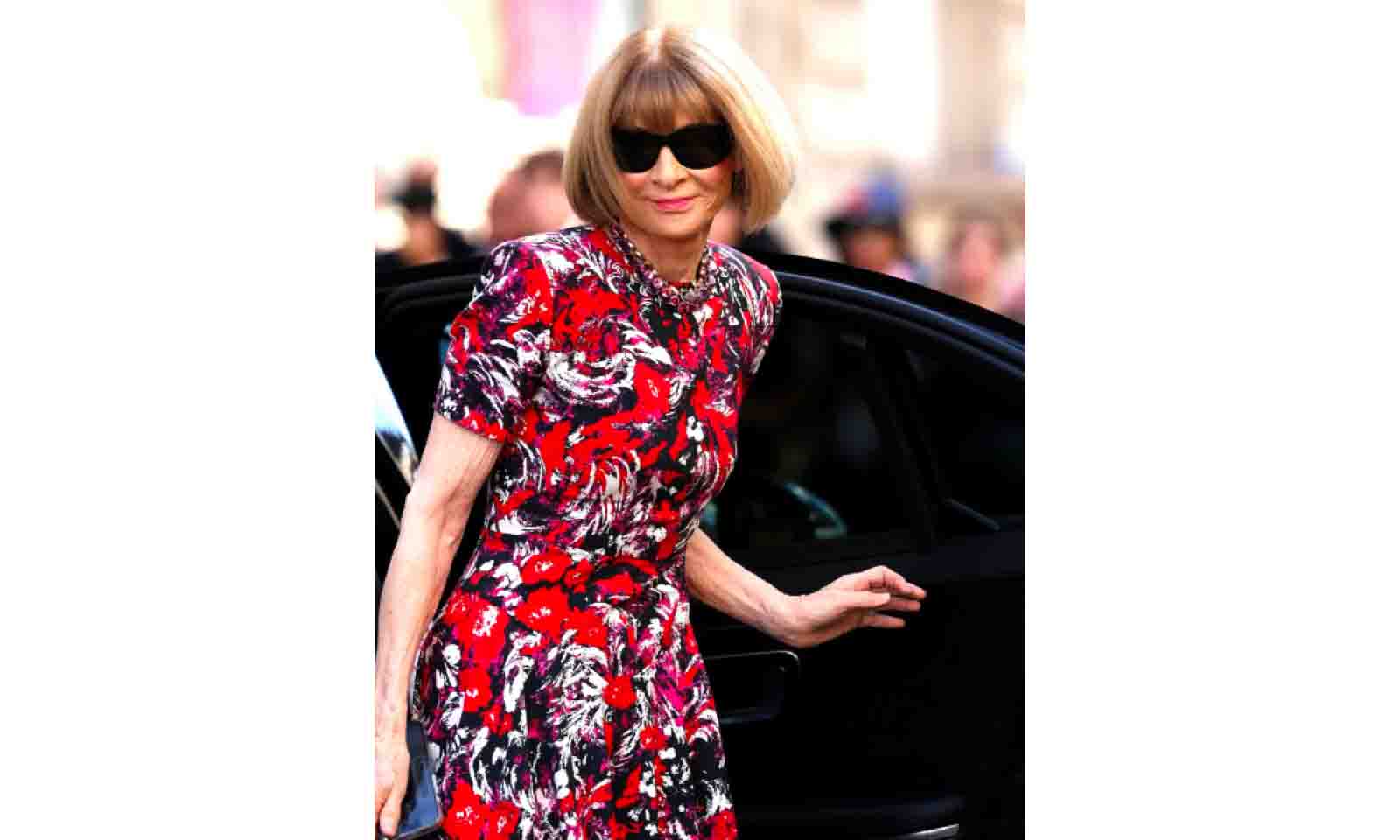
Fashion 263 Correspondent
The exit of Anna Wintour from the helm of Vogue US is, in the eyes of many, long overdue.
Her departure as editor-in-chief of Vogue US, after 37 years, may be framed as a transition, but for those who have endured her wrath, it feels more like the lifting of a long dark shadow.
Her departure comes not as a graceful retirement, but as a calculated pivot – still clinging tightly to power while offering a token gesture to the next generation.
Wintour’s legacy in the fashion world is one of ice-cold precision, iron-fisted control, and ruthless ambition. Far from being simply a powerful editor, she has become synonymous with fear.
Often described as bullying, racist, and emotionally void, Wintour has broken spirits, stunted careers, and discarded people with unnerving ease.
The Devil Wears Prada
Wintour, widely believed to have inspired the character Miranda Priestly in “The Devil Wears Prada”, announced that a new editorial role would be created at Vogue US.
“I want to help the next generation of impassioned editors storm the field with their own ideas,” she reportedly told staff.
Yet, true to form, she added that she would still be holding onto many of her current responsibilities — making it clear she’s not letting go without a fight.
“It goes without saying that I plan to remain Vogue’s tennis and theatre editor in perpetuity,” she declared. Her toxic presence has been so pervasive that when director David Frankel made “The Devil Wears Prada”, the fashion industry recoiled in fear.
Designers refused to work with the production, terrified of angering Wintour.
Screenwriter Aline Brosh McKenna admitted she struggled to find anyone willing to speak to her. “People were afraid of Anna and Vogue, not wanting to be black-balled,” she explained.
The fear was so widespread that they struggled to secure iconic locations like the Met and Bryant Park in New York.
Patricia Field, the costumer, even had difficulty sourcing clothes because of industry-wide terror of Wintour.
The book behind the film was written by Lauren Weisberger, Wintour’s former assistant, who detailed the chaotic, cruel world of the Vogue office.
Allegations of racism
In 2020, Wintour was accused of championing a “thin, rich and white” standard of beauty, both in the pages of Vogue and behind the scenes. Black journalists who worked under her reported a culture of racism, cultural appropriation, and offensive remarks.
“Fashion is bad,” said one Black former staffer, “but at Vogue, when we evaluated a shoot and said, “That’s Vogue,” it meant: thin, rich and white.
How do you work in that environment?”
One of the most glaring examples came in 2008, when Vogue featured LeBron James on the cover with Gisele Bündchen.
Critics slammed the imagery as racially stereotypical, likening James to King Kong.
That cover was just one of many editorial decisions that exposed Wintour’s blind spots, or worse, her complicity. “Not capable of simple human kindness”
Her former colleague André Leon Talley, a trailblazing Black voice in fashion, was abruptly cast aside.
In his memoir “The Chiffon Trenches”, he described Wintour as someone who “is not capable of simple human kindness,” and claimed she discarded him because he became “too old, overweight and uncool.”
Graydon Carter, former Vanity Fair editor, summed it up best: “She is immune to anyone other than the powerful and famous people who populate the pages of Vogue.
She has mercilessly made her best friends people who are the highest in their chosen fields.” Born and raised in London, Wintour served as editor of British Vogue before taking over its American counterpart in 1988.
Her cultural influence far surpassed the pages of a magazine – for better or, more often, for worse.
Her departure from the top editorial position may symbolise change, but it’s clear she won’t go quietly – nor, perhaps, ever truly disappear.
Wintour is particularly known for hosting the prestigious Met Gala annually, where we get to see celebrities from all over the globe showcasing their immaculate and jaw-dropping looks, wearing different kinds of fashion brands. She is also known to be the “Queen of Fashion”, and at almost every prestigious fashion show, the best seat is known to be hers.
Many celebrities have rubbed shoulders with the icon, including Tyla, Beyonce, Nicki Minaj, Rihanna, ASAP Rocky, Pharrell Williams, Naomi Campbell, the Kardashians and Jenners, among many others.
Wintour’s influence in the entertainment industry has been widely recognised as she covered and debuted a lot of pop culture moments including creating iconic and anticipated covers for “Vogue” including Rihanna’s pregnancy reveal (May 2022), Zendaya’s Met Gala co-chair debut (May 2024), Beyonce revealing the first pictures of Rumi and Sir (2018) and many more.
She has undeniably transformed the industry, elevating fashion’s cultural significance beyond recognition.
Even though she has stepped down in her role at American “Vogue”, Wintour will retain her dual roles as global chief content officer for “Vogue” and “Condé Nast”.
In this capacity, she will continue to oversee editorial content for brands such as “Vanity Fair”, “GQ” and “Glamour”, among others. — iolnews.com