

 daniel chigunwe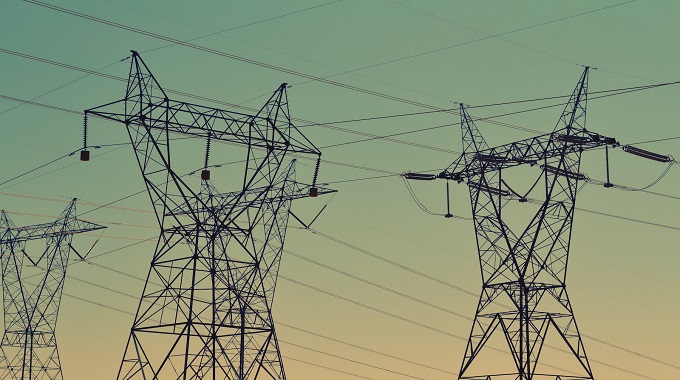
Nelson Gahadza
The mining industry says it is losing up to 10 percent of potential output due to power outages, while manufacturers say it is just yet another squeeze on margins.
The mining sector requires constant power supply in order to maximise on volumes at a time when most mineral prices are low, while the manufacturing sector accrues extra power costs as they adopt expensive alternatives such as generators.
The cost of running a diesel generator can go beyond USc36/kWh, compared to USc20/kWh for cleaner ZESA electricity.
Zimbabwe ramped up power cuts across the country as water levels at the world’s largest man-made reservoir, Lake Kariba, plunged due to an El Niño-induced drought, reducing the amount available for electricity generation.
This has left companies to devise different survival strategies to sustain operations in a difficult operating environment that is also characterised by exchange rate volatility and a lack of working capital.
According to the Chamber of Mines of Zimbabwe prospects for 2025 report, mining executives indicated that they were facing unscheduled power outages resulting in production stoppages and output losses.
“Analysis of survey data shows that the mining industry is losing up to 10 percent of potential output due to power outages,” said the Chamber.
In terms of tariff tolerance, it said about 93 percent of mining executives indicated that they would accommodate a tariff of less than USc10/kwh, while 7 percent indicated that they would tolerate a tariff of above USc10/kwh but not exceeding USc13/kwh.
The Chamber of Mines of Zimbabwe said analysis of tariff proposals shows that the average recommended tariff for the mining industry is around US$8,75/kwh.
According to the Confederation of Zimbabwe Industries (CZI) half-year 2024 Business and Economic Insights report, load shedding characterised the first half of the year as electricity generation was generally well below national demand, worsened by the El Nino-induced drought that reduced water levels at Lake Kariba.
Statistics from ZPC show that the average daily energy production for the first six months of 2024 was about 1322 MW at a time when national demand is about 1850 MW.
“A closer look at the statistics shows that the energy shortfall remained very high throughout the period, which has serious implications for business in terms of electricity availability as well as use of more expensive alternatives,” CZI said.
An industry representative body said the power situation continues to have a negative impact on business performance.
Victor Bhoroma, an economist, said companies are largely hamstrung by a punitive business environment, high inflation, inconsistent monetary policy and a volatile economy.
“As such, there is no way out of the ever-increasing cost of doing business locally. Firms have to adapt and evolve within the space provided or risk closing shop,” he said.
He said companies should invest in power generation to guarantee uninterrupted power supply to producers.
“There is no sustainable economic stability or successful economic blueprint without energy self-sufficiency,” he noted.
Meanwhile, the Chamber of Mines says apart from the power challenges, the sector is also saddled with structural issues affecting operations.
The industry says the current 75 percent foreign currency retention is inadequate to meet their operational requirements and funding of expansion projects.
It said survey data shows that the average foreign exchange retention that meets the mining industry’s foreign currency requirements is at least 85 percent.
“Respondents in PGMs, lithium and base metals highlighted that the 75 percent retention is now being applied on a shrinking base as mineral revenues were subdued due to softening commodity prices,” reads the report.
The Chamber noted that the retentions were under pressure as payment of electricity is wholly in foreign currency while most suppliers of goods and services are now demanding payment for goods and services exclusively in foreign currency.
“Labour unions are now demanding payment of wages wholly in foreign currency and the high royalty payable wholly in foreign currency.”
Chamber of Mines said the majority of respondents recommended a price-linked royalty, arguing that it will go a long way in balancing government revenue and mining sector viability.
According to the report, about 98 percent of the mining industry is required to surrender 25 percent of their export proceeds to the government in exchange for ZiG, liquidated at the prevailing official exchange rate.
“Of major concern to respondents is that they source local inputs that are priced at significantly depreciated parallel market rates, while their surrender portion is liquidated at the overvalued official exchange rate,” reads the report.
In terms of access to foreign currency, the mining industry measured index for prospects for improved access to foreign exchange for 2025 is -29.4, meaning that mining executives expect access to foreign currency to deteriorate in 2025.
The Chamber of Mines said the mining executives indicated that they were facing difficulties in accessing adequate foreign currency to meet their requirements.
The report noted that in the outlook, the majority of respondents, 94 percent, reported that they expect access to foreign currency to either worsen or remain depressed, as was the case in 2024, while 6 percent of respondent executives indicated that they expect access to foreign currency to be better in 2025.


 Online Reporter