admin
admin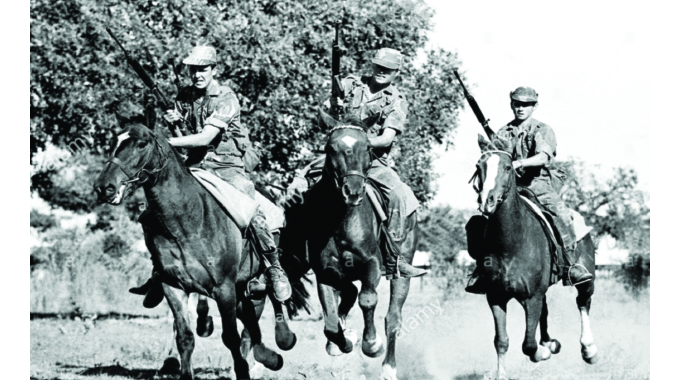
Canaan Nyika Mugadzahweta
Correspondent
We waited for them. They kept advancing towards us, silently. Thirty, 20 then 10 metres. My finger was ready on the trigger, safety catch on automatic. I could not hold myself anymore. They were so near . . .
My sixth sense was telling me to lead the afternoon patrol. We had information that the Rhodesians had moved downstream along Runde River, in the northerly direction towards Matibi Mission Hospital.
We were camped at Zhazhaumwe base under Chief Mawarire in Mwenezi along Runde River about 10km from Matibi Mission Hospital. Intelligence had also indicated that they had come from somewhere near or around Nhenga Railway siding.
Information indicating that the Rhodesians had been cited moving along Runde River, downstream was therefore correct. My worry was the sudden dearth of intelligence indicating their exact location.
It was impossible for the enemy to suddenly disappear into thin air. I had a premonition that the enemy was somehow trying to deceive us.
That the enemy also had information of our location, I suspected.
At around 2.30pm in the afternoon, I took four comrades for the afternoon patrol. We moved towards the north, a direction that would lead us to the proximity of the railway line. We were using the riverine vegetation, so we were actually moving along the river.
After about 2km we decided that we should now walk within the villages to obtain more information on the whereabouts of the Rhodesians. As we entered the villages, we found ourselves at Mudhara Job’s homestead. He was there. When he saw us he immediately rushed to us: “Message yasvika here?” He questioned me. (Did you receive my message, he queried).
Before I could answer, he asked me if everything was okay. “Hamuna kusangana murwizi umo here? Aiwa kana musina kuvaona vakuonai” (Did you meet them at the river? if you did not see them, they must have spotted you.) Cde zvinhu hazvina kumira zvakanaka, muvengi arimuno. (Cde things are not ok, the enemy is around).
I just gave a wink to Cde Manzungu and we took battle positions. I did not want to appear as if I was very worried about Mudhara Job’s information.
Inwardly, I agreed with him that the enemy must have seen us or that we could actually be in the enemy’s killing bag. I asked the old man how many enemy forces there were.
Before he could answer, Cde Manzungu drew my attention to a young boy, probably six-years-old running for his dear life towards us.
When he was about 50 metres away he shouted “Vari murwizi umo ndaona vari vana” (There are along the river, I saw four of them). I ordered both Mudhara Job and the young boy to clear. Again intuition told me they had seen us and were actually moving for the kill.
We remained in our positions. We did not have to wait for a long time. Just after a minute or so, we saw them in battle formation advancing towards us. They were idiots. How could they advance to a target they could not see? I had concealed myself behind a mango tree.
The other three comrades including Manzungu had taken positions near Mudhara Job’s three-bedroomed house. We knew, that with the surprise element, we could engage them and retreat without any fatality.
We waited for them. They kept advancing towards us, silently. Thirty, 20 then 10 metres. My finger was ready on the trigger, safety catch on automatic. I could not hold myself anymore. They were so near.
I aimed at the one who was at the far right near the mango tree. I pulled a trigger for a shot burst. The bullets ripped through his chest. Simultaneously the other comrades rapidly fired.
Two more went down. The third just threw his gun in the air and raised his arms in surrender. “Hold your fire”, I shouted to the comrades. “Stand still” I shouted to the enemy soldier, “ukafamba chete wafa!”(any movement you are dead). He froze instantly, shocked and bewildered. Trembling!
We advanced to check on those we had gunned down. They were dead. There was no life in them. Blood gushed from the huge holes punctured by the bullets. I ordered the enemy soldier to take off his clothes.
This is standard procedure in such situations. It leaves the enemy toothless, bare, naked and above all humiliated. I was not sure of the number of the enemy forces, some could still be lurking in the area and might shoot at us causing us harm.
We immediately left Mudhara Job’s homestead with our invaluable captive. In a short and quick debriefing, he informed us that their unit was based at Nhenga Railway Siding, that they had gone out of the camp for a beer drink and this eventually led them into an area under our strict control.
When we returned to our base, we found the comrades we had left there, ready for battle. They had heard the gunfire and were preparing to come to our rescue as reinforcements.
They were all surprised to see us frog-marching a black Rhodesian soldier (Mupuruvheya) into the base. I surrendered him to our security officer for interrogation. I was later told that the soldier’s unit had been based at Buchwa Mine and later deployed to Nhenga Railway Siding, and that more reinforcements were on their way from Salisbury (now Harare).
These were groups to be rapidly deployed in any engagement with helicopters as stop groups or fire force.
This was valuable information we would use in days to come. I decided to get rid of him that night. It was always a difficult task.
We were freedom fighters not murderers. How do you dispose of an unarmed man in the battlefield?
Nobody liked shooting and killing anybody at point blank range especially one who is unarmed. That image in most cases remains etched in your mind. It might haunt you too.
Most comrades refused to carry out such task. Moving around with him was too dangerous as this would attract unnecessary attacks on us or else he could disarm one of us. The question of letting him go free was out of the question. These were people who were paid murderers. The grief and cruelty they were inflicting on our people was unbearable and immeasurable. That night he would have his last supper. I decided. After supper, I called him to the command position, gave him a cigarette and after a good smoke, I told him to leave the base silently so that he could return to Nhenga siding.
Unbeknown to him, I had given two AK47 rifles to two mujibhas who were very excited to shoot an enemy soldier for the first time.
I had already selected an ambush position about 20 metres away from the base along the road the “freed” enemy soldier would be using.
About 40 seconds after he left, I heard the ear-splitting sound from two short burst of the AK47s and I knew my order had been carried out.
Canaan Nyika Mugadzahweta is also known by his Chimurenga name as Cde Brooks Chinembiri. He is a war veteran and retired civil servant. Here he writes in his personal capacity.


 Online Reporter