Tawanda Musarurwa, Zimpapers Business Hub
ZIMBABWE is heading for its largest current account surplus in years, Finance Minister Professor Mthuli Ncube has said, giving the Government renewed confidence that its goal of upper-middle-income status by 2030 is within reach.
The current account is a broad measure of a country’s dealings with the rest of the world.
A surplus means more foreign money is coming in, from exports and money sent home by citizens abroad, than is going out to pay for imports and other costs.
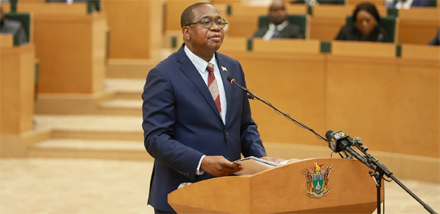
Presenting the 2027 National Budget, Minister Ncube said preliminary data showed a surplus of US$2,4 billion from January to September 2026, up from US$1 billion in the same period last year.
He projected it would pass US$3,5 billion by year-end, compared with US$2,1 billion in 2025.
“The favourable terms of trade and growing remittances during the period January to September 2026 have resulted in foreign currency receipts of US$15,9 billion, 33,7 percent increase compared to the same period in 2025,” Professor Ncube said.
Central bank figures in the budget show how sharply the position has changed.
The current account was in deficit in two of the four quarters of 2024 and in the first quarter of 2025.
According to RBZ data, the surplus in 2024 added up to only about US$500 million.
Then it took off. The surplus rose from US$271 million in the second quarter of 2025 to US$791 million in the third and US$1,09 billion in the fourth.
It dipped to US$579 million and US$548 million in the first two quarters of 2026, then jumped to a record US$1,38 billion in the third.
Exports are the main driver. Merchandise exports were US$5,2 billion in 2018 and about US$5,3 billion in 2020.
They hit US$11 billion last year and are projected at US$14,9 billion this year.
“The growth in export receipts over the past decade signifies that the economy is on a strong growth path,” Professor Ncube said.
Gold, tobacco, platinum, lithium and steel were the biggest earners.
Financial inflows from Zimbabweans abroad are the second pillar.
Remittances were US$1,2 billion in 2020 and US$2,8 billion in 2025. They are projected to pass US$3,2 billion this year.
Even though inflows from aid groups fell 44,7 percent and private loans fell 28,9 percent, total foreign currency receipts still rose 33,7 percent to US$15,9 billion, as exports and remittances more than made up the difference.
Foreign currency reserves, the country’s financial cushion, have also grown.
They rose from US$697 million in June 2025 to US$2 billion at the end of September, or about two months of import cover.
“This continued accumulation of reserves has strengthened the country’s buffer and enhanced the country’s capacity to withstand external shocks,” the finance minister said.
The figures matter because of the target set in Vision 2030, the Government’s plan to make Zimbabwe an upper-middle-income country by the end of the decade.
The World Bank defines that as gross national income per head of at least US$4 516 a year.
The National Development Strategy 2 (NDS2), which runs from 2026 to 2030, estimates that income per person was US$3 242 at the end of 2025. It aims to lift that above US$4 000 by 2028 and to about US$4 900 by 2030.
That requires growth averaging more than 5 percent a year. The economy was worth US$52,3 billion in 2025.
A strong current account supports that goal in practical ways.
Economic analyst Mr Persistence Gwanyanya said the country’s external position remains broadly resilient, although it is not immune to volatility in global markets.
“We have little control over the movement of global commodity prices, and there are always downside risks.
“But, we have seen and continue to see expanded production in the industrial and mining sectors, which will support the country’s export performance in the face of a possible softening of global commodity prices,” he said.
Mr Gwanyanya added that the sustained growth in Diaspora remittances will provide a critical buffer, helping the country to sustain a positive current account position even if commodity prices soften.
Increased foreign currency inflows help the central bank keep the local ZiG currency stable, make it easier for businesses to import machinery and raw materials and lower the risk of sudden shortages of dollars. The strategy also sets a target of raising reserves to three months of import cover, the international benchmark, and eventually to six months, the target for SADC countries.
Professor Ncube’s own forecasts show the boom may be peaking. He expects the surplus to narrow to US$3,4 billion in 2027 as export growth slows and commodity prices ease.
Imports are also rising fast. They grew 34,6 percent to US$9,7 billion in the first nine months of 2026, driven by fuel, machinery, raw materials, vehicles and chemicals.
The budget projects imports of US$14 billion this year and US$15,3 billion in 2027.
“Growth will be driven by higher demand for food arising from the anticipated 2026/27 El Niño-induced drought, as well as increased imports of electricity, fuel and machinery,” Professor Ncube said.
The surplus also depends on a few sources.
Exports made up about 69 percent of foreign currency receipts in the first nine months and gold and other minerals led the list.