Online Reporter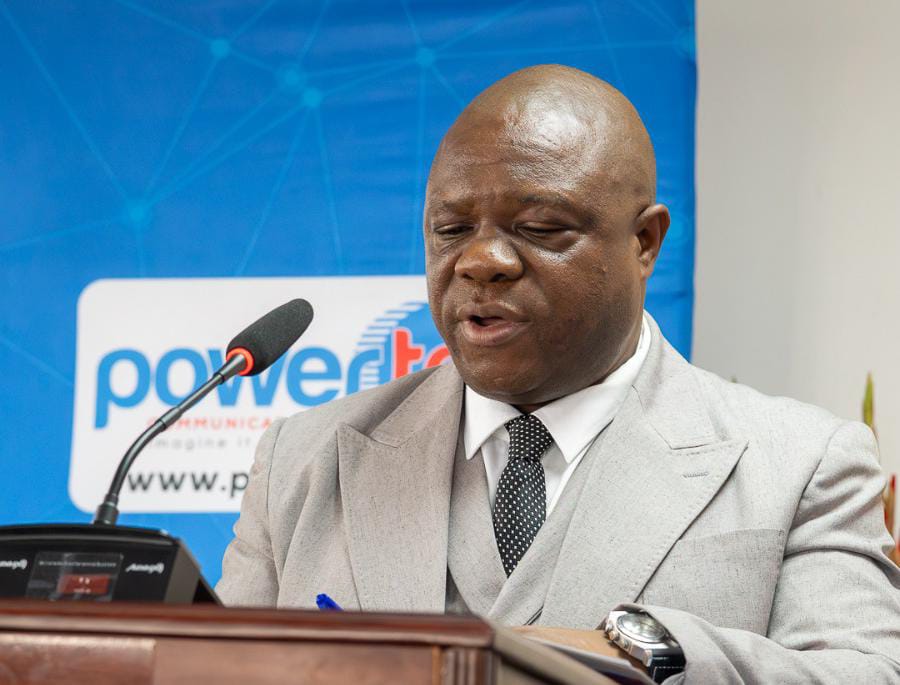
Nelson Gahadza
Senior Business Reporter
State-owned telecommunications firm Powertel says its 2026 growth strategy will be anchored on major capital investments in next-generation network infrastructure, artificial intelligence solutions and expanded broadband connectivity.
Powertel is looking to consolidate its turnaround and position itself as Zimbabwe’s national digital backbone.
Presenting the company’s performance and strategic outlook at the annual general meeting (AGM) yesterday, managing director Mr Willard Nyagwande said Powertel’s priority over the next 12 months would be accelerating network modernisation through the rollout of Long-Term
Evolution (LTE) technology, expansion of its high-capacity transmission network and investment in new digital solutions.
“We are solution-oriented and we continue to make sure that the competition respects us by doing the right thing.
“As we look ahead, Powertel is well positioned to become the national backbone company. If we continue investing in this business, we will be able to generate foreign currency from regional operators that continue to demand capacity through Zimbabwe,” he said.
He said the company’s immediate focus would be on completing critical infrastructure projects that will significantly increase network coverage and revenue.
Among the flagship projects is the commercial launch of Powertel’s new LTE network on September 1, 2026, following a USD 2,4 million investment to replace its obsolete Code Division Multiple Access (CDMA) platform.
Mr Nyagwande said management expects to have 65 LTE base stations installed, configured and generating approximately ZiG 300 000 in monthly revenue once the rollout is completed.
The company is also expanding its footprint into artificial intelligence-enabled services while strengthening its research and development capabilities through innovations such as asset-tracking solutions for vehicles, laptops, solar equipment and livestock.
“We are also working hard to establish a presence in the AI industry as part of our technology innovation strategy.
“Our research and development team continues to develop practical solutions that respond to customer needs while creating new revenue streams,” he said.
The telecommunications provider is simultaneously investing in transmission infrastructure after recently deploying Dense Wavelength Division Multiplexing (DWDM) technology, which dramatically increases the volume of data that can be transported across its fibre network.
Mr Nyagwande said the new system has given Powertel the largest equipped transmission capacity between Plumtree and Bulawayo, with active capacity reaching 800 gigabits and infrastructure capable of supporting up to 14 terabits.
“Today we can bring at least 800 gigabits of international traffic into Zimbabwe through Plumtree. If you compare this with our competitors, they do not have such a large backbone,” he said.
He said regional telecommunications giants, including Airtel and MTN, had already expressed interest in routing international traffic through Zimbabwe using Powertel’s infrastructure, presenting significant opportunities to earn foreign currency.
The expansion strategy follows a remarkable financial turnaround during the year ended December 31, 2025.
Mr Nyagwande said the company delivered strong growth despite operating in what he described as a highly competitive and capital-constrained market.
“The 2025 financial year marked a significant milestone in Powertel’s transformation journey. We remained focused on operational resilience, commercial expansion, network modernisation and disciplined cost management,” he said.
Revenue increased by 20,5 percent to ZiG 842 million from ZiG 699 million in 2024, driven by customer retention initiatives, commercial expansion and stronger internet business performance.
He attributed the growth to the company’s “NB Quad R” business model, which focuses on acquiring new customers, retaining existing clients, recovering lost business, repositioning services and strengthening revenue collection.
Powertel also expanded its internet capacity from just three gigabits to more than 45 gigabits while increasing total international bandwidth into Zimbabwe to about 70 gigabits.
At the same time, aggressive negotiations with upstream international providers significantly reduced bandwidth procurement costs.
“We previously reduced our bandwidth costs to below USD 10 per Mbps. I can now confirm that we have managed to reduce those costs to below USD 3 per Mbps,” Mr Nyagwande said.
“This enabled us to remain competitive despite increasing price pressure from customers demanding affordable internet services.”
The lower operating costs, coupled with improved procurement practices and stronger revenue assurance, resulted in earnings before interest, tax, depreciation and amortisation (EBITDA) surging by 307 percent to ZiG 247 million from US$60,85 million recorded in 2024.
Profit after tax reached ZiG 31,08 million compared to a loss of ZiG 145,28 million in the previous year, representing a 121 percent turnaround.
“This demonstrates that our operating model is commercially viable and that our core business is now generating sustainable economic value,” Mr Nyagwande said.
Mr Nyagwande said Powertel’s transformation had been achieved without external borrowing, with the company maintaining a zero loan book while financing capital expenditure from internally generated cash flows and strategic collaborations.
He said network reliability remained a key competitive advantage, with uptime consistently exceeding 98 percent as the company maintained what he described as zero tolerance to downtime.”
Deputy Minister of Energy and Power Development, Mrs Yeukai Simbanegavi, said Powertel’s transformation extends beyond improved financial performance, describing the company as a strategic national asset that will play a central role in modernising Zimbabwe’s electricity
infrastructure and advancing the country’s digital economy.
“The annual report reflects encouraging progress in strengthening operational performance, restoring profitability, expanding fibre infrastructure, improving customer retention and investing in next-generation technologies that will underpin Zimbabwe’s digital future. These achievements demonstrate resilience and unity of purpose,” she said.
The deputy minister said Powertel had become an indispensable component of Zimbabwe’s energy sector as the country accelerates the digitalisation of electricity infrastructure.
“Powertel Communications is far more than a telecommunications company. It is a strategic national infrastructure organisation that enables the efficient functioning of Zimbabwe’s electricity industry,” she said.
She added that the company was expected to work closely with sector institutions to support smart metering, remote monitoring of electricity infrastructure, predictive maintenance and improved customer service, while also contributing to Zimbabwe’s environmental, social and governance (ESG) objectives through digital technologies.
Mrs Simbanegavi also urged Powertel to position itself as a regional digital infrastructure provider as electricity markets become increasingly integrated across Southern Africa.
“As Zimbabwe strengthens its position within the Southern African Power Pool, telecommunications infrastructure will become even more critical.
“I therefore encourage Powertel to continue positioning itself as the preferred regional digital infrastructure partner supporting energy connectivity throughout the region,” she said.
The Deputy Minister said the Government expects the company to remain at the forefront of emerging technologies, including artificial intelligence, cloud computing, cybersecurity, hyperscale data centres and the Internet of Things, while maintaining commercial sustainability.