Online Reporter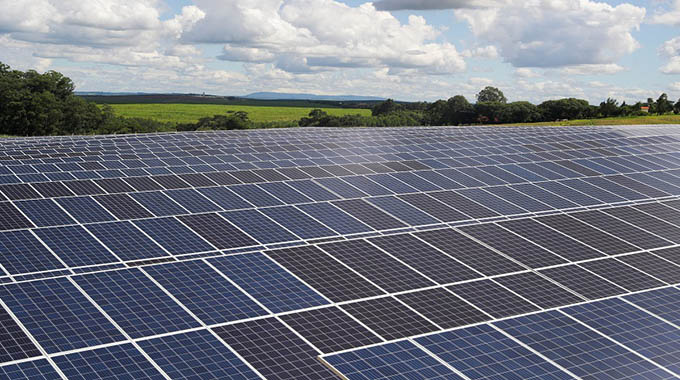
Nqobile Bhebhe, Zimpapers Business Hub
PPC Zimbabwe, the country’s largest cement producer, is moving forward with its planned 30-megawatt (MW) solar energy project, a vital component of its decarbonisation strategy that enhances energy resilience and reduces reliance on rising electricity costs.
The dual-phased renewable energy project comprises a 20MW embedded solar plant with battery storage at the Colleen Bawn, Gwanda, clinker manufacturing facility and a 10MW solar farm at the firm’s Bulawayo milling plant.
In 2022, PPC Zimbabwe completed the financial closure for the US$43 million solar project, expected to reduce the high energy cost as well as contribute towards the company’s decarbonisation initiatives.
With the Bulawayo plant requiring only 17 megawatts, the remaining 13MW is set to be fed into the national grid.
A total of 20 000 solar panels will be installed at a farm in Umguza, just next to the Bulawayo plant, while 40 000 panels will be put up in Colleen Bawn, Gwanda, with all the panels being the sun-tracking type.
“In Zimbabwe, we are developing a 30MW solar initiative with a 20MW embedded solar plant at Colleen Bawn and a 10MW solar plant at Bulawayo,” the company said in its latest 2025 Integrated Report for the period ended March 31, 2025.
“These projects are crucial to our decarbonisation strategy, expected to bolster energy resilience, mitigate rising electricity costs, and ensure compliance with evolving regulations.
“They demonstrate our commitment to environmental stewardship and sustainable value creation.”
The developments come as PPC seeks to enhance the sustainability of its Zimbabwean operations amid significant operational and market challenges in the 2025 financial year.
Power supply disruptions have often led to multiple production stoppages at the Colleen Bawn and Harare plants, while unreliable rail transport has hindered the delivery of essential raw materials.
However, PPC Zimbabwe has optimised its supply chain for quicker delivery times and implemented production efficiencies to control costs.
“FY25 faced both operational and market challenges,” the company acknowledged. “Power supply issues caused disruptions at the Harare and Colleen Bawn plants, while unreliable rail service delayed raw material deliveries.
“Despite these challenges, we improved turnaround times and adjusted our production strategy to reduce costs and enhance efficiency.”
On its part, the Government has undertaken several initiatives to improve the domestic supply of electricity, including the Hwange Power Station expansion and planned upgrades, as well as Kariba Power Station expansion.
Recurrent droughts have, however, limited output at Kariba due to reduced water availability. Several independent power producers have been issued licences, with some already feeding into the national grid while others remain work in progress.
Despite the notable efforts to boost demand, domestic power production continues to lag demand amid rapid economic growth.
The power demand can be as high as 2 200MW against an average supply of 1 400MW.
The cement manufacturer recorded solid financial results driven by robust cost management.
Revenue declined by 6,7 percent due to lower volumes, but earnings before interest, tax, depreciation and amortisation (EBITDA) rose to US$46,5 million (R849 million) from US$36 million (R675 million) in financial year 2024, increasing the EBITDA margin to 27 percent from 20,2 percent.
The Colleen Bawn plant achieved record clinker output, reflecting improved process stability and equipment utilisation, while the Harare factory reached its highest production levels since 2017.
Operational efficiency at Colleen Bawn was at 80 percent, with additional opportunities identified for further output increases.
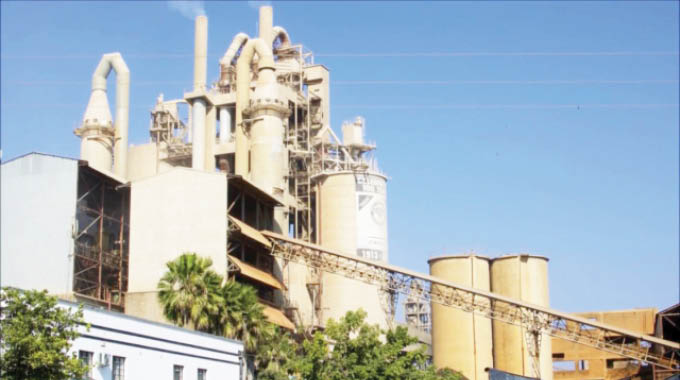
PPC continues to be a vital player in Zimbabwe’s construction sector, supplying a diverse range of cement products for residential, commercial, and infrastructure projects.
With a total installed capacity of 1,4 million tonnes per year across Colleen Bawn, Bulawayo and Harare, the company remains the market leader.
In response to competition from cheaper imports, particularly from Zambia, PPC Zimbabwe implemented strategic discounts for customers and sought internal efficiencies to maintain market share.
“Operating within a shifting regulatory landscape, we faced increased low-cost cement imports after the government lifted restrictions in January 2025.
This influx created pricing pressures and altered local market dynamics. We addressed this by offering targeted customer discounts and enhancing internal efficiencies to safeguard our market position,” the company added.
Despite these obstacles, PPC Zimbabwe is committed to long-term sustainability, with its renewable energy efforts aimed at reinforcing operational resilience and contributing to national climate action goals.