

 Online Reporter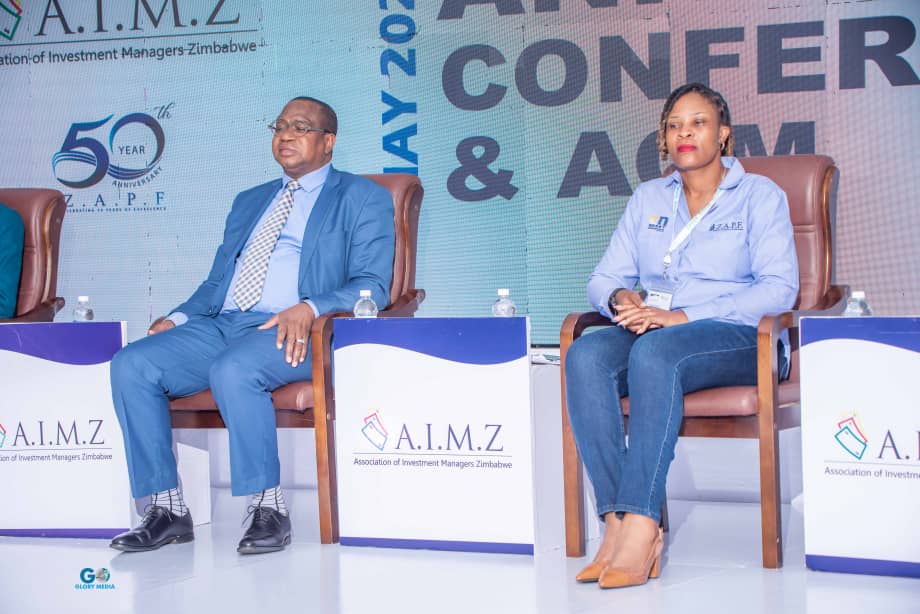
Tawanda Musarurwa, Business Hub
DESPITE delays in implementing compensation for pension fund members and life policyholders, who suffered value loss prior to 2009, the Insurance and Pensions Commission (Ipec), has reiterated that the matter will not be brushed aside.
Speaking at the 50th annual conference of the Zimbabwe Association of Pension Funds (ZAPF) in Victoria Falls, Ipec Director of Pensions, Dr Cuthbert Munjoma, stated:
“There is no going back on compensation. There is a misconception that compensation is linked to geopolitical factors. These factors are beyond the control of the funds and the shareholders of life companies. What we are trying to do is remedy the situation and move forward.”
Dr Munjoma’s remarks follow calls from some industry stakeholders to move past the compensation issue, arguing that the loss of value is a matter of the past. Presenting at the same event, First Mutual Holdings Limited’s Group Chief Actuary, Mr Livingstone Magorimbo, said that pension funds were not achieving the positive returns assumed in the compensation framework.
“I think we need to move from compensation to the augmentation of current pension values. We need to abandon the three percent implied in the compensation framework. Based on our research, historically, pension funds and life assurers have experienced negative returns, that is why we speak of value loss,” he said.
According to the regulations, pension funds and life assurers are required to compensate pensioners and policyholders at a compounded interest rate of three percent. Legal expert, Mr Nobert Phiri, emphasised that the industry has a legal obligation to comply with the compensation requirements.
“The Justice Smith Commission of Inquiry report was accepted by Parliament and by Cabinet. That report led to the promulgation of a Statutory Instrument outlining the compensation framework. That SI identifies the parties responsible for compensation, namely Government and pension funds and it remains in force. It has not been repealed or legally challenged. My respectful view is that it must simply be complied with.”
The pre-2009 compensation framework is outlined in Statutory Instrument 162 of 2023 (Compensation for Loss of Pre-2009 Value of Pension Benefits Regulations), which came into effect on 1 October 2023.
Under these regulations, pension funds and life assurers were required to submit compensation plans within 90 days of the effective date. Ipec would then approve the plans within 30 days, provided they met the necessary standards.
According to these timelines, compensation should have commenced by the beginning of the second quarter of last year. However, the regulator has revealed that many industry submissions have failed to meet the specified criteria.
One of the primary reasons for the delay is a lack of detailed data on members and policyholders by pension funds and life assurers. Speaking at Ipec’s annual general meeting last June, Commissioner Dr Grace Muradzikwa, highlighted the data gap:
“One of the observations from our team is that there is a lack of granular data, as required by SI-162. The pensions industry does not possess comprehensive data on contributing pensioners.
The reports we received were overly summarised, making it impossible for our teams to conduct the necessary reviews.”
SI-162 mandates the provision of specific data on pension funds’ active members, current pensioners, deferred and suspended pensioners, beneficiaries and individuals, who exited the fund due to death or other reasons, all of whom are entitled to compensation under defined contribution (DC) schemes.
For defined benefit (DB) schemes, only members, who exited during the investigative period are eligible for compensation.
Section Four of SI-162 of 2023 requires that all compensation plans include:
“An actuarial report clearly showing the cohorts of members to be compensated, the compensation amount per cohort, methodology, any assumptions made and the proposed sources of funding to redress the prejudice suffered by affected members;
and a detailed schedule of affected members showing their respective compensation payouts.”
The Government has announced that it has allocated US$175 million as its contribution towards the compensation process.


