tawandamusarurwa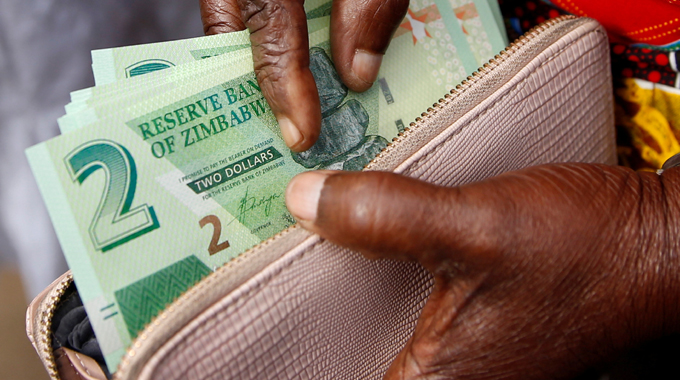
Various market watchers suggest different policies for Zimbabwe to pursue in its currency reform process. They range from adopting the exclusive use of the local currency, continuation of the dual/multicurrency system, full dollarisation or joining the Common Monetary Area that includes South Africa, Namibia, Lesotho and Swaziland. The biggest downside with the current dual/multicurrency system is that it is the system of choice for currency manipulators
Tawanda Musarurwa
IN 2009, following an unrelenting period of hyperinflation, Zimbabwe demonitised its currency — a process that was completed in 2015 — and adopted a multicurrency system.
While use of the US dollar, alongside a basket of other currencies, brought price stability, it also led to capital flight, erosion of monetary sovereignty and constrained economic development.
Overall, this eventually pushed Government to reintroduce the Zimbabwe dollar through the Finance Act No. 2 of 2019 and Statutory Instrument 212 of 2019, which provided for exclusive use of the local currency to settle all domestic transactions.
But the fallout from the Covid-19 pandemic forced Government’s hand to allow use of the United States dollar as legal tender in March 2020, alongside the reintroduced Zimbabwe dollar.
This was meant to limit the impact of the pandemic on the transacting public.
It is quite noticeable that Government has had to resort to using the US dollar either because of hyperinflation or after a black swan event.
The same trend is common in Latin America, which is arguably the most dollarised region in the world.
“The high degree of financial dollarisation seen in many Latin American countries is the legacy of severe economic crises in the 1980s and 1990s that destroyed confidence in economic policies and in holding savings in domestic currency,” reads an International Monetary Fund (IMF) paper titled “Stabilisation and reform in Latin America: a macroeconomic perspective on the experience since the early 1990s”.
“During the 1980s, Bolivia and Nicaragua experienced hyperinflation, while Argentina, Uruguay and Peru suffered years of very high and unstable inflation.”
Zimbabwe, however, can draw lessons from the country’s own previous experience with partial dollarisation.

In 2013, a local think tank, the Zimbabwe Economic Policy Analysis and Research Unit (ZEPARU), highlighted some concerns around the multicurrency system.
“The multicurrency system also poses a number of challenges. Although it was initially intended (for good reason) that the rand (ZAR) would be the reference currency, the United States dollar soon became the dominant currency for both accounting records and transactions, with even Government accounts being kept in United States dollars,” said ZEPARU in a research note at the time.
“This largely reflected the difficulties in obtaining ZAR currency, which in turn reflected South Africa’s unwillingness to have the rand circulating ‘unofficially’ outside of the Common Monetary Area (CMA) exchange control zone.
“With no restrictions on access to United States dollars, the choice of prices and wages are now usually agreed and quoted in United States dollars, while South Africa is Zimbabwe’s main trading partner.
“Movements in the United States dollar/rand exchange rate are, therefore, likely to have considerable effects on Zimbabwe’s inflation rate, competitiveness and international investment position.”
Zimbabwe’s industrialists do not see a future in a dollarised economy.
“As CZI (Confederation of Zimbabwe Industries), we support the current multicurrency system operating in our economy,” said CZI president Mr Kurai Matsheza.
“Ideally, we should have our own sovereign currency, but, unfortunately, it cannot be achieved overnight considering where we are coming from and the challenges we have.
“Certain fundamentals have got to be in place — import cover, consistent gross domestic product growth, et cetera — to be able to fully have our own currency and defend it.”
During the latter part of the multicurrency system, it became increasingly apparent to business that local production could not be sustained in such an environment, which made the country’s exports uncompetitive, hence the resultant growing calls to reintroduce the Zimbabwe dollar.
Latin American countries such as Ecuador have experienced similar challenges.
“The insistence on keeping the dollar as the national currency would seem to entail a dependence on its being weak in the long run, which is very unlikely,” writes University of the Pacific (Peru) professor Gonzalo Paredes in a 2017 CEPAL Review paper.
“The current disadvantage of Ecuador’s relative prices with its main trading partner is a serious problem for the country’s export sector, considering that, as Falconí and Oleas (2004) put it, ‘dollarisation suffers from a number of deep-seated problems, the most serious of which is structural, with long-run effects on the country’s economy: productivity’.”
Development economist Dr Prosper Chitambara said a currency has to inspire confidence as both a medium of exchange and store of value if it is to succeed.
“Once there has been a loss of confidence in a currency, it takes a lot of time to recover that confidence, and that process must involve the implementation of robust monetary, fiscal and institutional reforms.
“On the monetary side, we have seen the liberalisation of the exchange regime, which is positive. But fiscal policy has remained, in my view, expansionary.
“Ultimately, we need a social contract with clear deliverables, which is binding on everyone. This we see in a number of countries that have experienced challenges similar to what we are experiencing, like in Latin America.”
Various market watchers suggest different policies for Zimbabwe’s currency reform process. They range from adopting the exclusive use of the local currency, continuation of the dual/multicurrency system, full dollarisation or joining the Common Monetary Area that includes South Africa, Namibia, Lesotho and Swaziland.
The biggest downside with the current dual/multicurrency system is that it is the system of choice for currency manipulators.
Multicurrency system and speculation
In a dual or multicurrency system, arbitrage opportunities arise due to parallel foreign currency markets that offer premiums that are beyond official market levels.
Before the recent interventions by Government to tame market volatility, there was a notable trend where both companies and individuals were intentionally seeking unwarranted super profits by creating and taking advantage of arbitrage opportunities.
Sometime in April 2023, the Reserve Bank of Zimbabwe (RBZ)’s Financial Intelligence Unit (FIU) froze the bank accounts of four major distributors —Saxin Trading, Simrac Enterprises, Brainscope Investments and Munella Enterprises — for “engaging in illegal business practices in breach of the Bank Use Promotion Act (Chapter 24:24) and the Exchange Control Act (Chapter 22:05).”
Speculative tendencies have also presented as a survivalist response for those who experienced the harsh reality of the 2008 hyperinflation era.
Experts say inflationary psychology is premised on the basic concept that if prices are rising and have risen in the past, then the various economic agents will expect prices to continue to rise in the future, and, thus, behave accordingly.
Over the period that the US dollar has been used as legal tender, since March 2020, the FIU has implemented a number of measures to curb speculation.
The measures, largely technical, have somewhat markedly reduced the pace at which the Zimbabwe dollar has devalued, but they have not eradicated the depreciation, largely because demand for the US dollar has remained high, not only by industry, but by individuals who use it for value preservation.
Following the reintroduction of the Zimbabwe dollar in June 2019, the authorities put in place a five-year de-dollarisation roadmap, detailing how the economy would transition over the period.
The introduction of the wholesale auction system on June 7, 2023, which allows the market to determine the official exchange rate, is a positive move by the central bank, as it will help close the gap between the parallel market and interbank rates.
The elimination of arbitrage opportunities will go a long way in solving present currency challenges.
Increased allotment for the wholesale auction system will allow banks to hold more foreign currency.
It is then up to the banks to come up with a convenient arrangement for the market to access foreign currency from the formal system.
In the interim, the central bank has been forced to increase interest rates to deal with inflation.
Earlier in June, the RBZ increased the bank policy rate from 140 percent to 150 percent per annum, and raised the medium-term bank accommodation interest rate from 70 percent to 75 percent per annum.
It is, however, important that there is adequate foreign currency to relatively satisfy the market so that arbitrage opportunities do not re-emerge.
Official data shows that last year, total foreign currency receipts amounted to US$11,6 billion, compared to US$9,9 billion in 2021, an increase of 17,3 percent.
Among many other reforms, the RBZ should build on its foreign currency reserves, which it can then use as a buffer to protect the Zimbabwe dollar.


 Online Reporter