Chronicle Editor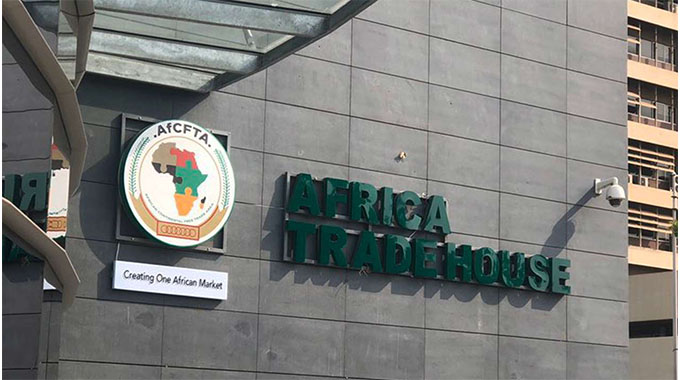
Sikhulekelani Moyo, Business Reporter
GOVERNMENT has rallied producers to scale up the development and strengthening of critical economic value chains in order to position the country to fully exploit opportunities under the African Continental Free Trade Area (AfCFTA).
The AfCFTA is one of the flagship projects of ‘Agenda 2063: The Africa We Want’ and provides a framework for increased regional production and exports.
By eliminating barriers to trade in Africa, the objective of the AfCFTA is to significantly boost intra-Africa trade, particularly trade in value-added production and trade across all sectors of Africa’s economy.
Zimbabwe is one of the pioneer countries that embraced the AfCFTA, which offers a huge market estimated at US$3,4 trillion with more than 1,2 billion people.
In a speech read on her behalf by the acting chief director, Mr Innocent Madziva, during a validation workshop on the development of local content thresholds for the fertiliser, packaging, and pharmaceutical sub-sectors on Friday, Industry and Commerce Minister, Dr Sekai Nzenza, stressed the need to increase the use of locally generated inputs to manufacture products, which will be able to meet the AfCFTA rules of origin.
“With the coming of the AfCFTA there will be increased access to markets for Zimbabwean products. This calls for increased use of locally generated inputs within our manufacturing processes so as to meet the agreed rule of origin thresholds and be able to trade at preferential duty rates,” said Dr Nzenza.
The ministry jointly organised the validation workshop with the United Nations Economic Commission for Africa (UNECA), which aims to support the National Development Strategy (NDS 1) thrust of supporting industrialisation and enhancement of local content threshold in the production of goods and commodities.
The transformation and diversification of the local industry is guided by an US$8 billion Industry and Commerce Roadmap, which is derived from NDS1. The roadmap sets out pragmatic plans to bring in structural transformation and move up the value chains.
Under this strategy, Zimbabwe has come up with 10 priority value chains for the period 2021-2025, which include cotton to clothing, sugar, soya, dairy, leather, fertiliser, bus and truck, iron and steel, waste plastic, and pharmaceutical value chains.
By moving the economy up the value chains and fostering structural transformation national priority, the minister called for the development and strengthening of value chains, as well as transforming the country from being an exporter of raw products to that of finished products.
She said such structural transformation can only be effectively achieved if the country exploits more of the locally generated resources.
Speaking at the same event, Mr Tichaona Mushayandebvu, who is United Nations Industrial Development Organisation (UNIDO) country representative and was standing in for the UN resident coordinator, Mr Edward Kallon, said that UNIDO intends to closely collaborate with other specialised UN economic agencies to support Zimbabwe’s re-industrialisation, economic growth, and competitiveness agenda. — @SikhulekelaniM1


 Online Reporter