Online Reporter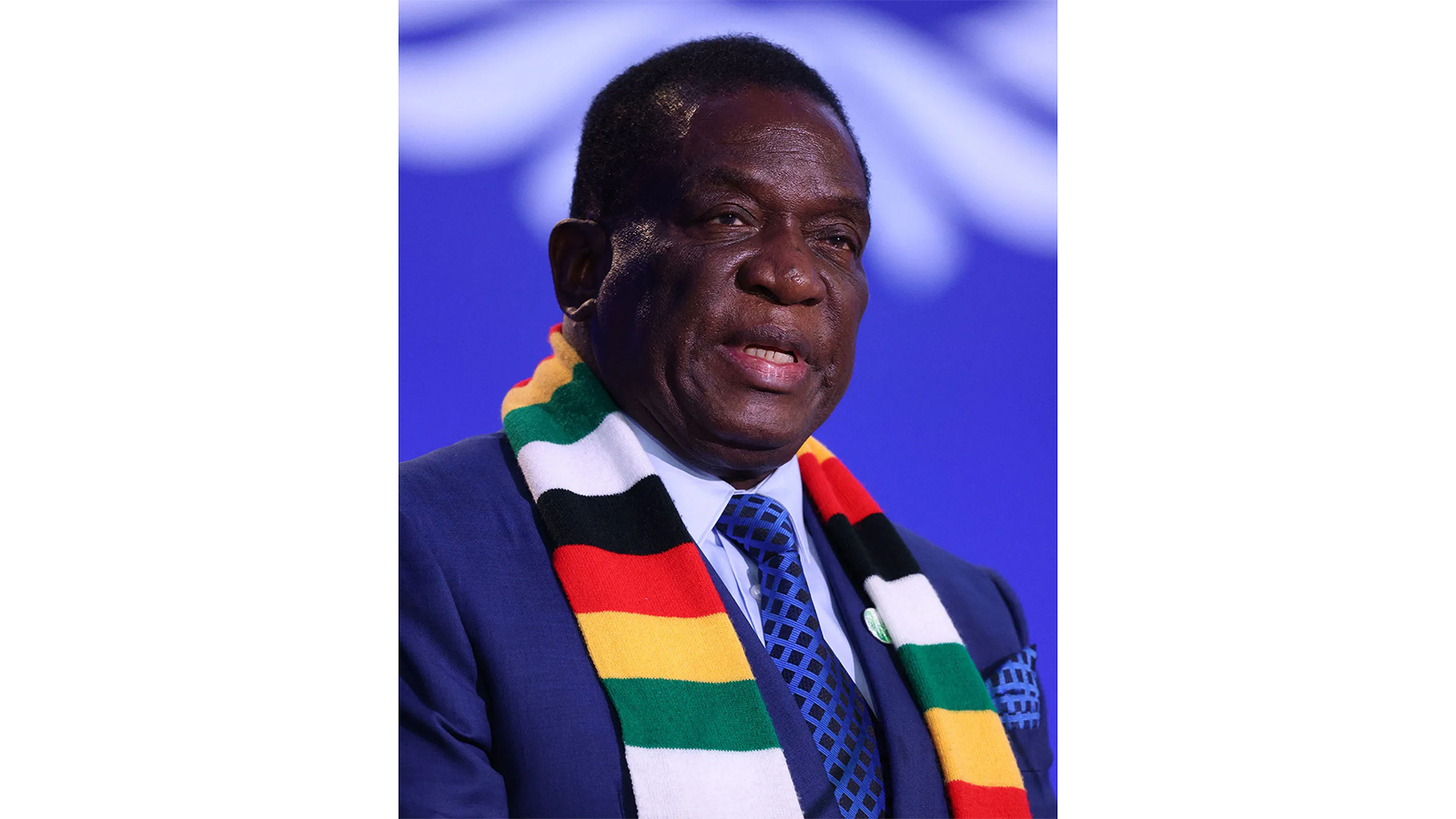
Nyore Madzianike-Senior Reporter
PRESIDENT Mnangagwa has called on the African Union and the Caribbean Community (CARICOM) to work together to advance justice and reparations in line with the priorities of both bodies.
Unity would enable and further strengthen engagement on reparations with backing of the global African diaspora and other international stakeholders.
President Mnangagwa made the remarks at the 2nd African Union-Caribbean Community (AU-CARICOM) summit held yesterday in Addis Ababa, Ethiopia.
He was represented at the summit by Minister of Justice, Legal and Parliamentary Affairs Ziyambi Ziyambi.
President Mnangagwa also underscored the importance of a shared commitment to form a strong alliance with CARICOM and the global African diaspora in pursuit of reparations and reparatory justice.
The summit was running under the theme ‘Justice for Africans and People of African Descent Through Reparations’.
Heads of State from African countries such as Mozambique, Ghana, Mauritania, Malawi and Angola plus Caribbean countries participated at the summit.
UN Secretary-General, Presidents of the World Bank and IMF, Heads of the African and Caribbean Development Banks, Executive Heads of UNEP, UN-Habitat and AfreximBank, Heads of other strategic regional and global partners also took part.
CARICOM has 15 full Member States: Antigua and Barbuda, Bahamas, Barbados, Belize, Dominica, Grenada, Guyana, Haiti, Jamaica, Montserrat, Saint Kitts & Nevis, Saint Lucia, Saint Vincent & the Grenadines, Suriname, and Trinidad & Tobago.
There are six associate members which are territories of Britain and the Netherlands Crown: Anguilla, British Virgin Islands, Cayman Islands, Curaçao, and Turks & Caicos.
The objectives of the summit were to reaffirm and elevate the political and diplomatic commitment to AU-CARICOM cooperation and adopt a joint communiqué articulating shared development priorities and global policy positions.
It was aimed at fostering dialogue on key thematic areas of reparatory justice, economic cooperation and development, governance and State-building, and global advocacy and multilateral cooperation.
The summit strengthened institutional frameworks for investment, trade, transport, and technical cooperation between the two regions, and showcased and amplified the cultural, historical and economic linkages binding the two regions.
The majority of the Caribbean population is of African descent with large numbers of African slaves shipped to the Caribbean until the 19th century bans first on the slave trade and then on slavery. Even after slavery was ended, most of the Caribbean countries, like most of Africa, were colonies of European countries.
“The theme of this summit aligns with the AU Theme for 2025, which is “Justice for Africans and People of African Descent Through Reparations.”
“It underscores the importance of our shared commitment to forming a strong alliance with CARICOM and the global African Diaspora in pursuit of reparations and reparatory justice. In fact, reparatory justice has become a vital issue worldwide, with growing acknowledgement that historical wrongs must be rectified through restitution, acknowledgement and transformative policies.
“It is a call to action that resonates not only within our governments but also deep within the hearts of our people.
“Reparatory justice also catalyses contemporary political and economic renewal,” said the President.
President Mnangagwa acknowledged that his call will be faced with resistance from the perpetrators of the slave trade, colonialism and apartheid, as was witnessed by sanctions unilaterally imposed on Zimbabwe when it tried to correct historical injustices.
He said for centuries, Africa and the Caribbean endured brutalities of colonisation, exploitation and slavery and epic human rights violations that stripped millions of their dignity, identity and opportunity.
“The scars of these historical injustices are not merely relics of the past but are woven into the very fabric of our contemporary societies, evidenced by systemic inequalities, socio-economic disadvantages and a persistent sense of disenfranchisement.
“This is not just about addressing past wrongs, but about building a united front founded on a just and equitable future, which serves as a meaningful expression of remorse from the perpetrators,” he said.
President Mnangagwa indicated that the summit offered a platform for joint advocacy, paving the way for common statements at global forums such as the UN General Assembly and the G20.
He indicated that AU and CARICOM should call for reparations that go beyond simple financial compensation, but that also serve to recognise the dignity of people and represent an acknowledgement of the pain and suffering endured by ancestors.
“Therefore, the primary reparations, both our people long for, must begin with a sincere and heartfelt ‘Sorry’, a word that carries the weight of accountability, empathy, and the first step towards genuine reconciliation,” he said.
President Mnangagwa said in line with the objective of the summit, Zimbabwe supports the establishment of the Transcontinental Partnership Framework, which encompasses the African Union, CARICOM, and the African diaspora worldwide.
He said the framework will be based on the resolution of the Global African Diaspora Summit held in South Africa in 2012 and the subsequent AU Assembly Decision 847 of February 2023, which, among other things, called for the establishment of an African Caribbean Joint Mechanism on Reparative Justice.
He indicated that the new framework will build a strong common front among the stakeholders in pursuit of reparations and reparatory justice at the global level.
“We must champion our shared priorities by building strong partnerships and enhancing our global leadership in justice, reparations, and sustainable development.
“Our pursuit of reparations should be bold, coordinated, strategic, and based on both historical truth and current geopolitical realities,” he said.
The President said although this is a long-term effort, with unity and clarity of purpose, Africa and the Caribbean could become a powerful force for global justice.
He said while he recognises that justice is a multifaceted concept, reparations should encompass a wide range of initiatives that include economic empowerment.
“We are grateful that, under the auspices of the African Union, African leaders and peoples are seeking to coordinate and strengthen efforts to promote development and achieve the goals of the “Africa We Want,” as outlined in our AU Agenda 2063, the blueprint guiding Africa toward its envisioned future.
“In this regard, we urge the rest of the world, including Africa’s 6th Region and the Diaspora, to invest in our economies, industries and infrastructure to create sustainable job opportunities for our people.
“Development must be fair and inclusive, ensuring that the benefits reach those who have been historically marginalised,” he said.
The President called for stronger cooperation between Africa and CARICOM to enable both regions to achieve economic growth.
President Mnangagwa called for the restructuring of the UN Security Council and attainment of a permanent African seat at the G20 to achieve fair global governance.
“True justice cannot exist without representation and the ability to influence decisions that affect our lives and communities.
“In this regard, Political Representation for Africa and CARICOM becomes essential, ensuring that Africans and people of African descent have a voice at all levels of government and policy-making.
“For example, Africa’s call for restructuring the UN Security Council and gaining a permanent seat at the G20 reflects the continent’s desire for fair representation in global governance.
“With over 1,3 billion people and significant contributions to global peace, security and economic growth, we argue that our inclusion in these key international forums is vital for addressing current challenges and promoting a more balanced and inclusive decision-making process.
“Strengthening Africa and CARICOM’s voice in these institutions would not only increase legitimacy but also encourage collaborative solutions to urgent global issues,” he said.
President Mnangagwa also said Zimbabwe supports proposals and recommendations that call for a formal collaboration between the African union and the Caribbean Community to establish a reparations joint mechanism.
He said this mechanism will act as a vital cog to unify strategies, enhance global representation and coordinate actions, particularly in preparing and presenting cases to international courts, including the International Court of Justice.
“In addition, we support the proposal to engage and include the Global African Diaspora in broadening the global reparations movement, in collaboration with Western nations, the United Nations, and other international stakeholders,” he said.
The first Africa-CARICOM Summit was virtually held in Kenya on September 7, 2021, and Zimbabwe participated in the inaugural summit.
The summit, among other issues, called for the lifting of punitive and unilateral sanctions and embargoes against Cuba and Zimbabwe to allow them to pursue their development aspirations.
The Summit also institutionalised the cooperation between Africa and CARICOM and the diaspora by designating September 7th of every year as Africa-CARICOM Day.