

 Online Reporter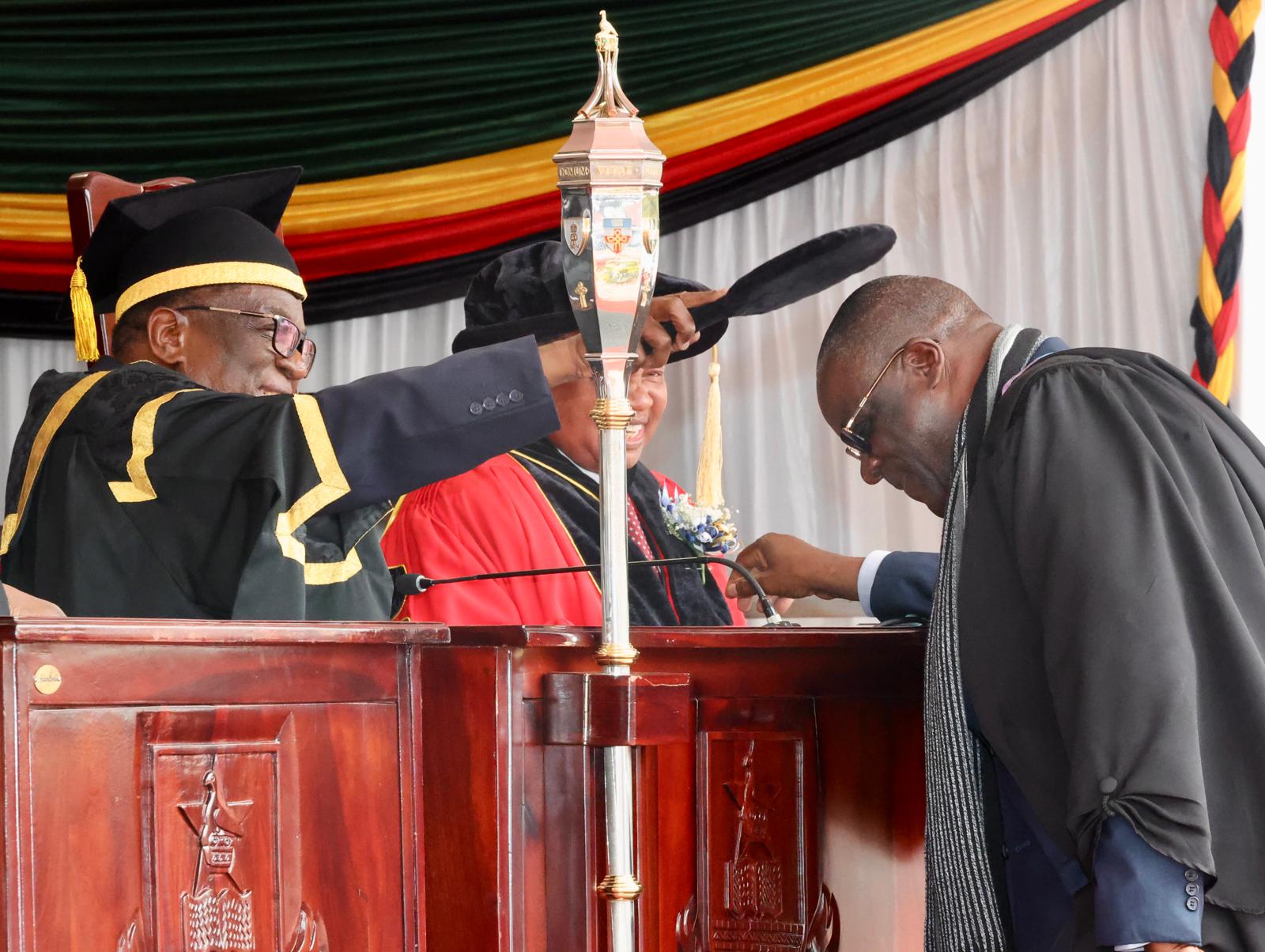
Zvamaida Murwira, Senior Reporter
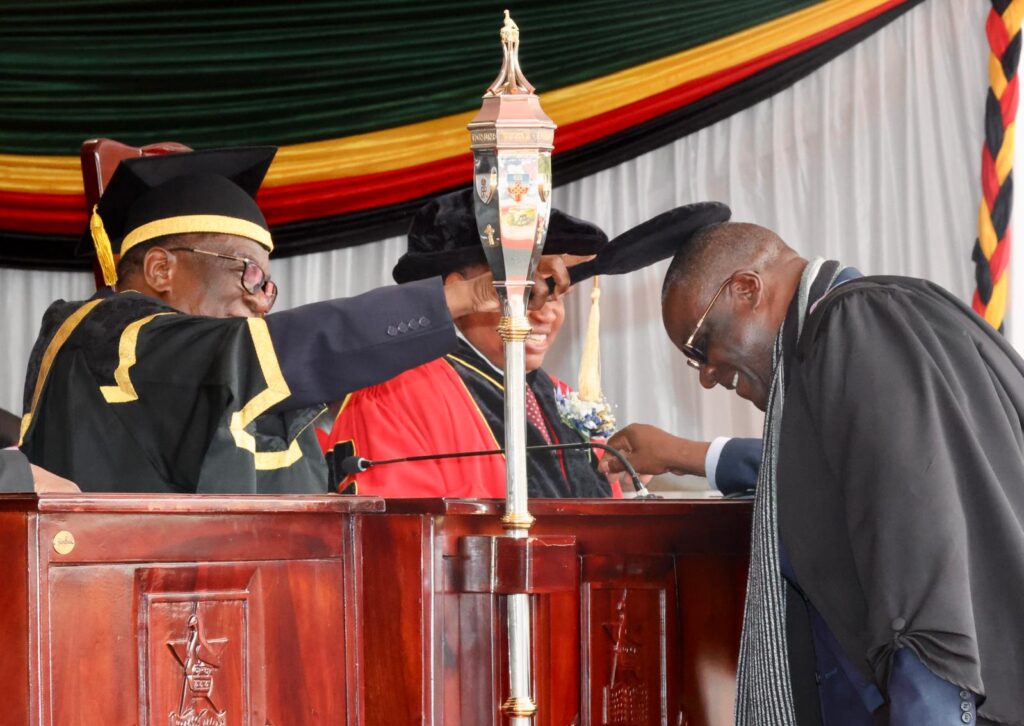
PRESIDENT Mnangagwa yesterday capped 7 132 graduates at the University of Zimbabwe’s 45th graduation ceremony, as the institution continues to expand its focus on research, innovation and industrialisation through its Heritage-Based Education 5.0 philosophy.
The graduation ceremony also highlighted the university’s growing entrepreneurial ecosystem, with 75 start-up companies having been established and registered, 60 of them student-led.
President Mnangagwa, who is Chancellor of all State universities, conferred Doctor of Philosophy, master’s, undergraduate and diploma qualifications across various faculties.
These included Arts and Humanities, Business Management Sciences and Economics, Engineering and the Built Environment, Law, Medicine and Health Sciences, Social and Behavioural Sciences and Veterinary Sciences, among others.
Of the 7 132 graduates, 53 percent were female, reflecting the continued participation and advancement of women in higher education.
The President capped first-class and distinction graduates, as well as 15 award winners, 34 graduates with disabilities and 37 others, who received special recognition.
Speaking at the ceremony, UZ Vice Chancellor Professor Paul Mapfumo said the Heritage-Based Education 5.0 philosophy had transformed the institution’s approach to research, innovation and industrialisation.
“In the area of research, innovation and industrialisation, the University registered a number of notable achievements,” he said.
“I am happy to report that the University has cumulatively established and registered 75 start-up companies, which are at various stages of business development.
“Of these, 60 are student-led, 13 University-owned, one community-led and one industry-led. These enterprises form a new regime of industries that speak to our people’s aspirations in line with the tenets of our National Development Strategy 2.”
Prof Mapfumo said the university’s start-ups had produced more than 350 goods and services, with about 200 steadily penetrating local and international markets.
“These companies are investment-ready and open to national and international venture capital to take them to the next level,” he said.
The start-ups have participated in international platforms including the Paris VivaTech 2026 Exhibition in France and the Korea Knowledge
Prof Mapfumo said potential partners included the Zimbabwe Investment and Development Agency (ZIDA), ZimTrade, the Confederation of Zimbabwe Industries (CZI), National Venture Capital Company of Zimbabwe (NVCCZ) and the Zimbabwe National Chamber of Commerce (ZNCC).
Local authorities have also expressed interest in partnering with the university.
“As part of our endeavour to contribute to the Government’s rural industrialisation agenda, the University of Zimbabwe has been strengthening its community laboratories, utilising science, technology and innovation to improve livelihoods,” Prof Mapfumo said.
He said the university’s start-ups were implementing inclusive value-chain development models involving more than 2 000 smallholder farmers and ordinary citizens across strategic agricultural value chains.
The graduation ceremony ran under the theme: “Critical human capital for Zimbabwe’s industrialisation and competitiveness.”
Prof Mapfumo also highlighted the establishment of the first National Minerals Research Centre and the university’s work in the value addition of lithium, rare earth minerals and uranium.
Other milestones included the establishment of a Bioequivalence Testing Laboratory and the recent launch of an industrial incubation centre.
The university also hosted 12 high-level delegations from the region and beyond, including representatives from the African union Commission and the African union Development Agency-NEPAD.
Notable graduates included Deputy Chief Secretary in the Office of the President and Cabinet responsible for Presidential Communications, Mr George Charamba, who graduated with a Master of Arts degree in African Economic History and Knowledge Systems.
Harare lawyer Mr Oscar Nyamunokora was conferred with a Doctor of Philosophy in Social and Behavioural Studies, while the former Editor of The Herald, Caesar Zvayi, graduated with a Bachelor of Laws (LLB) Honours degree.
Legislator Dr Energy Mutodi graduated with a Master of Laws in Constitutional and Electoral Law, while Zimpapers staffer Berven Fombe obtained a Bachelor of Arts Honours Degree in Journalism, Media and Broadcasting.
Among those receiving special recognition were Blessing Kugwa and Arthur Mapato, who received US$1 000 each after being named the best overall female and male students, respectively.
Kugwa graduated with a Bachelor of Science Honours degree in Actuarial Science, while Mapato graduated with a Bachelor of Science Honours degree in Mathematics and Computational Science.
Other recipients of the Emmerson Dambudzo Mnangagwa Chancellor’s Award received US$500 each.
They were Priscilla Makuvise, the Best Overall Graduating Law Student; Stanley Chivanga, the Best Overall Graduating Engineering Student; Michelle Vivian Banda, the Best Overall Graduating Life Sciences Student; and
Mapato, the Best Overall Graduating Science Student.
Overall, Mapato received US$1 500 after winning two awards.
Speaking after his graduation, Mr Charamba said he intended to continue with his academic pursuits, given the demands of his work.
“It is a bridging programme. I intend to do a higher degree in the area of history. So, in a way you could consider this a transitional qualification; the big one is coming.
“Well, in my line of work, I have to be what they term the universal man or the Renaissance man who is gifted in practically every aspect of human endeavour.
“So, for you to function quite effectively, you then have to have the tools for different challenges that our society faces. And of course, serving a person like the President means you really have to be alert, to be on the cutting edge of
knowledge and that is what I am trying to do,” said Mr Charamba.
The ceremony was attended by Higher and Tertiary Education, Innovation, Science and Technology Development Minister Dr Frederick Shava, Cabinet Ministers, vice chancellors from other universities, captains of industry and senior Government officials.


 Peter Tanyanyiwa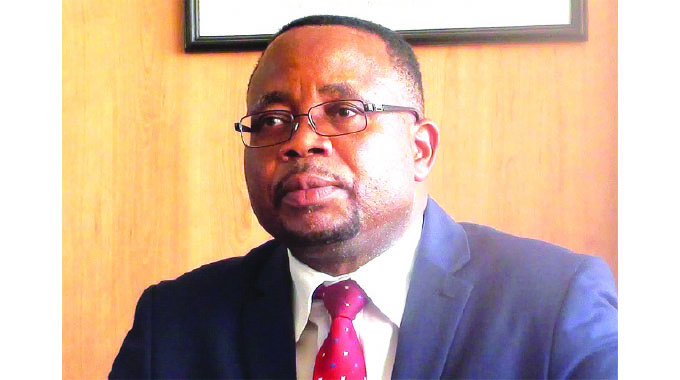
I have observed thousands upon thousands of graduates churned out of our universities for decades now. Where are they? Why are we still struggling with skills gaps when we churn out so many “highly qualified” people in this country? If we look at our government, industry and social environments, one in every three people has a doctorate. Zimbabwe is a land of “doctors” yet it suffers from basic human problems. Of late we are seeing too many students passing with First Class. Is this a sign of advanced mental development of more students or our curriculum is now exhausted like we see at O and A-level where students write as many as twenty subjects and ace them all? It was hardly unheard of during our time that so many graduates would pass with First Class Honours in any degree. Today it is like fashion.