Online Reporter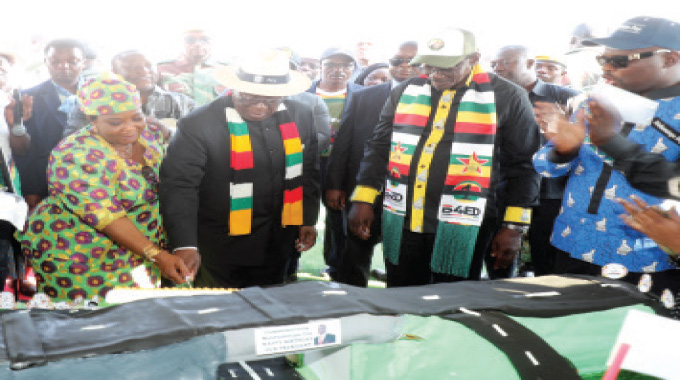
Elliot Ziwira, Features & Supplements Editor
On Monday, the nation celebrated Munhumutapa Day, honouring the legacies of heritage and identity.
It is, therefore, befitting to pause and reflect on President Mnangagwa, affectionately known as ED, a leader whose story echoes the spirit of the Munhumutapa Empire.
Beyond being a statesman of our age, he has become a custodian of memory, a torchbearer of sacrifice, and a practitioner of servant leadership, which was the hallmark of Munhumutapa guardianship.
It has to be recognised that Munhumutapa Day is not about looking back at the majesty of a pre-colonial empire. It is about revisiting the values that sustained it; unity, inclusivity, resilience and custodianship.
The Munhumutapa leaders understood that authority was not for personal glory, but for guardianship of the people’s destiny. Leadership was measured not by how much wealth a king amassed, but by the extent to which the people flourished under his watch.
As Zimbabweans mark Munhumutapa Day, they do so with the knowledge that history is not static. The same ethos that once powered an empire is alive in ED’s journey. It is a journey characterised by struggle, sacrifice, vision and a determination to leave no one and no place behind.
The Munhumutapa Empire rose in the 15th century and flourished for generations, defying the vagaries of time and the encroachment of hostile forces.
Its resilience came not from material strength alone, but from a shared belief in identity and collective destiny.
That same spirit finds echoes in ED’s story. From a young man who joined the liberation struggle in defiance of colonial subjugation, to a seasoned statesman navigating the challenges of governance in a globalised world, his life demonstrates that determination is the true measure of leadership.
As often observed, the liberation struggle was never about individual gain. It was about restoring dignity to the dispossessed. ED’s role in that struggle, from enduring imprisonment to carrying the burden of exile, speaks to the Munhumutapa tradition of collective guardianship: the leader’s role as a servant of the people.
Leadership worth its salt is forged in fire. ED’s formative years in the liberation movement demonstrates that true authority is earned through sacrifice, conviction and courage.
Arrested, tried and sentenced to death as a young nationalist, he escaped the hangman’s noose by virtue of his age, yet endured the harshness of prison life. Like the Munhumutapa leaders, who resisted foreign incursions, he bore pain so that others could be free.
This sacrifice matters, because it contextualises his leadership today. His belief in empowering young people, expanding education, defending sovereignty and uplifting rural communities is not a rhetorical flourish.
That is the natural outcome of a life dedicated to service. For ED, liberation was not a chapter that ended in 1980.
It is an unfinished book, one that must be completed by strengthening independence through economic empowerment, national unity and modern development. It has to be stressed that servant leadership is not a slogan, no! It is a way of governance. Just as Munhumutapa custodians invested in the welfare of their people, ED has prioritised projects that speak to everyday needs.
These include infrastructure development, agriculture, youth empowerment and industrialisation.
From roads like the Harare-Beitbridge Highway to new dams and power projects, ED understands that development is about connecting communities and creating opportunity.
Through promotion of climate-proofed initiatives like Pfumvudza/Intwasa and investments in irrigation, he has anchored food security on the principle that a nation cannot be sovereign if it cannot feed itself.
Munhumutapa leaders, as history recalls, incorporated diverse communities into a shared kingdom. ED echoes this inclusivity by insisting that the future belongs to young people who must be skilled, empowered and inspired.
Moreover, through initiatives to revive manufacturing and mining, he is laying the foundation for a Zimbabwe that can sustain itself in a competitive global economy.
Yet, these are not isolated policy points. They are a continuation of the Munhumutapa tradition of stewardship to safeguard today while preparing for tomorrow. This year’s Munhumutapa Day coincided with the International Day of Democracy, making the symbolism unmistakable.
Democracy, like servant leadership, thrives only when leadership is about the people, not the self.
ED has consistently stressed dialogue, tolerance, and inclusivity. His Political Actors Dialogue (Polad) initiative, his calls for peace during elections, and his emphasis on unity across political divides reflect the belief that democracy is not an imported model, but a homegrown culture of dialogue.
His mantra, “Zimbabwe is open for business”, goes beyond economics to embrace a spirit of openness, inclusivity, and participation. Similarly, his promise to “leave no one and no place behind” captures the Munhumutapa ethos of weaving diversity into a single national fabric.
History, as often argued, is not a closed book to be shelved. It is a living guide, whispering lessons for those willing to listen.
Munhumutapa Day is more than nostalgia. It is about inspiration as well.
The Munhumutapa leaders left us with a legacy of visionary leadership, resilience, and inclusivity. ED’s story aligns seamlessly with this legacy. His life is a narrative of continuity; from pre-colonial guardianship, through colonial resistance, into the post-independence project of nation-building. Rooting his leadership in history’s soil, ED inspires Zimbabweans to see themselves not as passive spectators of change, but as active custodians of their own future.
For today’s generation, especially the more than 30 000 youths who gathered in Zvishavane, the Midlands Province, for this year’s Munhumutapa Day commemoration, ED’s life offers both historical and contemporary lessons on leadership, freedom, culture, heritage, and unity.
Freedom, once won, must, indeed, be defended and expanded through development.
Young people should know that culture and heritage are not relics, but foundations of modern identity; that unity in diversity is not an ideal, but a practical necessity for national progress.
In his insistence on patriotism and self-belief, ED reminds youths that they are heirs to an empire of resilience, and custodians of a future defined not by despair, but by possibility.
We are reminded that leadership is not about the individual. It is about building legacies that outlive the leader. Just as the Munhumutapa leaders’ legacy echoes across centuries, so too must Zimbabweans build for generations yet unborn.
ED’s leadership, grounded in the servant ethos of Munhumutapa, challenges us to rethink our role as citizens. Are we passive recipients of governance, or active participants in shaping a Zimbabwe defined by service, inclusivity, and pliability?
ED’s story, like that of the Munhumutapa Empire, urges us to choose the latter. It jolts memory to the fact that history is not behind us, rather, it is within us.
We are implored to insist on the restoration of the robbed, plundered, bastardised and destroyed African institutions that Aime Cesaire weeps for in Notebook of a Return to the Native Land (1947).
When servant leadership aligns with the will of the people, the future becomes a terrain of hope, not despair.
“It is the people who are galvanised, moved and organised by our ideas towards transforming, modernising, industrialising and growing our economy. As it was during the liberation struggle, we remain like fish and the people our water.
“Therefore, let us continue to be immersed among the people,” ED said at the 7th National People’s Congress in 2022.
Hence, annually, on Munhumutapa Day, we do not only pay tribute to a historical realm. We also honour a leader in our midst, ED, who, like the Munhumutapa custodians of old, has chosen to lead not by domination, but by service. His legacy, like theirs, will not be measured by titles, but by the endurance of the nation he serves.
Munhumutapa lives on. Servant leadership lives on. ED lives on — in the people, with the people, for the people.