Chronicle Editor
Mashudu Netsianda, [email protected]
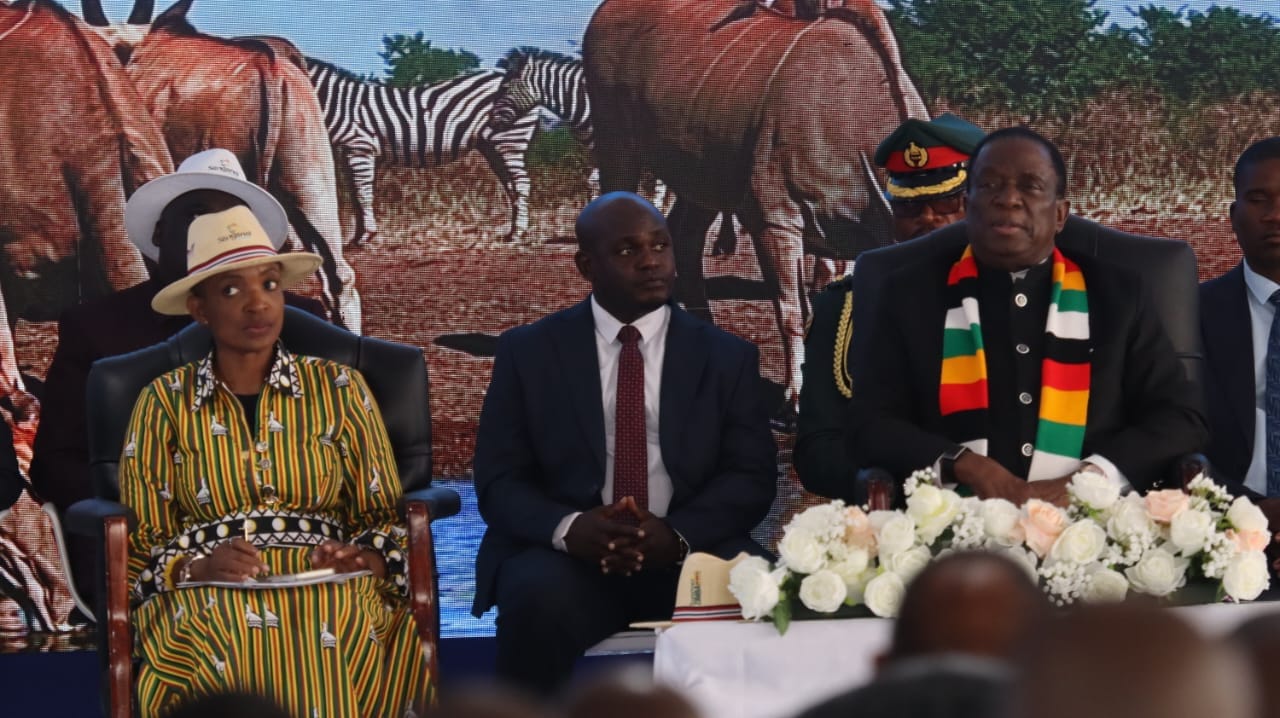
PRESIDENT Mnangagwa has arrived in Nairobi, Kenya where he is set to join other Heads of State and government in attending the Africa Fertilizer and Soil Health Summit.
The three-day summit which started on Tuesday and ending on Thursday, seeks to deliberate on Africa’s recent widespread decades-long decline in soil quality of farmland – a phenomenon that continues to negatively impact the agricultural production capacity and food security in the continent.
The objective of the Summit is to bring together all relevant stakeholders to highlight the crucial role of fertilizer and soil health in stimulating sustainable pro-poor productivity growth in African agriculture and to agree on an African Fertilizer and Soil Health Action Plan, as well as the Soils Initiative for Africa.
Posting on his official X page, President Mnangagwa said: “Delighted to be in Nairobi for the Africa Fertilizer and Soil Health Summit. Fertilizer and soil health are vital for sustainable agriculture and food security across Africa. This regional cooperation helps us drive towards Vision 2030.”
The summit is expected to bring together the African Heads of State, high-ranking government officials, senior policymakers, private-sector players and civil society organisations.
Other participants will include representatives of farmer organisations and development agencies, including non-governmental organisations (NGOs), scholars and scientists, and representatives of leading donor organisations.

In June 2006, the Heads of State and Governments of the African Union endorsed the Abuja Declaration on Fertilizer for the Africa Green Revolution, a continental strategy to reverse the worrying trend of poor productivity of the African soils.
The Declaration focused on key targets required for agricultural growth, food security, and rural development in Africa, with a focus on the role of fertilizers. It recommended raising the use of fertilizers from 8 kg/(nutrients)/ha to 50 kg (nutrients) /ha in 10 years and the establishment of an African Fertilizer Financing Mechanism (AFFM) to improve agricultural productivity by providing financing required to boost fertilizer use in Africa to achieve the target of 50 kg of nutrients per hectare, as mandated by the Abuja Declaration.
Fifteen years after the Abuja Declaration, Africa’s agriculture and food security narrative has evolved significantly. The fertilizer market itself has changed, including the roles that private and public sector actors play.
Another major change since Abuja is the increased recognition of the critical role of sustainable soil management. The decline in soil health has hindered the efficiency of fertilizer use and hampered agricultural productivity growth, food security, and environmental sustainability across the continent


 Online Reporter