Online Reporter
Mthabisi Tshuma,Zimpapers Writer
PRESIDENT Mnangagwa has called upon the Convention on International Trade in Endangered Species (CITES), the international body that monitors endangered species, to lift restrictive measures on the trade in raw ivory and allow once-off sale for its guarded stockpiles to fund conservation efforts.
He made the remarks at the inaugural Africa Biodiversity Summit, which began Sunday and ended today in Gaborone, Botswana.
The event was convened by the African Union Commission (AUC) under the theme: “Leveraging Biodiversity for Africa’s Prosperity”.
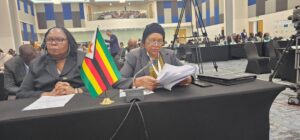
In a speech read on his behalf by Minister of Environment, Climate and Wildlife, Dr Evelyn Ndlovu, President Mnangagwa said CITES should allow African elephant rangeland countries to dispose of their huge ivory stockpiles to fund sustainable conservation programmes.
“Zimbabwe firmly believes that the sustainable use of natural resources, including wildlife, is key to ensuring their long-term survival.
“In this regard, the contentious issue of the international trade in endangered species, particularly concerning our successfully managed populations of the elephant and our stance on ivory and live animals, is of utmost important to Zimbabwe and the SADC region at large,” she said.
“In this regard, Zimbabwe’s position on the international ivory trade is not merely one of economic opportunism, but a practical conservation strategy rooted in the principle of sustainable utilisation.
“We continue to argue that that the current, rigid CITES ban, which is a ‘one-size-fits-all’ approach, is counterproductive to wildlife management successes achieved in Southern Africa,” said President Mnangagwa.
He said as a country Zimbabwe was advocating for the “once-off sale” of the cache seized from smugglers and poachers, and harvested from carcasses found in the country’s national parks.
This would raise millions of dollars to support wildlife management operations.
“Southern Africa currently holds a substantial, legally acquired ivory stockpile, estimated to be worth hundreds of millions of dollars, derived from natural elephant attrition and confiscations, which demands costly security and storage without providing any commensurate benefit,” said President Mnangagwa.
“We are faced with critically under-resourced conservation efforts, escalating human-wildlife conflict caused by our successful, and burgeoning elephant population.
“Therefore, the immediate and urgent lifting of the ban to allow for a controlled sale of this inventory is essential,” he added.
President Mnangagwa also called upon African nations to speak with one voice and promote a common African position on sustainable and legal trade in wildlife products at most major CITES gatherings.
“Therefore, I issue a call to action for all African states to stand united, urging us to speak with one single, powerful voice on global platforms, and we must refuse to allow external, non-range states to dictate policy that is not grounded in verifiable science, but on emotion or political contradiction,” he said.
“Africa’s unified voice must be coherent, robust, and unambiguous in demanding the right to sustainable utilisation and finance conservation.
“The time has come for Africa to define its own biodiversity narrative, one that reflects our realities, our aspirations, and our sovereignty. We must move beyond being custodians of global biodiversity to becoming active participants in the biodiversity economy.
“Let this Summit reaffirm our collective commitment to a future where biodiversity conservation drives prosperity, where trade is fair and sustainable, and where our natural heritage continues to thrive for generations to come,” said President Mnangagwa.
Follow on X: @mthabisi_mthire