malvernmugadzikwa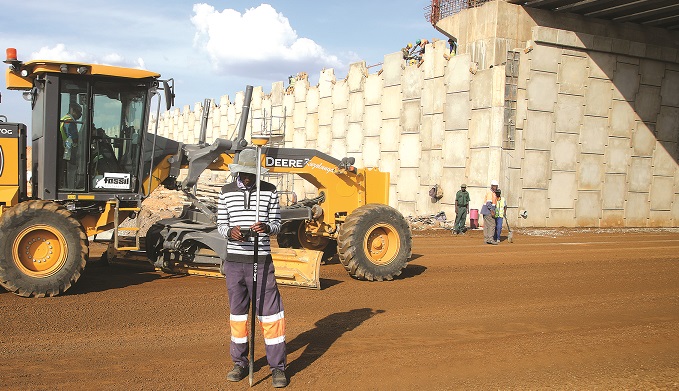
National Focus
Dr Jenfan Muswere
WITH the advent of the Second Republic, Zimbabwe has embarked on a transformative journey towards national development, with President Emmerson Mnangagwa at the helm.
The New Dispensation has prioritised the establishment of a robust public-private partnership (PPP) framework, which has significantly contributed to the completion of critical infrastructure projects, notably the rehabilitation of major highways.
This initiative not only promises to enhance transportation but also aims to stimulate economic growth and foster regional connectivity.
The PPP framework: A catalyst
for development
Under President Mnangagwa’s leadership, Zimbabwe has embraced the PPP model as a strategic approach to mobilise resources, expertise and innovation from the private sector to complement public investment.
This framework is designed to leverage private sector efficiency and investment capabilities, addressing the country’s infrastructure deficit without overburdening Government finances.
According to the Zimbabwe Investment and Development Agency, most notable PPPs that have just been approved include the Harare-Nyamapanda highway. The Nkayi-Bulawayo road and the Victoria Falls-Bulawayo road are also set for an upgrade.
Last month, Cabinet considered and adopted the proposed public-private partnership between Government and Bitumen World for the immediate rebuild of the Beitbridge-Bulawayo-Victoria Falls road.
Transport and Infrastructural Development Minister Felix Mhona has already presented the plans to Cabinet and works on the road are set to commence soon.
President Mnangagwa’s vision for Zimbabwe extends beyond road rehabilitation.
The Second Republic aims to position the country as a regional hub for trade and investment.
The PPP framework is central to this vision, as it encourages collaboration between the Government and the private sector across various sectors, including energy, agriculture and health.
By prioritising infrastructure development, the President seeks to create an enabling environment for business growth and attract foreign direct investment. The President’s broader strategy is to revitalise Zimbabwe’s economy and enhance its competitiveness on the global stage.
Nero: A political chameleon
But over the years, Zimbabwe’s economic transformation has been derailed by the self-acclaimed, delusional opposition leaders who have worked hand-in-glove with the imperialist to stifle development and the betterment of the people.
Despite all their efforts, in all the previous elections the people have always made sure that their vote ensures that these prepaid opposition leaders are never given the mandate to preside over the affairs of the country.
In the 2023 Presidential elections, like in all other elections before, Zimbabweans voted for ZANU PF and dumped an imperialist-inspired opposition political party, which is globetrotting in search of trinkets and is masquerading as a prominent opposition party that will bring change in Zimbabwe.
The rise and fall of
Nero’s leadership
Nero’s ascent to leadership followed the death of longtime opposition leader Morgan Tsvangirai. However, as time passed, his approach became characterised by strategic ambiguity — a reluctance to clearly define his party’s policies and a failure to take a definitive stand on pressing issues.
This lack of clarity alienated many supporters who were desperate for a coherent and actionable plan to challenge ZANU PF.
His strategic ambiguity not only confused his base but also contributed to the disintegration of the opposition.
Internal divisions within the CCC became increasingly pronounced as factions emerged, each with differing visions for the party’s future.
This fragmentation weakened the opposition’s ability to mount a credible challenge to ZANU PF, allowing the ruling party to consolidate its power further.
Internal contractions have left the opposition without a clear path forward.
He tried to hide under the guise of “strategic ambiguity” but that proved to be his greatest undoing.
Under strategic ambiguity, his party failed, forcing him to jump ship like the coward he has always been.
Now that he needs money to sustain his livelihood, he has begun rearing his head, claiming to be pro-people yet some of his most devout followers have abandoned him as he has shown that he is a man without a plan, who spends hours as a keyboard warrior in search for change. He was forced into retirement after squandering the opposition funds donated by imperialists.
Thus, his strategic ambiguity was nothing but a looting conduit meant to hoodwink the people and fundraise for his personal gains.
His lack of decisive leadership has left his party fragmented and disillusioned, culminating in his recent resignation at a critical juncture when the opposition was expected to present clear alternative policies and vision.
No amount of puppetry or illusions can overshadow the tangible deeds that the Second Republic, under the tutelage of President Mnangagwa, has accomplished.
The erosion of integrity: African journalists and the rise of regime change agents
But Nero is not alone in this self-destructive journey.
Recently, we have witnessed some African journalists transforming to become regime change agents, sacrificing journalism on the altar of self-aggrandisement.
The landscape of journalism across Africa has faced significant challenges, particularly regarding integrity and independence.
A troubling trend were some journalists, swayed by financial incentives — often referred to as “brown envelopes” — have aligned themselves with scorched-earth-policy political parties that promote sanctions has emerged.
This shift poses a serious threat not only to the credibility of journalism but also the broader democratic processes within their countries. This practice undermines the ethical foundations of journalism, turning reporters into pawns in political games rather than unbiased observers and watchdogs of society.
This reliance on brown envelopes has led to a compromised media landscape, where the lines between journalism and political advocacy blur.
In their quest for financial gain or political favour, these journalists often become regime change agents, using their platforms to promote specific political agendas rather than providing balanced and objective reporting.
This can result in biased coverage that undermines the public’s ability to make informed decisions about governance and leadership.
The implications of this trend extend far beyond the realm of journalism.
When journalists prioritise personal gain and political alignment over their duty to inform the public, they contribute to the weakening of democratic institutions.
A free and independent press is essential for a healthy democracy, as it serves to check the power of those in authority and provide a platform for diverse voices.
ZANU PF: A colossal party driving national development
President Mnangagwa’s astute leadership, not only as the country’s President but the ruling party’s First Secretary, has seen him emerging victorious where many before him have failed.
The ruling ZANU PF’s extensive organisational capacity and a resolute commitment to national development, as witnessed by robust economic discussions which usually dominate its agenda at the annual conferences, is testament why the party has remained in power despite efforts by regime change agents to dethrone it.
Since its formation, ZANU PF has positioned itself as a champion of the people’s interests, striving to address economic challenges and improve living standards across the nation.
Under President Mnangagwa’s leadership, the party has implemented policies aimed at fostering economic growth and social welfare.
Despite the fact that Zimbabwe has been under intense international pressure through the illegal sanctions meant to make its economy scream, ZANU PF has responded to these issues with a series of strategic initiatives aimed at revitalising the economy.
The party’s commitment to addressing these challenges is evident in its policies that prioritise agricultural productivity, industrialisation and infrastructure development.
The just-ended ZANU PF 21st Annual People’s Conference was not just a talk show but a gathering to ensure Zimbabweans’ aspirations are met, as the President aptly said. During the conference, many issues were covered, from infrastructural development, bread-and-butter issues, to educational issues, among others.
Government was directed by the ruling ZANU PF to ensure that all demographics of the Zimbabwean population are fully satisfied and have favourable living conditions, to which they agreed to put shoulder to the wheel.
Another aspect was the call for the private sector to continue partnering the Second Republic in developing the country through public-private partnerships (PPPs).
PPPs will continue to play a huge role in road construction and rehabilitation.
Honourable Dr J Muswere is the Minister of Information, Publicity and Broadcasting Services



 Online Reporter