

 dyton mupawaenda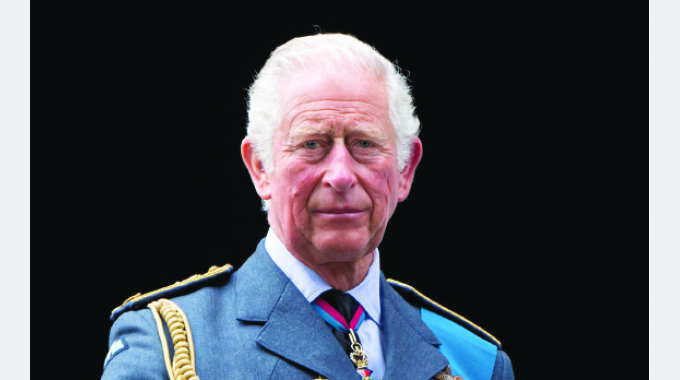
Masimba Mavaza-Herald Correspondent
The meeting of President Mnangagwa and King Charles III at the latter’s coronation in Westminster Abbey today is one planned in the heavens, as it brings back memories of triumph and near-death escapades.
Curiously, this week the security officer who thwarted a bomb assassination attempt at Independence celebrations in 1980 at Rufaro Stadium in Harare where King Charles III, then Prince Charles, was in attendance, was laid to rest.
And, the man who was then Zimbabwe’s Minister of State for Security, now President of Zimbabwe, extends a congratulatory hand to the man he saved from a possible bomb explosion.
Indeed, the ties between President Mnangagwa, affectionately known as ED, and King Charles III were cemented then.
The coronation takes place when the funeral of David Daniel “Dan” Stannard, a former policeman and intelligence chief credited with foiling a plot to assassinate Prince Charles and the then Prime Minister Robert Mugabe, was held on Tuesday afternoon at Newmarket Catholic Church.
Stannard died on March 30 aged 85 at Ely, Cambridgeshire, after living in Mill Lane for over 20 years. He began his career in Africa in 1957 as a member of the British South Africa Police (BSAP), and eventually rose to the rank of chief superintendent before retiring in 1981.
Stannard’s work with the Central Intelligence Organisation (CIO) led to him foiling a plot to assassinate Mugabe and other dignitaries, including Prince Charles, at Zimbabwe’s independence ceremony in 1980. For his actions, he was awarded the Gold Cross of Zimbabwe.
His citation, signed by the late former President Mugabe, reads:
“Mr Stannard’s timely and immediate reaction to the presence of suspicious characters saw the almost ripe South African plot foiled and the country was saved from a bloody war, not to mention the human life saved.”
He moved to Britain in 2002 with his family, and settled in Fordham. He served as a sacristan at Kirtling Church for several years.
The Minister of State Security, who was personally on the ground directing an operation, which sniffed out the bomb was Emmerson Mnangagwa, now President of Zimbabwe.
The irony of it all is that the two men who served King Charles III are in the same country: one laid to rest, while the other congratulates the man he saved.
Today, as the King is being crowned in Westminster Abbey, with the Queen Consort beside him, his lifesaver will grace the occasion. The presence of President Mnangagwa will mark a meeting only witnessed in epic books.
It is a unique coronation, and, indeed, a wonder to the world, as King Charles meets his saviour. Who bows to who is the question!
The other wonder is that since 1601, there has only been one coronation in the month of May. The royal family has always chosen Westminster Abbey for every coronation since 1066.
Before the Abbey was built, coronations were carried out wherever was convenient; taking place in Bath, Oxford and Canterbury. Also, for the first time since 1937, the coronation of King Charles III will include the crowning of a Queen Consort.
Queen Elizabeth, wife of King George VI, was the last Queen Consort to be crowned. A Queen Consort is the wife of the king who becomes the queen and does not have royal powers as with the King.
On Christmas Day 1066, William the Conqueror became the first monarch to be crowned at Westminster Abbey. It is coincidental that the man who saved the King’s life lived near Norfolk. The 18th Duke of Norfolk is responsible for the King’s coronation this year, and was also responsible for the State Funeral of Queen Elizabeth II.
Every coronation of a British monarch since King George III has taken place between May and September.
The earliest English coronation that is recorded in detail, although not the first, is the crowning of the Anglo-Saxon King Edgar in Bath in 953 CE. The contemporary form of the coronation dates from 1902, when King Edward VII was crowned.
This consists of a state procession from Buckingham Palace to the Abbey, another procession inside, the Recognition, the Anointing, the Coronation Oath, the Homage, and finally, another procession from the Abbey back to the Palace.
Charles will also have the crown of St Edward placed on his head, officially crowning him as King Charles III.
He will be seated in the Coronation Chair, known as Edward’s Chair, holding the sovereign’s sceptre and rod to represent his control of the nation, and the sovereign’s orb to represent the Christian world.
Unlike his late mother’s 1953 coronation, the King will be anointed out of sight, enclosed behind a three-sided screen, rather than just a canopy.
The new partition pays tribute to the Commonwealth and the King’s lifelong passion for sustainability. The service has also been planned to be representative of different faiths and community groups, in line with the King’s wish to reflect the ethnic diversity of modern Britain.



 Online Reporter