Online Reporter
Gibson Mhaka, Zimpapers Politics Hub
AS the outgoing SADC Chair, President Mnangagwa is leaving a legacy centred on agricultural self-sufficiency, regional industrialisation, innovation and self-reliance.
His leadership also underscored a message of shared progress, collective heritage and the need for member states to work together toward a common goal of a stable, industrialised and prosperous SADC.
These themes were illustrated during his tenure when he took delegates attending the 44th Heads of State and Government Summit and the SADC Industrialisation Week (SIW) to his Precabe Farm in Kwekwe, as well as on tours of Geo Pomona
Waste Management Private Limited and the Museum of African Liberation.
His leadership consistently emphasised the need for member states to embrace modern technology and best practices to drive socio-economic growth.
By showcasing the success of Precabe Farm, President Mnangagwa was promoting the idea that SADC countries can and should modernise their agricultural sectors to ensure food security and inspire other nations.
The tour highlighted a tangible model for agricultural productivity and modernisation. By showcasing the farm’s high yields of winter wheat and barley, he demonstrated a commitment to food security and the importance of adopting advanced farming methods.
This sets an example for how large-scale farming operations can inspire agricultural excellence across the region.
The delegates were captivated by the exceptional agricultural practices on display at the First Family’s Precabe Farm, which had about 300 hectares of winter wheat and approximately 200 hectares of barley.
They expressed admiration for the First Family’s noteworthy role in driving socio-economic growth through extensive farming operations.
The team also saw the Ankole breed of cattle, which the President acquired from Rwanda.
The deputy executive secretary responsible for regional integration, Ms Angelo Makombo N’tumba, who led the SADC member states, said they were impressed by the resilience shown by Zimbabweans in addressing their challenges.
“We had a very fruitful Industrialisation Week here in Zimbabwe. When I was told that I was going to see the President’s farm, I just thought it was a mere farm, but when I arrived here, I was shocked to see the level of professional farming being employed here,” she said then.
“The President is demonstrating best farming practices needed to develop the nation. While we had a talk show on the SADC Industrialisation Week, I am glad that we are seeing the practical aspect,” Ms N’tumba added.
Ms N’tumba expressed her admiration for Zimbabwe’s effective strategies in mitigating the impact of sanctions through innovative home-grown solutions, stressing that many countries in the region can draw valuable lessons from this exemplary approach.
“I have learned a lot about how Zimbabwe has managed to tackle sanctions through the use of home-grown solutions and many countries in the region can learn a lot from this,” she said.
Mr Lambert Hategekimana, a SADC SIW delegate from Kenya, said he was moved and impressed by the high-breed cattle at Precabe.
There are over 2 000 cattle of different breeds at the farm, including 36 of the Ankole breed.
“I was very happy to see that the President (Mnangagwa) can take care of this rare breed of cattle. Back in our country, this breed is for royalty. We don’t even drink the milk, nor do we eat the meat. They are very special,” he said.
The visit to Precabe Farm demonstrates President Mnangagwa’s hands-on approach and commitment to a SADC legacy centred on agricultural self-sufficiency and modernisation.
By taking fellow Heads of State to a successful large-scale farming operation, he presented a tangible model of what is possible in the region.
The tour, which showcased impressive yields of winter wheat and barley, served to illustrate his message that SADC countries can and should embrace modern agricultural practices to ensure food security and inspire excellence across the continent.
This action highlights his belief in leading by example, proving that his calls for innovation and self-reliance are backed by practical, home-grown solutions.
The SADC leaders were also taken on a tour of Geo Pomona Waste Management Private Limited, where a public-private partnership (PPP) has transformed a former dumpsite into a modern waste-to-energy plant.
The project serves as a tangible example of a smart city initiative that addresses environmental issues while promoting green energy and economic development.
Leaders present at the tour included the immediate past SADC Chairperson, who is also Angolan President João Lourenço, Eswatini’s King Mswati III, Madagascar President Andry Rajoelina, former Botswana President Mokgweetsi Masisi and SADC Executive Secretary, Mr Elias Magosi.
The leaders hailed the transformation of the site from a toxic dumpsite to a modern waste-to-energy facility as a milestone in Zimbabwe’s journey towards sustainable urban development and energy security.
Geo Pomona Waste Management has resulted in a significant transformation of the landscape at the dumpsite, which is in line with the Government’s objective of establishing smart cities across the country.
President Mnangagwa’s actions as SADC Chair, particularly the tours he led, presented a clear development model.
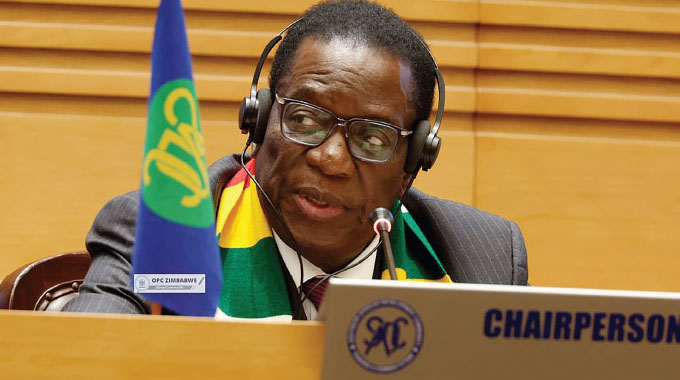
The Geo Pomona Waste Management site was shown as an example of a smart city initiative that addresses environmental problems while promoting economic development, which aligns with his push for innovative solutions to regional challenges.
Speaking during the tour, President Mnangagwa said the SADC region should never flinch from being innovative, but always adapt to the best practices to drive the modernisation, industrialisation and development of the bloc.
“Let us never shy away from thinking outside the box, adapting best practices from elsewhere, guided by our realities.
“Let us scale up endeavours across all sectors to propel every community into a prosperous future, leaving no one and no place behind.
“To drive the modernisation, industrialisation and development of the region, we remain mindful that SADC must be built, governed and prayed for by us, its citizens. The weighty responsibility lies with us,” he said.
“This waste-to-energy initiative has not only addressed the environmental challenges that were caused by this dumpsite, but the plant, once completed, will generate electricity for the national grid.
“This project further dovetails with our theme: Promoting Innovation to Unlock Opportunities for Sustainable Economic Growth and Development, towards an Industrialised Sadc,” he said.
The tour is a testament to the fact that President Mnangagwa’s tenure as the outgoing SADC Chairperson is distinguished by a legacy of promoting innovation, industrialisation and sustainability as key drivers of regional development.
The tour of the Geo Pomona Waste Management site also stands as a tangible example of this vision in action.
This practical demonstration underscores his belief that SADC member states can and should adopt innovative, home-grown solutions to tackle regional challenges, thereby inspiring a unified movement towards a more prosperous and sustainable future.
As the outgoing SADC Chair, President Mnangagwa is also leaving a legacy built on shared progress and collective heritage.
He demonstrated this by taking SADC heads of state on a tour of the Museum of African Liberation, where he emphasised the critical need to accurately document and secure African history.
In his address during the tour, President Mnangagwa said the continent should remain resolute in its innovation toward total economic emancipation and that African history should never be distorted to suit former colonial masters’ interests.
At the museum, President Mnangagwa handed over one hectare of land to SADC member states to document their history, reinforcing the project’s regional significance.
President Mnangagwa added that the museum was an affirmation of the liberation struggles of the African continent.
“It should ultimately be the custodian and embodiment of all that characterised the decolonisation of our respective countries, our region and the entire African continent, including the African diaspora.”
President Mnangagwa’s visit to the Museum of African Liberation demonstrates that his legacy as the outgoing SADC Chair is deeply rooted in Pan-Africanism and the preservation of a collective heritage.
In taking the SADC Heads of State to the museum, he underscored the critical importance of documenting and securing Africa’s history of liberation from its own perspective.
This action sends a powerful message that a unified and industrialised SADC must be built on a foundation of shared history, pride and an unwavering commitment to defending against neo-colonialism.
The museum tour served as a symbolic call to action, urging the region to be the custodians of its own narrative and destiny.
It is important to note that as President Mnangagwa prepares to hand over the SADC Chairmanship to his counterpart from
Madagascar Andry Rajoelina, he leaves behind a clear and powerful legacy. His tenure was defined by a practical approach to leadership, moving beyond rhetoric to showcase tangible models of development.
The tours of Precabe Farm, Geo Pomona Waste Management and the Museum of African Liberation stand as a testament to his belief that the region’s prosperity will be built on its own strengths, through agricultural self-sufficiency, industrial innovation and a firm grounding in its collective heritage.
In doing so, he has set a forward-looking example for the bloc, demonstrating that self-reliance and modernisation are achievable goals for a stable and prosperous SADC.