Online Reporter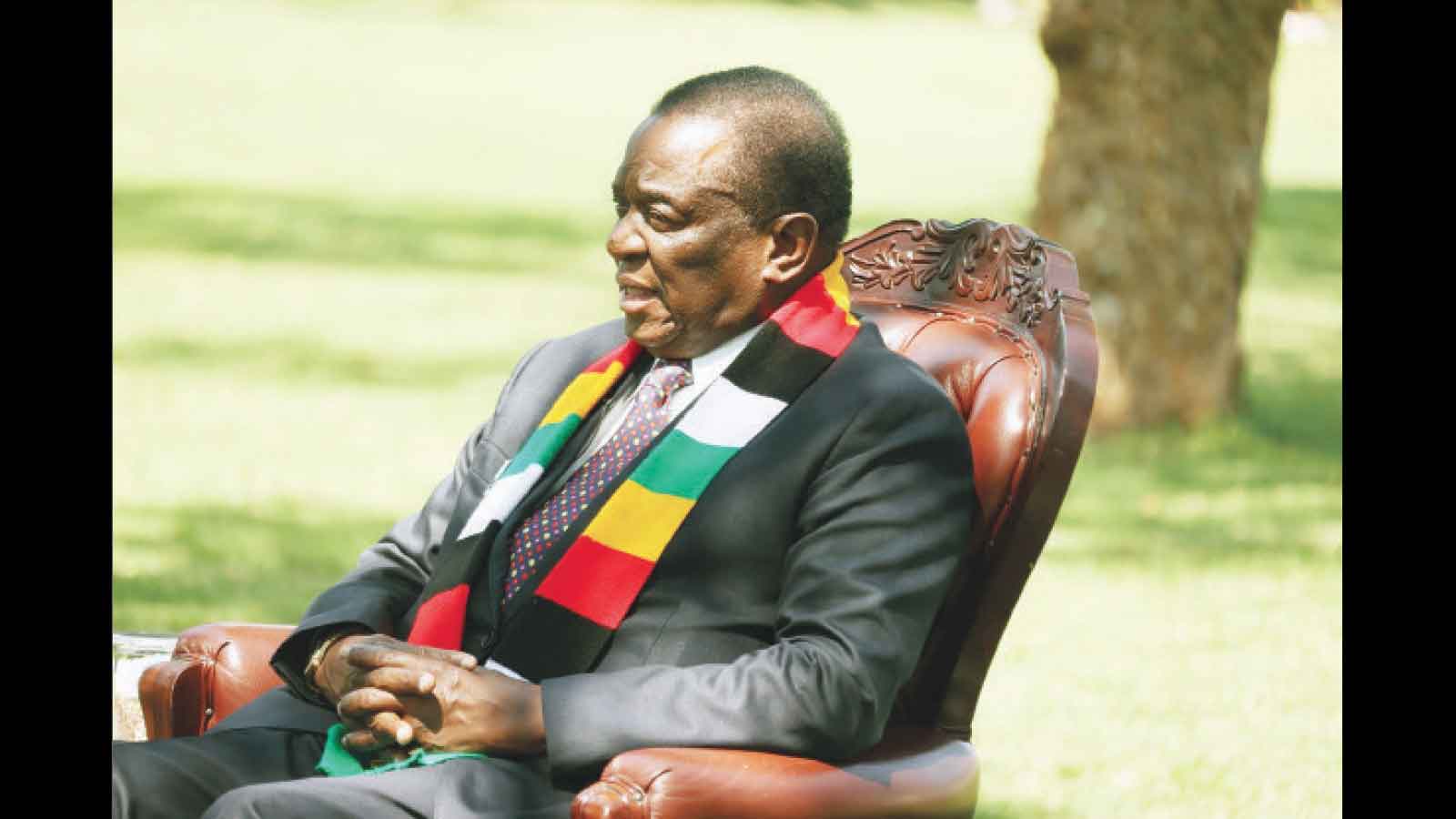
ZIMBABWE will add another feather to its diplomatic cap when it assumes the chairmanship of the Common Market for Eastern and Southern Africa (Comesa) in October, taking over from Kenya. President Mnangagwa will succeed his Kenyan counterpart, President William Ruto, and for the next year, he will steer the affairs of the economic bloc comprising 21 diverse countries. With a combined population exceeding 680 million people, the bloc commands a substantial collective Gross Domestic Product (GDP) of approximately US$1 trillion. In a recent interview with journalists from public media, President Mnangagwa outlined his vision for his tenure. Below are excerpts from the interview.
Q: Your Excellency, this year’s Comesa Summit is being hosted in Zimbabwe. What message would you like to convey to fellow Heads of State, investors, business leaders, and citizens across the Comesa region as they prepare to visit Zimbabwe?
A: First and foremost, I say to my colleagues, Heads of State and Government, that they are welcome. Zimbabwe looks forward to welcoming them with warm hearts. We believe that they will not regret spending time in Zimbabwe. We are ready to give our best for this Summit. Zimbabwe will be honoured to assume the Chairmanship of Comesa from October 2026.
Q: Your Excellency, what does this responsibility mean for Zimbabwe and the broader Comesa region?
A: It is not a minor responsibility.
It’s a very huge subcontinental duty. We, with humility, accept this responsibility. I have no doubt that the burden will not be that of Zimbabwe alone. It shall continue to be a collective burden of SADC. I will never consider that this Chairmanship is solely a chairmanship for Zimbabwe, but I share it with my colleagues in SADC.
Q: What key priorities will Zimbabwe champion during its tenure as Chair of Comesa, particularly in advancing regional economic integration and sustainable development?
A: Well, I believe that together as a community, not only as SADC, but perhaps as Comesa, we need to promote first and foremost food security in our respective jurisdictions and countries. Zimbabwe is lucky. We are endowed with a very progressive agricultural setup. We are food secure, and we are willing to share our expertise in that sub-sector of the economy, agriculture.
Basically, we are an agricultural country, and our economy is basically agricultural. Our growth trajectory is sustained mainly by our agricultural performance.
So we believe that from that standpoint, we are a strong economic participant in the region.
Q: Your Excellency, Zimbabwe is renowned for its natural beauty. Talk about Victoria Falls, talk about Great Zimbabwe, cultural heritage, hospitality. What makes Zimbabwe an attractive destination for tourism, trade, investment, and why should people across the region choose to come and visit Zimbabwe?
A: Well, I want to say every country has its own beautiful sights. I don’t want to say Zimbabwe is the most beautiful, but because I come from Zimbabwe, I must speak about Zimbabwe. So Zimbabwe is the most beautiful. We have the Victoria Falls, but of course, Zambia also claims that the Falls is also a Zambian feature. But when I meet my brother, (Zambian) President Hichilema, I say, well, do you admire a girl from the front or from the back? Then he says, no, obviously, we admire a girl from the front. And the Victoria Falls faces Zimbabwe. So you see, you can conclude from this where the beauty is.
Q: Your Excellency, peace, stability, and economic prosperity are closely linked. How important is regional cooperation in ensuring Comesa remains a zone of peace and prosperity?
A: I have no doubt that the rest of us, both in SADC and Comesa, have the will, capacity, and endeavour to make our region peaceful and progressive, and we cooperate.
Fortunately, each of our member states have our separate strengths. In Zimbabwe, we have strength in the agricultural sector. So we contribute more in this basket of countries in the area of agriculture.
Others contribute more, like Zambia, in the mining sector. They are very good in mining, copper, and so on. But as Zimbabwe, I think we are better known for our agricultural sector.
Q: Your Excellency, as Zimbabwe assumes the Comesa chairmanship, what legacy would you like the country to leave at the conclusion of its tenure of the Chairmanship?
A: The success of our Chairmanship will depend on the support we receive from member states. It is not our individual acumen, wisdom, or credibility that makes our Chairmanship memorable. Our Chairmanship will depend on how much support we get from member states. I have no doubt that we enjoy good relations with the entire community of SADC and Comesa. We are able to interact without any constraints.
Q: Your Excellency, when we look at the African continent, how can Africa leapfrog its development?
A: I can speak more confidently for the SADC region. In the SADC region, I believe that our strength is in agriculture. Yes, we have member states in SADC that are well industrialised. But critically, we are better suited to champion our agricultural sectors in the region. And on the African continent, the better part of the population is the young generation.
Q: On various platforms, I have heard you speak about the importance of this young generation. Even in the Comesa region, what would you like to see the role of the young people being in terms of development?
A: If I have to be honest, I would want to see the young generation respecting the older generation, first and foremost.
Secondly, I would like to see a young generation that is adventurous, that wishes to break new ground. We should not just continue to follow and walk on the path trodden by us, the elders.
They should break new ground and create their own achievements as a younger generation. Then we will die a happy older generation. A younger generation that breaks new ground, makes mistakes, and sometimes makes good things. They shouldn’t be afraid to make mistakes. It’s only through trying and failing that the country moves forward.
Q: Your Excellency, recently, during the BNC (Bi-National Commission with South Africa), you said that, as leaders, you enact the laws that enable business to take place easily. Let’s look at the role of the private sector, even in the Comesa region, SADC region. How key is it to have them being part of economic development?
A: Every aspect of endeavour in the economic sphere is critical. I don’t think that there are aspects of activities that should be regarded as minor and others as major.
Everything contributes to the good of the other. None of these activities can excel without the support of other activities. So collectively, we must service each other; collectively we must focus we must focus and not look down upon the activities of other elements of the entire economic infrastructure. We must complement whatever we are doing and move together. Where there is an area which lacks support or remaining behind in terms of development, let us assist. Let us give attention to it so that collectively, as a whole of Government, we move together. No place or area should be left behind.
Q: How key is it for the region to have robust infrastructure?
A: As a region, yes, in the region, our level of development is not equal. Some have better road infrastructure, rail infrastructure, and air infrastructure. Some have internal systems that service the economy very well. Some have developed systems that relate to external engagement with effectiveness. Some in the region are not as effective as others in dealing with international relations or regional relations. So it is critically important that we address and make sure that, as we grow our economy, as we modernise our country, we speak to our region, we speak to the continent, we are able to talk to each other, we are able to relate, must be willing to learn every time from fellow African States.