Online Reporter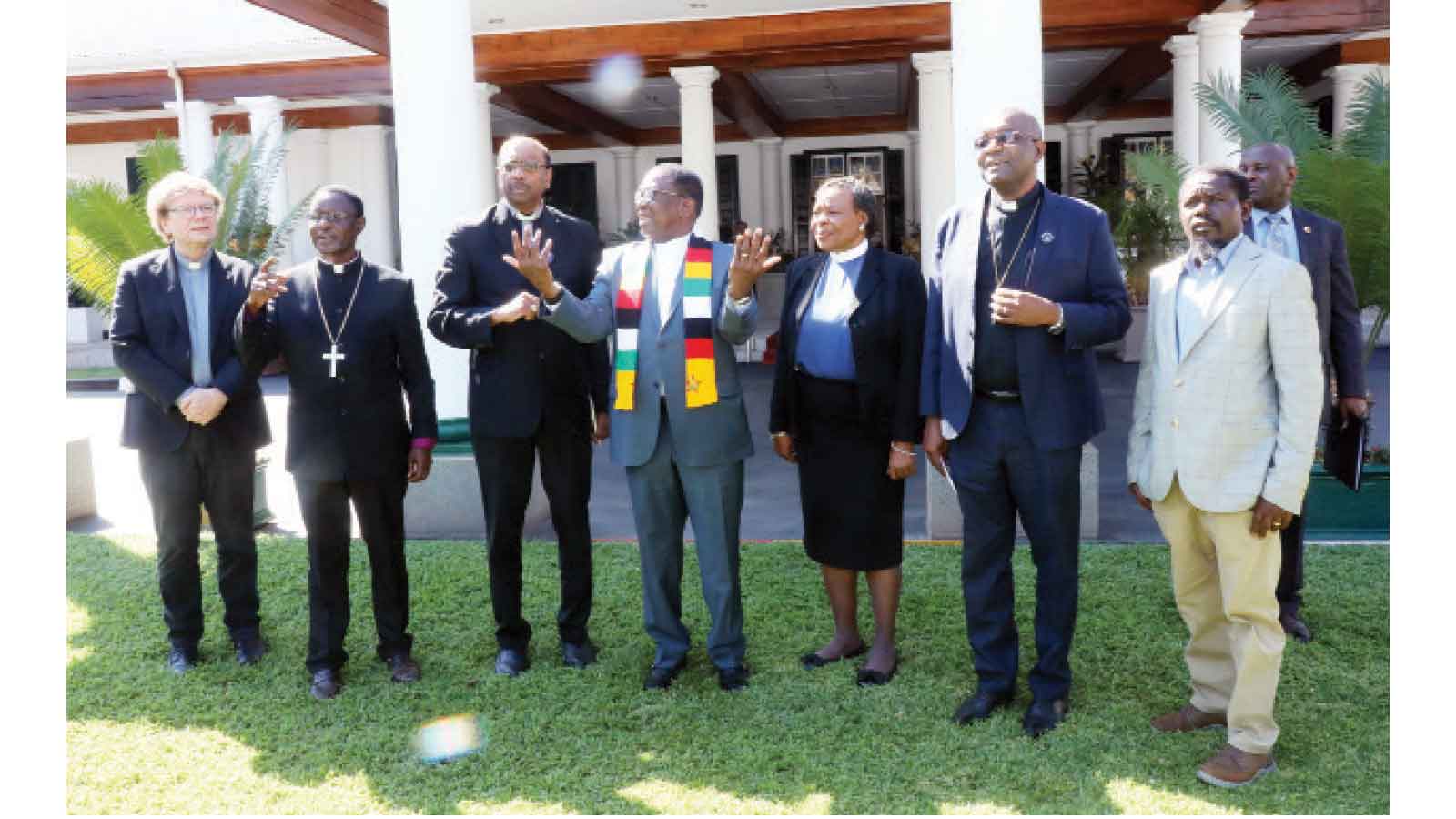
Debra Matabvu-Senior Reporter
PRESIDENT MNANGAGWA has reaffirmed the importance of a strong partnership between the Government and the Church in promoting peace, national unity and socio-economic development.
This followed a meeting with a delegation from the Zimbabwe Council of Churches (ZCC) and the World Council of Churches (WCC) at State House in Harare yesterday.
The delegation was led by WCC general secretary Reverend Professor Jerry Pillay, who is in Zimbabwe for the 48th General Assembly of ZCC which started July 21 and ends today.
The general assembly will run under the theme, “Breaking walls: Discerning the signs of the times.”
Writing on his X platform after the courtesy call, President Mnangagwa said the discussions focused on strengthening collaboration between the Church and Government in advancing the country’s development agenda.
“This morning (yesterday), I had the pleasure of welcoming a delegation from the Zimbabwe Council of Churches (ZCC) for a courtesy call at State House in Harare,” President Mnangagwa said.
“The delegation is led by the World Council of Churches (WCC) general secretary, Rev Prof Dr Jerry Pillay. He is currently in our country for the 48th General Assembly of the ZCC, running from 21 to 24 July. We welcome the assembly’s timely theme, ‘Breaking Walls: Discerning the Signs of the Times.’
“Our discussion centred on the vital partnership between Church and State. We must continue to work together to foster peace, national unity, and development across Zimbabwe.”
The meeting underscored the growing collaboration between Government and faith-based organisations in addressing social, economic and humanitarian challenges while promoting national cohesion.
Speaking to journalists after the meeting, Rev Pillay described the engagement as productive, saying discussions covered a wide range of issues, including the reintegration of Zimbabweans returning from South Africa, climate change, youth empowerment, gender justice, and national dialogue.
On the issue of returnees, Rev Pillay said the WCC was encouraged by Government’s commitment to support Zimbabweans returning home.
“We also had a discussion on the issue of the returnees,” he said.
“I come from South Africa myself, even though I live now in Switzerland, Geneva, but we discussed the issue of the returnees.
“We outlined the concern and the need to help the reintegration of people into the Zimbabwean context.
The President has given the assurance that Government is on top of that, and they are doing everything to receive people, ensure they know that this is the home for them, and therefore Government will do everything to make sure that they feel that they are back home.”
Rev Pillay added that President Mnangagwa had indicated “quite clearly what Government has always said” that anybody from Zimbabwe who had gone abroad is free to return to their country.
“So, as they have returned, Government has given us the assurance that they will work on reintegrating the returnees into society.
“From a global point of view, the World Council of Churches is dealing with these issues because we are obviously concerned about how migrants and immigrants are treated in the world itself, and so the interest of the WCC in what is happening in South Africa and here and in other countries in the African region, we are working on those things,” he said.
Discussions also touched on gender justice and efforts being taken to improve the welfare of women and vulnerable groups, said Rev Pillay.
He said the Government shared with his delegation what is being done in that area, and “we feel quite comfortable” knowing they are doing sufficient work.
The WCC delegation also reiterated the Church’s long-standing call for an inclusive national dialogue process and welcomed Government’s openness to continued engagement.
“The Council of Churches has always been keen to hold a national dialogue, an all-inclusive dialogue, and they have discussed that with the Government in the past.
“We were able to reiterate that point, and have asked Government if they would participate in that process, which would be church-led, and the President has assured us that the Foreign Ministry Department is looking at that.
“They have no objections in terms of working with the churches, and they are keen on that. We found a very positive energy and spirit to work for reconciliation and healing, addressing the past historic occurrences in the country, dealing with issues of trauma, and seeking to find dialogue to help people to be healed and restored.
“So, our meeting was very positive,” said Rev Pillay.
The delegation included church leaders and representatives from Zambia, South Africa and other countries in the region, reflecting the WCC’s broader commitment to supporting peace-building, social justice and community development initiatives across Africa.