

 admin
admin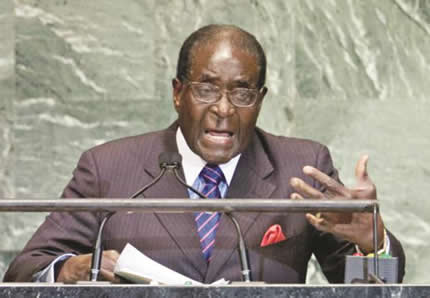

From Tendai Mugabe at the UNITED NATIONS, New York
President Mugabe – who arrived here on Saturday – will today attend the launch of the High Level Political Forum on sustainable development at the United Nations headquarters. The HLPF succeeded the Commission on Sustainable Development and would be meeting after every four years. President Mugabe is scheduled to address the 68th Session of the UNGA on Thursday.
The launch of the HLPF was preceded by the opening plenary of the High Level Debate on Millennium Development Goals that was held yesterday.
Zimbabwe was represented at that meeting by Foreign Affairs Minister Simbarashe Mumbengegwi and director for social services in the ministry of Public Service, Labour and Social Welfare Mr Sydney Mhishi.
Sources that attended the meeting said other related internationally agreed development goals for persons with disabilities also came under discussion during the meeting that was officially opened by UN secretary general Mr Ban Ki-moon.
Zimbabwe, the source said, was supportive of the inclusion of a cross-cutting issue in the post-2015 agenda.
“The Zimbabwean delegation highlighted the importance of full participation of persons with disabilities in not only national but international discourse affecting them,” said the source.
He said the Zimbabwean delegation made strong representation on issues affecting people with disabilities.
In this regard, the source said it was noted that people with disabilities in developing countries were still marginalised due to technological advancements.
“The delegation said while the increased reliance on new technologies for gathering diverse views has numerous advantages, it has also perpetuated marginalisation of those populations that do not have access to them,” said the source.
“He said persons with disabilities in, particularly those from less prosperous nations, are even less likely to have access to new technologies.”
In this regard, the Zimbabwean delegation reiterated the need to ensure new technologies was made universally accessible.
It is understood that Zimbabwe argued that affirmative action was measures were also critical in ensuring the inclusion of persons with disabilities in society and in the economy.



 Online Reporter