Zimpapers Writers
PRESIDENT Mnangagwa is set to commission the Finealt Bioeconomy Industrial Park in Mutoko on Thursday, a landmark project expected to boost rural industrialisation, create thousands of jobs and strengthen value addition and beneficiation in line with Zimbabwe’s Vision 2030 development agenda.
The commissioning marks a significant milestone under the National Development Strategy 2 (NDS2), which identifies rural industrialisation, value addition and beneficiation as key drivers in transforming Zimbabwe from a primary commodity producer into a diversified manufacturing and export-oriented economy.
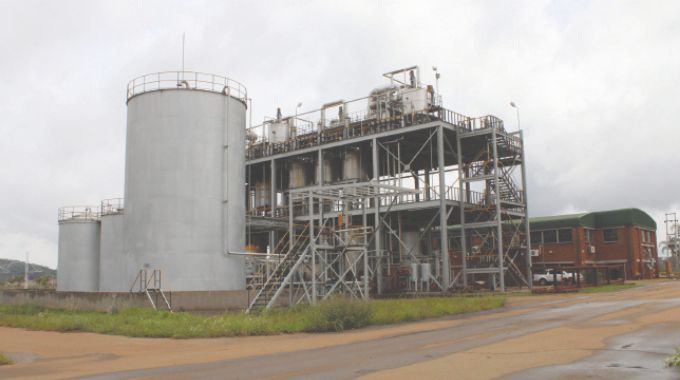
The industrial park, developed by Finealt Engineering, an entity under the Ministry of Higher and Tertiary Education, Innovation, Science and Technology Development, is an integrated manufacturing hub comprising a biodiesel plant, cooking oil processing plant and soap manufacturing facility. A stockfeed plant is expected to be added during the next phase of the project.
The facility has been designed to utilise locally available biological resources and agricultural by-products found mainly in Mashonaland East Province, creating value-added products while strengthening community participation in economic activities.
The project also speaks directly to the objectives of NDS2, which states: “During NDS 2, Government will prioritise the transformation of the agricultural sector into a competitive, export-oriented and value-driven industry that anchors rural industrialisation and growth in trade.”
In an interview, Permanent Secretary in the Ministry of Higher and Tertiary Education, Innovation, Science and Technology Development Professor Fanuel Tagwira said the industrial park demonstrates the practical application of Heritage-Based Education 5.0, which focuses on harnessing local resources, indigenous knowledge and innovation to drive industrial growth and economic development.
“This is a very important project which answers to Heritage-Based Education 5.0,” Professor Tagwira said. “It also answers the call for rural industrialisation of our economy.
“The first of its kind is being rolled out by the Ministry of Higher Education, Innovation, Science and Technology
Development using one of its entities called Finealt Engineering. Within the industrial park, we have a biodiesel plant, we have a cooking oil plant, we have a soap plant and we will later on have a stock feed plant. So, the idea is that within the biological resources that are found in Mashonaland East, we are trying to unlock value for the benefit of the communities and also create jobs.
“At least 20 000 households in Mashonaland East are going to be contracted to grow sunflowers to support the plant. Additionally, there will be staff working in the plant processing the product, and so there will be a lot of jobs that will be created.”
Professor Tagwira said the project would not only generate employment opportunities and promote value addition but would also help reduce Zimbabwe’s dependence on imported edible oils and conserve foreign currency.
He said the integrated nature of the project would ensure that every stage of the sunflower value chain is utilised, creating maximum economic value.
“Zimbabwe spends US$300 million annually importing crude oil and then we refine this crude oil into cooking oil. Whereas this plant is going to make the whole value chain of seeds is exploited. The 20 000 households in
Mashonaland East who are going to supply the seeds, which will be processed into cooking oil. Out of that we are going to get stock feed.
“So we are trying to cut the US$300 million import bill and save foreign currency. If we can cut the US$300 million, create jobs in the agriculture and manufacturing sectors as well as get stock feed, that is a bigger benefit. If we can then export it will still be fine.”
The biodiesel plant is expected to produce 22 000 litres of biodiesel daily, while the cooking oil processing plant will handle up to 6 000 tonnes of sunflower seed annually. The industrial park will also manufacture bar soap, detergent products and soap tablets, with livestock feed production earmarked for a future phase.
Professor Tagwira said the Mutoko project is intended to serve as a pilot programme that can be replicated in other provinces using resources unique to each area.
The industrial park, he said, demonstrates how institutions of higher learning can contribute meaningfully to President Mnangagwa’s rural industrialisation agenda through innovation and practical application of Heritage-Based Education 5.0.
“It is a model to show what universities and polytechnics can do to support the rural industrialisation agenda of His Excellency as part of Heritage-Based Education 5.0. All the infrastructure on that site was put up by our polytechnics as well as the machinery was installed by our polytechnics.
“The conceptualisation of the innovations that you will find in the industrial park also came out of our institutions. Once we have done this project and it has succeeded, our aim is to cascade it to other provinces, but using the natural endowments that are found in those provinces.”
Professor Tagwira said an estimated 50 000 people from across Mashonaland East Province are expected to attend the commissioning ceremony.
He said the Finealt Bioeconomy Industrial Park builds on the innovation ecosystem already established at universities and tertiary institutions by extending innovation-driven industrialisation into rural communities.
Professor Tagwira said local community members benefited directly during the construction phase through skills development programmes conducted at the site.
“We also took people from the local community and trained them. Builders, plumbers and other artisans have been trained while these buildings were being constructed. Some of them will be assessed and receive recognised qualifications, giving them skills they can use beyond this project,” he said.
The Mutoko Bioeconomy Industrial Park is expected to become a model for similar projects across the country, supporting Government efforts to promote decentralised industrialisation, employment creation, import substitution, value addition and inclusive economic growth.
Finealt Engineering acting chief executive officer Mr Patrick Mpala said the industrial park has been designed as an integrated manufacturing system in which by-products from one process become raw materials for another.
“The biodiesel plant, soap-making plant and cooking oil plant are all integrated. The cooking oil plant produces what is called soap stock, which becomes raw material for the soap plant, while the biodiesel plant produces glycerine, which is also used in soap manufacturing. These three plants work together to produce different varieties of bioeconomy goods and services.”
Mr Mpala said the cooking oil plant has the capacity to process 20 tonnes of sunflower seed daily, producing approximately 5 000 litres of Biofine cooking oil for the domestic market.
The soap manufacturing plant can produce 4 000 small bars of soap every hour and an additional 2 000 larger lavender soap bars per hour. Meanwhile, the biodiesel facility has been upgraded significantly, increasing production capacity from 3 000 litres to 27 000 litres per day.
“We have upgraded from 3 000 litres to 27 000 litres per day. The challenge we may have now is feedstock, but that is something we are going to work on by improving feedstock production within the community,” said Mr Mpala.
He said future expansion plans include the production of stockfeed from sunflower cake, a by-product of cooking oil extraction, as well as mealie-meal processing.
“When we grind our sunflower, there is cake that is left. We are going to turn that into feedstock for animals and chickens,” he said.