admin
admin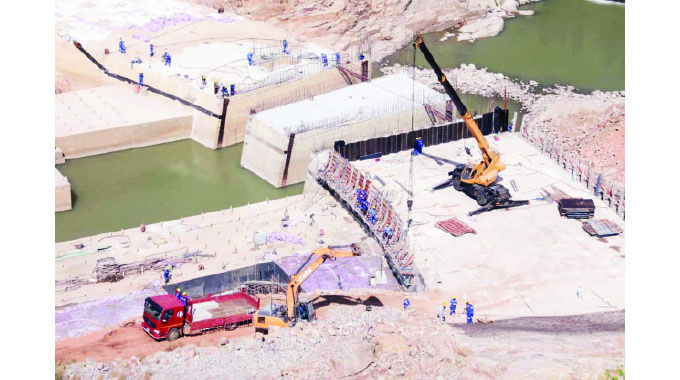
Lovemore Chikova-Development Dialogue
Outlying areas, especially those along the border lines of Zimbabwe, have been neglected for a long time, and this explains their lagging behind.
Let’s take the following districts and areas for example: Chiredzi, Kanyemba, Gwayi-Shangani, Binga, Beitbridge, Pfungwe, Kotwa, Rushinga, Gwanda and Plumtree.
What do these places and many others that are far-flung have in common?
Well, they:
-Receive low rainfall
-Experience high temperatures
-Are food insecure
-Are border areas
-Have most of the people who live there being poor
-Have poor social services facilities
In fact, problems that bedevil these areas are far more than those mentioned above, following years of neglect dating back to the days of colonialism.
The white minority government never bothered about developing these places — first because they never imagined their kith and kin living there, and second and later on because they were mostly used by liberation war fighters as points of exit and entry into the country.
As a result of the white regime’s uncalled for marginalisation of these areas, the new Government at independence in 1980 faced a huge task to bring them at par with other areas in terms of development.
It was a tough job, considering that the areas had been neglected for a long time, for almost a century, in fact.
But all this has started changing with the coming in of the New Dispensation in 2017.
Many times when President Mnangagwa speaks about development, he makes it a point to emphasise his popular statement that no one or any place will be left behind.
To buttress this point, Deputy Chief Secretary to the President and Cabinet Mr George Charamba announced last week that a national master plan had been put in motion to help transform the marginalised communities.
The master plan focuses on alleviating poverty by bringing the much-awaited development to such areas.
Policies to drive the development of the marginalised areas are already in place, what is needed is to push them with much vigour, which is what Government is now doing.
The devolution policy was instituted mainly for the purpose of ensuring development comes to marginalised areas by empowering the communities.
Through devolution, Government has been looking at an area like Chiredzi, for example, and determining what needs to be done to uplift the lives of people living there.
The available resources in Chiredzi were assessed, and it was realised that places like Chilonga had vast areas with good soils, while at the same time there are reliable sources of water.
This explains the moves to set up massive irrigation schemes in the area driven by the locals, who will directly benefit in terms of food security.
A lot is being done in the Gwayi-Shangani area in Matabeleland North, where the Gwayi-Shangani Dam is expected to be complete by the end of this year.
Once the dam is complete, it will hold enough water to change the story of this dry region through various activities, including irrigation and tourism.
Kanyemba in Mashonaland Central was granted national project status to enable fast track development for the area.
A number of infrastructure development projects are being implemented there, including the rehabilitation and resurfacing of the 141km Mahuwe-Kanyemba Road, expansion of Chapoto Clinic into a fully-fledged hospital and the establishment of irrigation projects, some in conjunction with the private sector.
Already, Government has started clearing 200 hectares for irrigation, with a further 10 000ha to be done in conjunction with private players.
In developing the marginalised areas, focus must be on a number of issues that can make a quick change for the benefit of the people.
Agriculture
This is the backbone for rural economies in Zimbabwe and forms the major component of the developmental aspirations of the country.
It is imperative then that in driving the development of marginalised areas, there should be much reference to agriculture, which provides the basis of the livelihoods for rural folk.
This is why in cases cited above, especially in Chilonga, Kanyemba and Gwayi-Shangani, establishment of irrigation schemes tops the list of priorities.
Agribusiness
Agribusiness has the potential to spur rural development, as access to markets for the rural folk can empower them financially.
It is crucial to commercialise farming to enable the rural people to make profits from their agricultural activities.
Tourism
Tourism is a low hanging fruit that can yield far much better results for the development of marginalised areas if it is well-planned and prioritised.
For instance, the development of rural tourism can bring with it vast opportunities in the improvement of infrastructure, as tourists would need good roads, excellent cellphone networks, the internet and many other provisions.
It is then important to identify certain places in the marginalised areas that can be developed for tourism purposes.
Natural resources
Many of the marginalised areas in Zimbabwe are endowed with natural resources where community-based natural resources management can result in the empowerment of the communities.
Some of the marginalised areas are located along borderlines of wildlife sanctuaries and involving the people in the management of flora and fauna will ensure immeasurable benefits.
In areas like Binga, a number of projects like building of schools and clinics have been carried out using proceeds from programmes like the Communal Areas Management Programme for Indigenous Resources (CAMPFIRE).
The concept of Community Share Ownership Trust adopted by the government is one such example of ensuring people who live in areas with natural resources reap the benefits.
Transport
Many marginalised rural areas have poor transport network systems, yet an efficient transport system has the potential to help transform them.
An efficient transportation system can widen access to markets, facilitate easy movement of people and goods and help integrate the marginalised areas with fairly developed ones.
Energy
There are quite a number of social, political, economic and environmental benefits that accrue when energy is taken as a necessity for rural development. Rural energy has a positive impact on other aspects of rural development such as education, agriculture and health.
The provision of energy fits well into the broader development of rural areas in line with the provisions of National Development Strategy 1 and Vision 2030.
Health
Access to health facilities in rural areas is another focus area that is important for development of marginalised areas. Without a healthy population, it is practically impossible to drive a rural development agenda because it requires active participants and active beneficiaries.
Profiles of rural health centres need to be upgraded with the introduction of electricity and modern equipment. There should be deliberate investment policies into the rural health sector, so that resources are directed to the marginalised areas.
Information Communication Technology (ICT)
ICT has of late become a major component for development in marginalised areas, as it comes with various socio-economic benefits.
In rural development, the use of ICT brings benefits across the board, including in agriculture, education, health, general economic development and tourism.
Since almost all people who dwell in rural areas depend on farming, ICT can help them improve their knowledge of the sector and be able to achieve better yields.
The mitigation against climate change and the natural disasters it causes can be easily handled with ICTs that enhance access to information.
ICT brings to the rural areas provisions such as e-health, e-learning, e-libraries and e-banking.



 Online Reporter