Online Reporter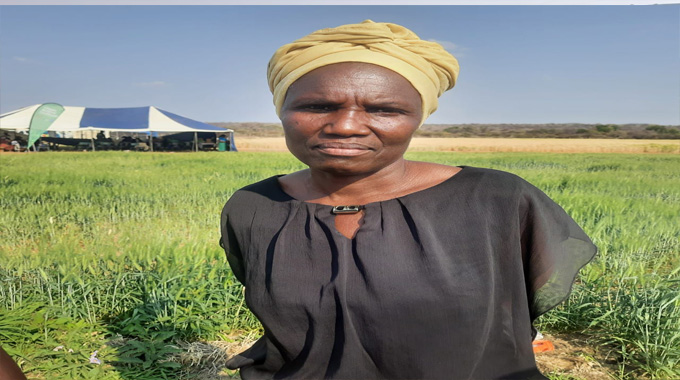
Gibson Mhaka, Senior Features Writer
IT is a sunny afternoon at Midlo Irrigation Scheme in Matobo District, Matabeleland South Province.
Farmers are sitting under a shed, looking out at their 20-hectare farm with wheat and maize.
The scheme, which has 46 members comprising 32 women and 14 men, utilises modern irrigation technology — a centre pivot has been installed to irrigate 15 hectares, while a drag hose will be used to irrigate the remaining five hectares.
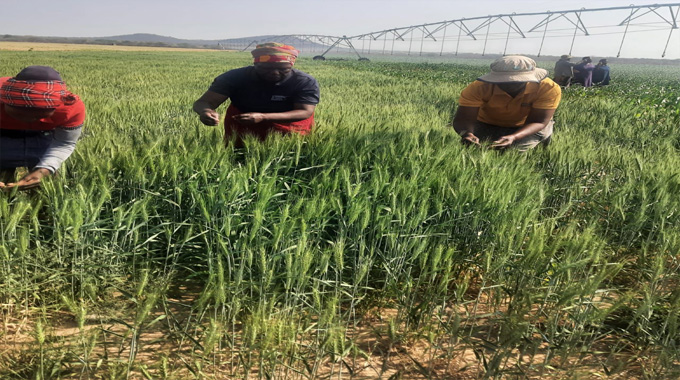
The scene is one of dedication and potential abundance, especially as another significant portion of the wheat crop is now golden and ready for harvesting.
This successful yield, irrigated efficiently, thanks to the installed technology, represents months of hard labour and significant investment.
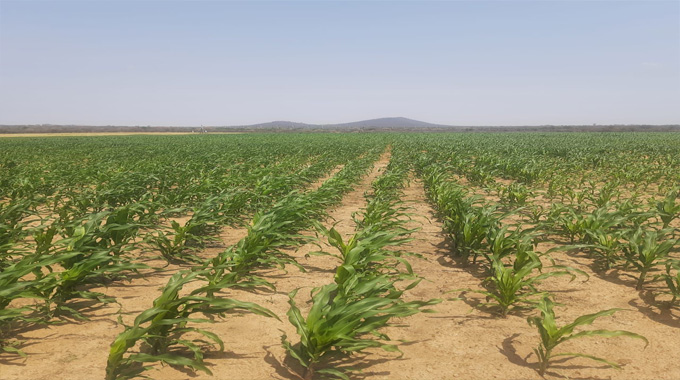
The farmers’ spirits are high, fuelled by the prospect of bringing in a bountiful crop that promises to sustain their families and enhance their community’s resilience.
Yet, just like with their previous produce, the farmers harbour a crucial dream: accessing stable and profitable markets for their hard-earned yield.
However, this time is different. Unlike previous harvests where their hopeful picture was darkened by the familiar and harsh reality of the persistent struggle to find reliable buyers, the impressive tonnage of wheat and the upcoming maize harvest mean a lot because the farmers are confident their produce will be sold at fair prices and in a timely manner.
This optimism stems from a ground-breaking initiative — a joint effort by the Government of Zimbabwe, the Green Climate Fund (GCF) and the United Nations Development Programme (UNDP).
The programme is specifically targeting farmers in Manicaland, Masvingo and Matabeleland South, with 2 307 smallholder farmers across Zimbabwe set to access global markets following the launch of this new project.
The farmers currently benefitting are being represented by 350 lead farmers, with 52 percent being women.
This move is expected to significantly boost productivity and successfully integrate local irrigation schemes into the mainstream economy.
The primary objective of this joint initiative is to facilitate access to profitable markets, enhance farmer incomes and build resilience against climate change.
The programme operates under the seven-year Climate Resilience Livelihoods (CRL) project, which already provides support to over 2,3 million people in climate adaptation efforts.
It achieves its goals by utilising private sector dialogues and farmer learning days to strengthen market access, introduce new agricultural technologies, and promote sustainable farming practices.
These dialogues are a vital step in connecting smallholder irrigation farmers with private sector buyers, financial institutions and input suppliers.
Farmers from Midlo Irrigation Scheme and Masholomoshe Irrigation Scheme in Gwanda had a direct opportunity to benefit when they attended a private sector-farmer business dialogue and exhibition held at Midlo Irrigation Scheme recently.
The approach strategically combines business-to-farmer sessions, where private companies, buyers, input suppliers, banks, microfinance institutions, and insurance companies share opportunities for contract farming and value chain integration, with field days that demonstrate climate-smart technologies like solar-powered and drip irrigation systems, as well as soil and water conservation techniques.
Following the sessions, farmers expressed overwhelming gratitude for the initiative.
They reported that the dialogues were transformative, directly helping them find reliable markets for their produce and identify sources for financial assistance.
Furthermore, the sessions proved invaluable by connecting them with suppliers where they could easily repair, service and purchase their irrigation equipment, effectively closing critical gaps in their production value chain and ensuring the long-term viability of their farming operations.
Chairperson of Midlo Irrigation Scheme, Ms Dolly Moyo (60) said the dialogues were a game-changer that have opened new opportunities for the farmers.
She detailed how the sessions clarified where they can market their produce, access loans, buy chemicals for their crops, and purchase equipment and inputs for their irrigation scheme.
She noted that the dialogues came at a crucial time, as the farmers have long been battling against significant market access barriers.
“We produce good-quality crops, but we struggle to find buyers. The traders come to our irrigation, offer low prices, and take advantage of us,” she said.
“But we now know where we can sell our produce, access loans and buy chemicals thanks to this initiative by the Government of Zimbabwe, the Green Climate Fund (GCF), and the United Nations Development Programme (UNDP).”
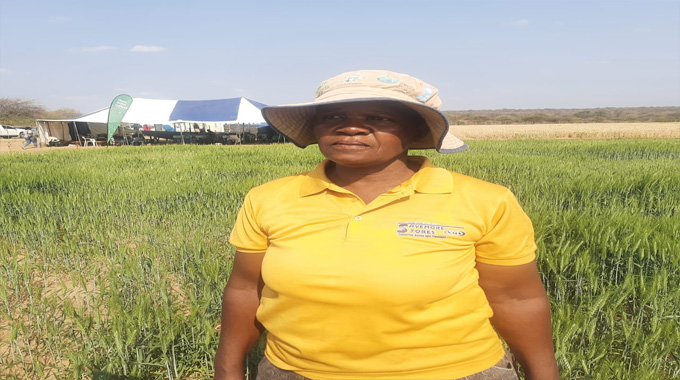
Ms Silibaziso Tshuma from Masholomoshe Irrigation Scheme concurred with Ms Moyo.
Ms Tshuma, who is a member of the Irrigation Management Committee (IMC) as treasurer, expressed deep gratitude for the initiative, stating that it has truly “opened doors” for their farmers.
“All along, we were growing crops and struggling with the market,” she explained.
“The dialogues were an eye-opener because we learned that our produce can be bought by people from Gwanda, and that Gwanda town can be our most lucrative market.”
She highlighted the strategic shift in their farming: “We now know that we can first do market analysis before we grow the crops, which is something we never thought of doing before these sessions.”
Mrs Phumzile Ncube, an Agricultural Business Advisory Officer in Ward 14, hailed the dialogue, saying it presented farmers with a vital opportunity to meet with stakeholders.
“This dialogue helped farmers to form partnerships to ensure they would then transform into farming as a business.
“Farmers have been assisted a lot; they now know that if they produce, they will sell their produce,” she said.
“They have been sensitised on the importance of market research and taught what to grow to avoid struggling with marketing their produce.
“Furthermore, they have been educated on integrating livestock production, knowing they can use part of their crops to feed the animals or even produce their own animal feed.”
Speaking on the initiative, Dr Nelson Chanza, a Climate Smart Agriculture Expert for the GCF Project, highlighted the scope and strategy of the programme.
“The project is operating in the three provinces in the southern part of the country.
“Midlo Irrigation Scheme is one of the 21 irrigation schemes that the Green Climate Fund project is working with to support farmers in terms of resilience building,” he said.
Dr Chanza stressed the significance of the event.
“This is a very significant event where we have invited the private sector and the farmers that are in the irrigation schemes supported by the project here in the northern part of the province.
“So, basically, here, we have convened farmers from Masholomoshe Irrigation Scheme and Midlo Irrigation Scheme.”
He explained the core objective of the partnerships being forged.
“We have also invited the private sector with the objective of making sure that we establish partnerships. We need these partnerships to ensure that farmers transform into farming as a business.”
“So, this is a clear demonstration of farming as a business concept that the project and the Government of Zimbabwe are promoting.
“We intend to make sure that we crowd in the private sector — from input suppliers, those that can support farmers with the agricultural inputs like seeds, fertilisers, chemicals, pesticides and fungicides. We are also looking in terms of the service providers that work with farmers.”
Dr Chanza affirmed that the focus is on market-driven production to prevent farmers from struggling with their produce.
“Whenever these partnerships are established, we can, of course, have companies that can venture into contract farming with the farmers, so that they are guaranteed in terms of a ready market,” he explained.
“This would ensure a meaningful transformation as the farmers would be able to satisfy their production demands, where the farmers are also able to make sure that whenever they produce, there is a guaranteed off-taker, so that they can get income for the purposes of maintaining or sustaining these schemes.”
Ultimately, the successful collaboration between the Government of Zimbabwe, the GCF, and the UNDP is transforming the narrative for farmers like those at Midlo and Masholomoshe.
The transition to a “farming as a business” model, underpinned by private sector partnerships and market-driven production, represents a decisive step towards not only guaranteeing income and sustaining these vital irrigation schemes but also building genuine climate resilience.
By linking local farmers directly to off-takers and financial resources, this ground-breaking initiative ensures that the hard work invested in every golden wheat crop translates into long-term economic stability and dignity for the entire community.