

 Vusumuzi Dube
Rutendo Nyeve recently in Hwange
COAL mining companies in Hwange, led by Hwange Colliery Company Limited (HCCL), have unveiled ambitious plans to refurbish the critical railway line linking the coal fields to their markets.
The development is expected to enhance logistics efficiencies for the coal mining sector and ease the bulk cargo burden on the national roads infrastructure.
This emerged during the recent visit to Hwange by Vice President, Dr Constantino Chiwenga, as part of his Matabeleland regional tour to assess key economic development projects.
The VP began his tour in Matabeleland South two weeks back and moved to Matabeleland North before concluding the visit with Bulawayo last Friday.
The move to expand the railway network along the Hwange coal mining ecosystem, has received the full backing of the Government, and aimed to create an efficient and cost-effective logistics corridor for the booming mining industry in the region.
VP Chiwenga confirmed that the companies are finalising a position paper detailing their execution strategy, which will be presented to the Office of the President and Cabinet (OPC) for approval.
“One of the enablers for Hwange coal business is to have an efficient transport system and the only efficient transport system is the railway,” he said.
“So, they are drafting their paper, which they told me is almost now done, which will come to the Office of the President and Cabinet…that they with the other companies here can refurbish the railway line, which will then take the products to the various markets,” said VP Chiwenga.
“That is what we would want to see and that is what we have to encourage them.”
The announcement has been met with optimism, highlighting the railway’s pivotal role in the economy in as far as easing the business cost drivers is concerned.
In an interview, Minister of State for Matabeleland North Provincial Affairs and Devolution, Richard Moyo, said the collaborative effort by the Hwange Colliery Company management and other coal mining companies in Hwange, would be a game-changer in revamping the railway line.
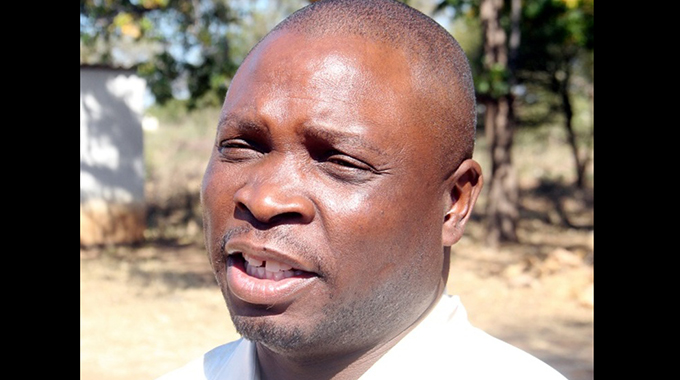
“We would be very happy as a province because as we speak, though the Bulawayo – Victoria Falls is undergoing construction works, if these trucks continue to use the road it will not be as durable as we expect,” he said.
“So, if by the completion of the road works coincides with that of the railway line, this will enable coal to be moved by rail while the road is used for light traffic. As a province, we fully support this idea by the Colliery and other companies to refurbish the railway line.”
Economists concur that an efficient rail system is the lifeblood of the coal industry, allowing for the bulk movement of millions of tonnes of coal at a fraction of the cost of road transportation.
This comes at a time when stakeholders have collectively called for the revival of the National Railways of Zimbabwe (NRZ), whose infrastructure gaps over the years has had adverse impacts on business operations.
The situation has severely constrained production and export potential for mining houses, while simultaneously unleashing a fleet of heavy haulage trucks onto the Bulawayo-Victoria Falls Highway, in particular.
This has accelerated the deterioration of the vital tourism road, leading to increased maintenance costs and safety concerns.
By shifting the bulk of coal freight from road to rail, the proposed project will not only decongest the highway but also significantly lower logistics costs for miners.
The resultant improved efficiency is expected to go a long way in supporting the expanding mining operations in Hwange, attract further investment and stimulate ancillary economic activities in the mining town, from services to housing.
By attracting such initiative, private sector involvement in infrastructure development aligns with broader Government efforts to revitalise the country’s railway system, which includes engaging international partners for recapitalisation and pursuing public-private partnerships to restore NRZ to its former status as a key economic artery.


 Bongani Ndlovu