Chronicle Editor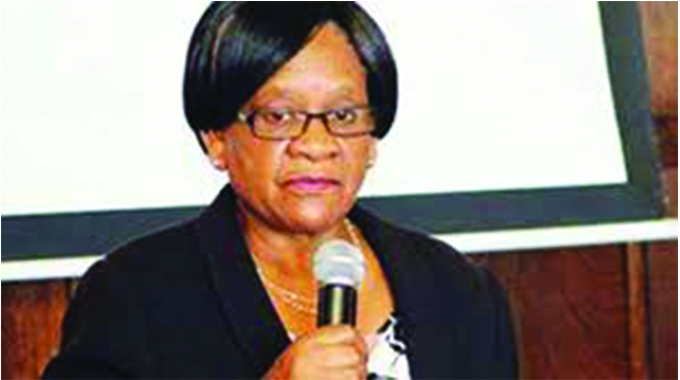
Nqobile Bhebhe, Senior Reporter
THE private sector should complement Government efforts towards provision of e-learning facilities by investing in internet and energy infrastructure to expand reach to disadvantaged learners, a Cabinet Minister said yesterday.
Speaking during the Business4Children Council launch organised by UNICEF on the sidelines of the Zimbabwe International Trade Fair (ZITF) in Bulawayo, Minister of Primary and Secondary Education, Dr Evelyn Ndlovu, said the Government was committed to providing adequate furniture and ICT equipment for schools as part of its transformation agenda.
The gathering was told that the country has 7 081 primary schools and that only 23,02 percent are connected to the internet.
“While these achievements are noteworthy, they need to be scaled up to reach more children and more schools especially the disadvantaged ones,” said Dr Ndlovu.
“This is where the Ministry of Primary and Secondary Education sees a great opportunity to invite the private sector and corporates to take these innovative interventions to national scale and facilitate access of a million more children to learning opportunities in Zimbabwe.”
About 150 schools have been equipped with solar energy and future connectivity to internet for thousands of children.
According to a UNICEF concept paper, the business sector plays a critical role in the socio-economic development of a country and is also a key partner towards ensuring fulfillment of the rights of children.
Regarding connectivity and electrification of schools, Dr Ndlovu said Harare has the highest proportion of primary schools with internet connection at 73 followed by Bulawayo with 56 percent.
Matabeleland North has the least proportion of primary schools with internet at 11 percent.
“Out of 3 066 secondary schools, 39,43 percent are connected to the internet.
Harare has the highest proportion of secondary schools with internet followed by Bulawayo.
Mashonaland West has the least proportion of secondary schools with internet,” she said.
At provincial level, Masvingo has the highest proportion of primary schools without access to electricity followed by Matabeleland North.
The total number of secondary schools without electricity are 873, constituting 28.47 percent of 3 066 of secondary schools in the country,” said the minister.
She, however, said the challenges present an opportunity for the ministry to become more innovative in its delivery of learning.
With support from UNICEF and other partners, more than 2 000 radio lessons from ECD to secondary level have been delivered to pupils.
– @nqobilebhebhe.



 Online Reporter