Victoria Ruzvidzo
Editor’s Brief
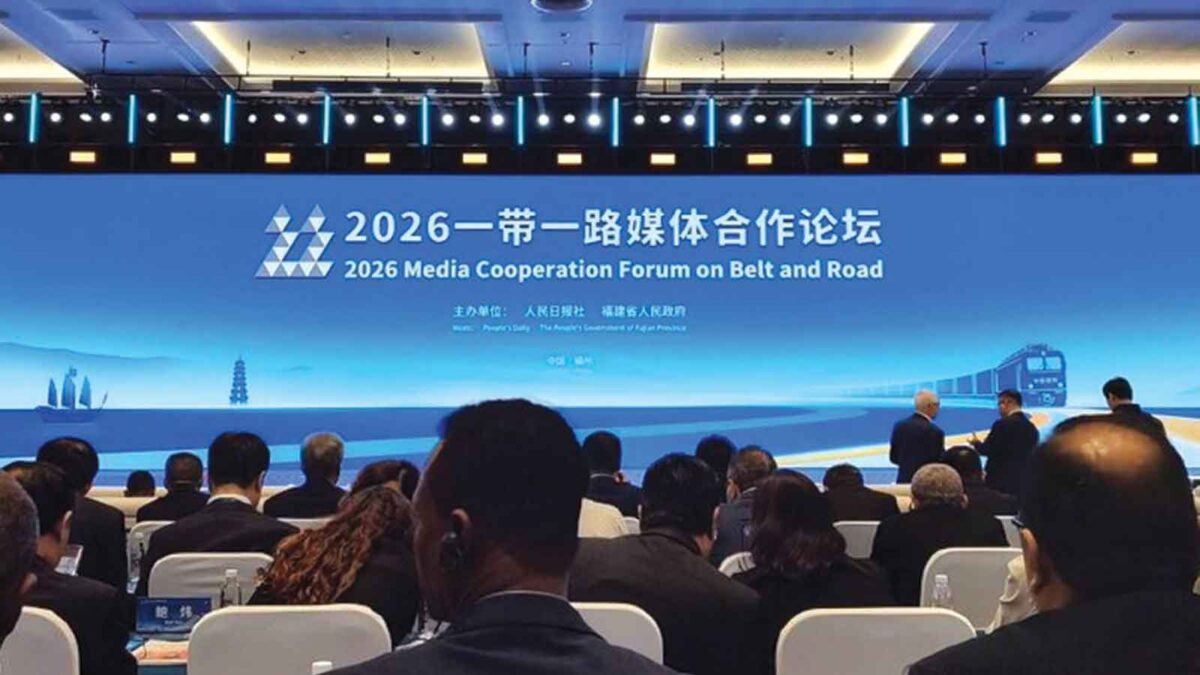
When at least 200 delegates from 182 media outlets and other global and regional institutions gathered in Fuzhou, China, for the 26th Media Cooperation on Belt and Road last week, it was business unusual.
They came from 100 countries in Africa, Asia. Europe, the Pacific Islands and other parts of the world.
What could have passed for an ordinary and routine yearly event following the launch of the Belt and Road Initiative by Chinese President Xi Jinping in 2013, turned out to be a great meeting of minds that sought practical strategies to deepen the role of media in the development discourse.
It was not a mere talk shop, but one in which we all emerged better educated and more intentional in our desire to communicate effectively amongst ourselves as media, with governments, the private sector and the various publics we serve.
The Belt and Road Initiative is an infrastructure and economic development strategy that connects Africa, Asia, Europe and Latin America through railways, ports, pipelines and highways to close infrastructure gaps and foster trade.
It has already transformed many economies and presented platforms for increased levels of trade and the exchange of skills and technology, among other benefits.
And in all this, it was realised at the outset that cooperation and close collaboration among media organisations within the Belt and Road sphere was critical. Information needed to be distributed globally to ensure intended results were achieved.
The media, in its various forms, plays a crucial role in information dissemination, particularly so in this age of growing misinformation and disinformation. Reliable and trusted media would thus create a formidable force in sharing the correct narratives hence the Media Forum.
At the meeting, it was noted that the media is a catalyst for international cooperation.
Emphasis was placed on using media platforms to promote dialogue and cooperation among participating countries while sharing information on development projects and investment opportunities in markets within the Belt and Road countries.
The media would help strengthen policy communication and international understanding of issues.
The media was also expected to document the achievements and challenges of Belt and Road cooperation to help track progress.
The Forum also recognised that media organisations should not merely report on international developments, but also help audiences understand their economic, social and cultural significance so they could make informed decisions.
In this regard, it was also critical to strengthen media partnerships and joint content productions.
Delegates discussed the importance of media in facilitating communication between governments, institutions, businesses and citizens.
Emphasis was also made on using media platforms to promote dialogue and cooperation among participating countries, share information on development projects and investment opportunities and to document the achievements and challenges of Belt and Road cooperation.
The discussions recognised that media organisations should not merely report on international developments, but also help audiences understand their economic, social and cultural significance.
Furthermore, building sustainable partnerships between international media institutions would be critical.
This could be through exchange programmes for journalists and media professionals, sharing stories, research and technical expertise.
The already existing Belt and Road News Network was highlighted as a platform through which media institutions could strengthen these partnerships.
Furthermore, the Forum examined the opportunities and challenges presented by emerging technologies, particularly artificial intelligence with participants considering the application of AI in news gathering, verification and content sharing.
In this regard it was critical to ensure responsible and ethical use of AI in newsrooms.
Another important deliberation pertained to the role of media in bringing people from different countries and cultures closer together with delegates highlighting the need to tell stories that reflect ordinary people’s experiences, development aspirations and contributions to international cooperation.
Emphasis was placed on cultural exchanges, educational opportunities, tourism and the sharing of development experiences.
Indeed it was argued that international cooperation becomes more meaningful when its benefits and opportunities are understood by ordinary citizens.
Particular attention was given to infrastructure development and regional connectivity, trade and investment cooperation, industrial development and value addition, energy and technological cooperation and the green development and sustainable growth.
This placed responsibility on media organisations to communicate these developments through factual reporting, local perspectives and human-centred stories.
Objective reporting, professional integrity, fact-checking and the rejection of misinformation would be the mainstay.
A key outcome of the deliberations was the adoption of the Belt and Road Media Cooperation known as the Fuzhou Initiative. The initiative provides a framework for strengthening international media cooperation through win-win cooperation, content collaboration and embracing digital transformation and responsible AI adoption.
Also, people-to-people ties to promote cultural exchanges and stronger relationships between societies were crucial.
Overall, this initiative encouraged media organisations to become recorders, participants and promoters of Belt and Road cooperation.
For Zimbabwe and Africa at large, the initiative would help promote investment opportunities through highlighting opportunities in such sectors as mining, agriculture, manufacturing, infrastructure and energy, while strengthening China-Africa relations.
Knowledge and technology transfer would also be an important factor in achieving the desired results.
In all this, it would be critical to promote African perspectives: ensuring that African media organisations participated in shaping international narratives about their economies.
The discussions in Fuzhou reinforced the reality that the world has become an increasingly interconnected global village where cooperation, rather than isolation, offers the greatest prospects for progress.
Furthermore, Africa has ceased to be a mere recipient of policies and seeming favours but is now actively involved in determining its future.
It is a voice that is now being heard. The media needs to up the ante in helping the continent assert this position.
We left the meeting convinced that the world can actually be a better place to live in if we all play our part in fostering development.
For media, a more constructive and progressive stance could yield much for our respective countries and the world at large.
In God I Trust!
X handle: @VictoriaRuzvid2; Email: [email protected]; [email protected]; WhatsApp number: 0772 129 972.