

 admin
admin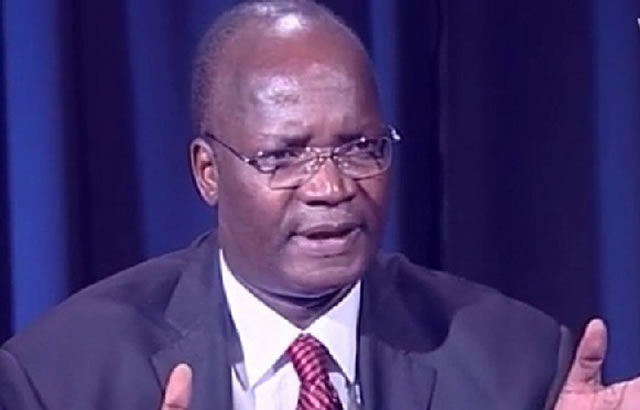

Martin Stobart
CONSEQUENT to his reappointment as Minister of Information, Media and Broadcasting Services, Professor Jonathan Moyo has set out to revolutionise the entire media and communications sector. This revolutionisation has been comprehensive, well thought out and strategised.
Not only that, it has been as swift as lightning itself. What is more from the distance where I am there seems to be palpableoperational synergy between the Minister and his Permanent Secretary, and I do not think that I am less qualified to detect the operational compatibility between the two.
Recently a young journalist friend of mine as we discussed, in general terms, the Ministry’s performance, remarked that (Professor) Jonathan (Moyo) as Minister of Information, is futuristic; he does things now for the future. I thought that was a mature and intelligent comment coming as it did from a relatively young scribe. When he was Minister the first time round, Minister Moyo was merely responding to the imperatives and vicissitudes of the political order of that time.
It was then a political order which was to all intents and purposes, constantly in a state of flux. The private media were on the war path, literally, were sanguinary and were baying for the blood of the Zanu-PF government and not because the government was a bad one, but, especially, because it was a Zanu-PF government; and worse, because it was headed by President Mugabe, the arch-enemy of the Western world.
Clearly, at that time the stance and the modus operandi of the private media was at the behest of the West and things a la western: the Zanu-PF government, especially its leader, had to be toppled not by fair means but foul. So, this was the scenario in which cabinet Ministers reacted to the execution of their duties and national responsibility and obligations.
I am not here deliberately trying to malign or provoke or hypercriticise the private media. I hold that it is my sacred and inalienable right to reflect, consciously where we have come from to be where we are today with our new political dispensation, lest we forget. As nature has it, people tend to lapse into some false comfort zone.
As Minister of Information, Media and Broadcasting Services, Professor Moyo has come up with brand spanking new policies which, as we can see, even those who do not want to see, are designed to usher in reforms. If in the past POSA and AIPPA were “draconian” and “notorious”, surely the changes that are currently underway should put paid to the gripe against these Acts. The Minister, as I see it, is very painstaking in what he is doing. He is roping in some senior practitioners in journalism to anchor some of the institutions in the sector.
In other words the Minister is trying to bring together journalists from across the hitherto polarised divide so that they can be able to feed and drink at the same trough without goring each other and without poisoning each other. Oh no! Comrades I am not self patronising. I do not know Professor Jonathan Moyo at all neither does he me. It is just that I find him and his mind easy to read and also easy to interpret what he does and why he does it. I can go further and say that I find Comrade Didymus Mutasa the easiest politician to read (because of his frankness and no-holds-barred style of doing things). Let me not stray or meander.
Indeed Professor Jonathan Moyo in his capacity as Minister of Information, “does things today for the future…” he is inviting, by crafting new policies and formulating changes in the media sector, journalists, especially Zimbabwean journalists, to put Zimbabwe first and to advance and articulate the goals of this nation among other nations of the world. This is not to say that local scribes should or must sing praises about government. I would not do that even for all the tea in China!
However, the primary and sacrosanct duty of all Zimbabweans is to defend Zimbabwe “with all its appurtenances”. Local journalists must be patriotic. They cannot do that if the motive is pecunitory (money). The local scribes have a sacrosanct duty to stand up for Zimbabwe. (In defence of Zimbabwe, to wit). That is what journalists in other nations do. This does not mean that they should not stand up for democracy. No. Yet we must also not be reckless in our version of democracy. Democracy is relative. It is a “difficult tree to nurture.”
There is a universal definition or version of the term democracy in the same way that there is of culture.
However, the relativity is inherently and intrinsically embedded. What is democratic in Zimbabwe may not be democratic in, say, Zambia, to mention a contagious country. More so to a country outside the African continent.
The media changes, call them reforms if you fancy, are exciting to me at least. They vest in and entail responsibility on the local practitioners. Journalists do not operate in a vacuum. I think this is what is fundamentally wrong with local journalists, they cannot be journalists if they are not funded by the West.
This reminds me of a piece I read in a magazine some 30 years, 40 years ago. As we know from history the Romans produced the most lawyers in the world. No problem there, at least for them. They were lawyers for the mere love of intellectual knowledge and competence. For employment they were prepared to be dustmen and that is what they were for centuries.
The Greeks heritable (or hereditable) bequeathal to humanity is not economic (what with Angela Merkel and the EU tightening the noose on the country).
There is no economic independence anywhere in the world. And so democracy in its current version and form cannot be used universally as a tabula for good and democratic governance.
To and for the Greeks’ literariness and opposite to literature is an intellectual property far exceeding economic considerations. If you are into journalism for pecuniary benefit and foreswear any other job then you are not only a slave of your profession but a mercenary.
Therefore with the new media reforms comes responsibility.
There is a saying in Latin to the effect that nobleness oblige (nobility entails obligation). The challenge is squarely on the local scribes to have a common trajectory and to mould themselves into an agglutinative professional fraternity that is founded on national principles.
Discerning followers of the local media would want to forget what has been happening in the past in the media domain when positions in Misa and Zuj were filled according to sectoral interests. Hence a clinical and incisive analysis of the minister’s thrust and objectives as he sets out to reform the local media should be seen in the concept of the honourable efforts by the Minister to inject a new ethos into the profession.
The media can make or break a nation. They are in the forefront of information dissemination. Their role is pivotal in all aspects of national governance. Yet it is crucial for the practitioners to always recognise that the “nobility” they enjoy is not without obligation. In this case we are talking about national responsibility. It’s something real. Something sacrosanct and palpable.
In Zimbabwe the media practitioners can be likened to Alexandre Duma’s The Three Musketeers. Local journalists should know the difference between a journalism that takes into and recognises the national interests.
Journalism is not a window opening into Sesame Street. It is not an open Sesame, to be exact. Local journalists should learn a thing or two about patriotic journalism from Sir Winston Churchill and my name sake Martin Walker, both of whom are renowned journalists and authors. The private media, in my singular view, are playing a mercenary role. We have to say this without fear or favour otherwise journalism, in Zimbabwe at least, becomes a mercenary profession irreversibly.


 Online Reporter