Vusumuzi Dube
Judith Phiri, Business Reporter
The Minister of Justice, Legal and Parliamentary Affairs Ziyambi Ziyambi has said much progress has been done for the Public Interest Disclosure (Protection of Whistle blowers) Bill, 2022 with it currently before the Attorney General’s office to draft the Bill.
The Bill encapsulates the protection of whistle blowers with particular attention paid to the scope of coverage of persons afforded protection to ensure the protection of all whistle blowers, both public and private sector employees (also including consultants, contractors, volunteers or any other workers performing some work for an organisation, and any other person who has reported corrupt activities or some wrongdoing within an organisation.
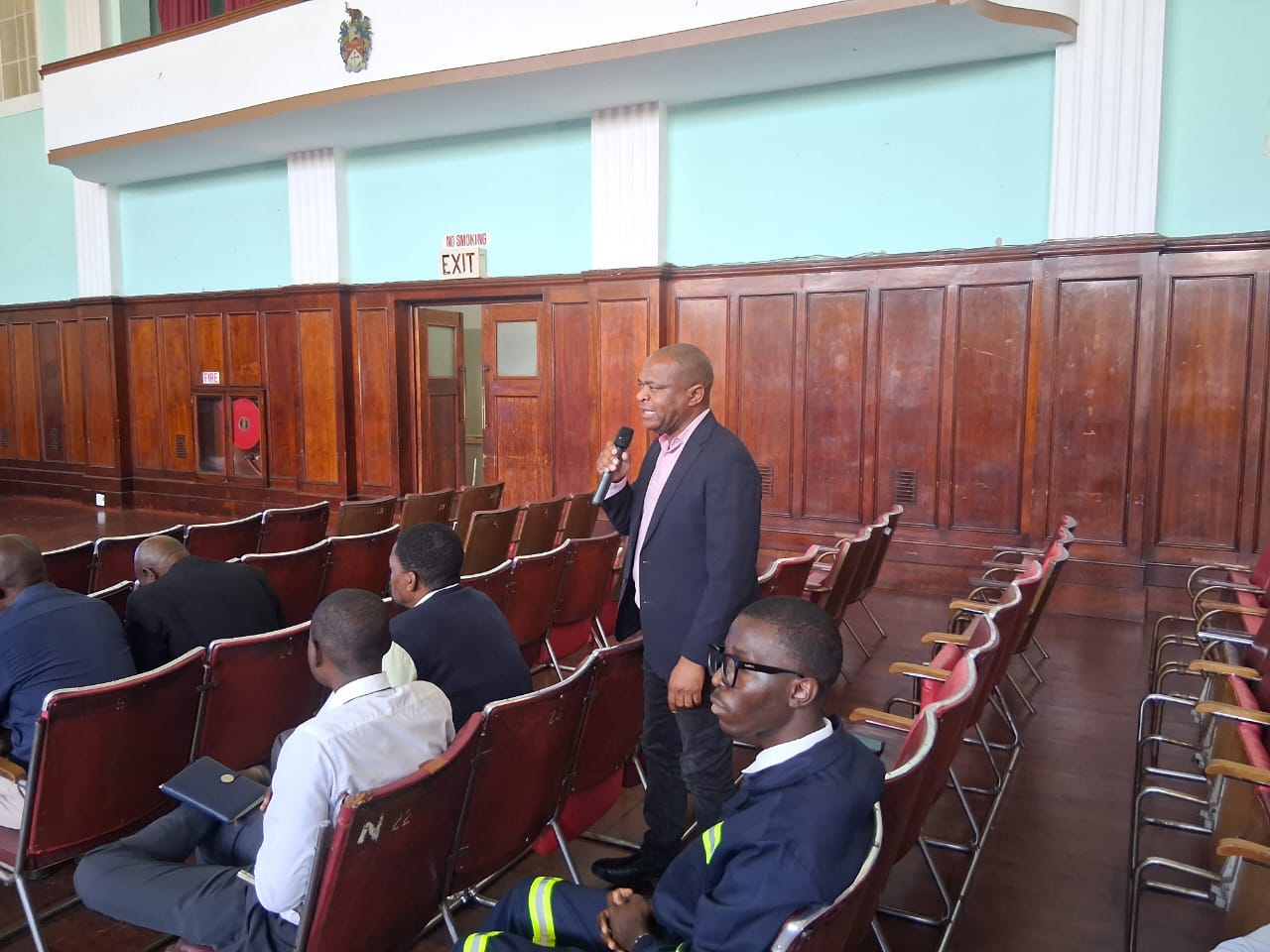
Giving an update on the Bill during a capacity workshop for African Parliamentarians Network Against Corruption (APNAC) in Bulawayo yesterday, Minister Ziyambi Ziyambi said the purpose of the Bill was to facilitate the disclosure of conduct adverse to the public interest in the public and private sectors.
“We are developing the Public Interest Disclosure (Protection of Whistle blowers) Bill, 2022. The purpose of this legal framework is to facilitate the disclosure of conduct adverse to the public interest in the public and private sectors.
“Its main aim will be to protect whistle blowers through prohibiting their detrimental treatment as a result of whistleblowing by providing a framework within which public interest disclosures shall be dealt with,” he said.
He said currently the country did not have specific legislation that protects an employee, volunteer, consultant, contractor, any other worker in any sector, or any person if such an individual “blows the whistle” on illicit activities within the organisation that they are employed in.
The Minister said this gap has hindered the fight against corruption in Zimbabwe and has exposed whistle blowers to risks of retaliation.
He added: “The enactment of this law will signal a radical shift in individuals’ willingness to be part of the fight against corruption in our nation.”
“The Bill however is still to be produced although there has been progress with the Principles of the Bill having been approved by the Cabinet. The Attorney General’s office has been given instructions to draft the Bill and the office is therefore seized with the matter.”
He said the Bill together with the Witness Protection Bill will be presented before Parliament.
Minister Ziyambi said since the beginning of the Second Republic, President Mnangagwa gas charted a new developmental path anchored on economic reforms supported by political and legal reforms.
He said in keeping with the Second Republic’s fight against corruption and its subsequent retardation of national development, means and methods to attract, encourage, promote and safeguard foreign and domestic investment have been designed and continue to be designed.
The Minister added: “We look forward to the enactment of this law to champion the fight against corruption and increase Zimbabwe’s competitiveness in the global market. This law added to other anti-corruption mechanisms the nation has, will enhance the efforts of the government and in particular President Mnangagwa’s zero tolerance towards corruption.”
He said protecting whistle blowers will contribute to an environment of trust, tolerance and accountability; and in the case of public interests, enhance the capacity of Zimbabwe to respond to wrongdoing within state entities.
In his keynote address officially opening the workshop on Friday, the Speaker of Parliament, Advocate Jacob Mudenda commended anti-corruption agencies for their sterling efforts in exposing, combating and eradicating the corruption scourge but said there was an urgent need to plug existing policy gaps that militate against gains that have been made so far.
“I must commend Zimbabwe Anti-Corruption Commission (ZACC) and the other anti-corruption agencies for the work they are doing to expose, combat and eradicate corruption and the abuse of power by those holding political and public office.
“However, ZACC has been found wanting in a number of areas which include the ‘catch and release’ as well as for the lack of ‘teeth’ to prosecute high profile figures allegedly caught up in corrupt activities.
“I must add that the majority of cases handled by ZACC relate to criminal abuse of office by senior officials in Government, State enterprises, parastatals and the private sector. I am hopeful that the presentation from the Auditor-General will shed more light on her experiences in unearthing corruption in the public sector in order to enhance sound and prudential management of the public purse,” said Adv Mudenda.
He said the Auditor General deserved unreserved commendations for the sterling work she was doing without fear or favour.
Adv Mudenda said the Judiciary must also be congratulated for establishing special anti-corruption courts in order to speedily adjudicate over corruption cases.


 Online Reporter