admin
adminBy Peter Banda
In the Business Herald issue of Tuesday 22 February 2011, we announced the birth of Zimbabwe’s Project Management Association known as the Project Management Institute of Zimbabwe.
The dozens of views and comments that were received from readers who went through the article were so amazing and encouraging. The general opinions from project management practitioners who responded out there were that such an institute for Zimbabwe was long overdue. “We have so many accidental project managers harming public infrastructure development projects through trial and error. It’s time PMIZ moved in to clean up the mess and test credentials of all project management practitioners,” wrote Ngoni Manyika from the Ministry of Labour.
In this second article of this new column dedicated to educating readers about project management matters, we answer some of the questions below that we raised last week and elaborate why we feel the footprint of project management is missing on the country’s economic recovery prescriptions.
Just what is project management all about? Is it a significant subject to talk about in matters of national development? Is it just one of those academic subjects not to bother about? What is and what is not a project?
Project management has been around since the beginning of time. As a developing country we cannot afford to ignore the value of project management as a fundamental vehicle to any change, neither can we tolerate the trial and error approach to project management.
In 1998, Zimbabwe lost the offer to host the Afcon soccer tournament project to West Africa after the project sponsors CAF could not obtain evidence of buy-in to the project by one key stakeholder to the project – the Government of Zimbabwe.
Ziscosteel is most likely to have collapsed due to failure somewhere in project management and it is only good project management that will revive the steel giant, not the rich sponsors who jostled for the tender, inasmuch as the ailing country’s other parastatals.
Perhaps it is fundamental to begin with basic academic matters of defining what is and should be called a project and project management. Max Wideman (2000), the ex-president of the Project Management Institute (PMI®), in his outstanding Comparative Glossary of Common Project Management Terms lists some 15+ definitions for the word “project” and another eight or so for project management. To help clarify this task the following definitions are useful.
The Association for Project Managers (APM), UK’s largest professional body for project managers (2004) defines a project “as a unique, transient endeavour undertaken to achieve a desired outcome”. The Project Management Institute, based in Philadelphia, USA (the world’s largest professional association) defines a project as “a temporary endeavour undertaken to create a unique product, service or result”. The PMIZ is affiliated to both APM and PMI and subscribes to the professional values and ethics set by these two institutions. In Japan, a country that is well known as a leader in automotive industry projects, the Project Management Association of Japan (2005) defines a project as “a value creation undertaking based on a specific mission, which is completed in a given or agreed timeframe and under constraints, including resources and external circumstances”.
Some common themes obviously emerge from the above four definitions; firstly that every project must be unique, it must not be a routine activity that has been performed before. The typical project has a degree of novelty, in terms of time and place, team carrying out the task, product or service being provided. However, someone may have certainly done something like it somewhere before. For this reason, projects are said to have aspects of uniqueness.
The second theme is that projects are temporary in nature, meaning that the typical project must have a known point of start and finish. A project can last anything from one day to several years. For example, project Fifa 2010 World Cup was known to start on June 11 and finish on July 11 2010.
Most scholars argue that the all-inclusive Government of Zimbabwe is also a project that was conceived from a project charter known as the Global Political Agreement, hence we should not be surprised that the project is coming to an end. Perhaps only a good termination plan is required.
The human, material and financial resources committed to the project are therefore also temporary such that when the project is completed commitment ceases.
If there is no visible or known start and finish time, it’s not a project! Despite project management having been around for the last 40 years, many people still hold conventional views about this subject and want to isolate it as a profession associated with “mortar and brick” ventures (civil and construction), NGOs, entrepreneurship or technical people.
Projects are everywhere and dominate our lives on a day- to-day basis. What matters is the size and magnitude of the project; from a simple wedding ceremony or installing a new IT server in an organisation, to building of Soccer City Stadium in Soweto for the 2010 Fifa World Cup.
Failure to recognise the value of project management as being at the core of development in our civilised society is like depriving ourselves of mastering a critical life skill.
Have we been looking at the “elephant of project management” as the seven blind men? Part 2 of this article will raise more nourishing lessons for all readers who have a passion for project management. Check out more next Tuesday right here.
l Peter Banda is the secretary-general and chief executive of PMIZ. Send your views and comments via e-mail to [email protected] website link www.pmiz.org.zw


Online Reporter
- Chronicle , SundayNews
- July 29, 2026
- 35 views
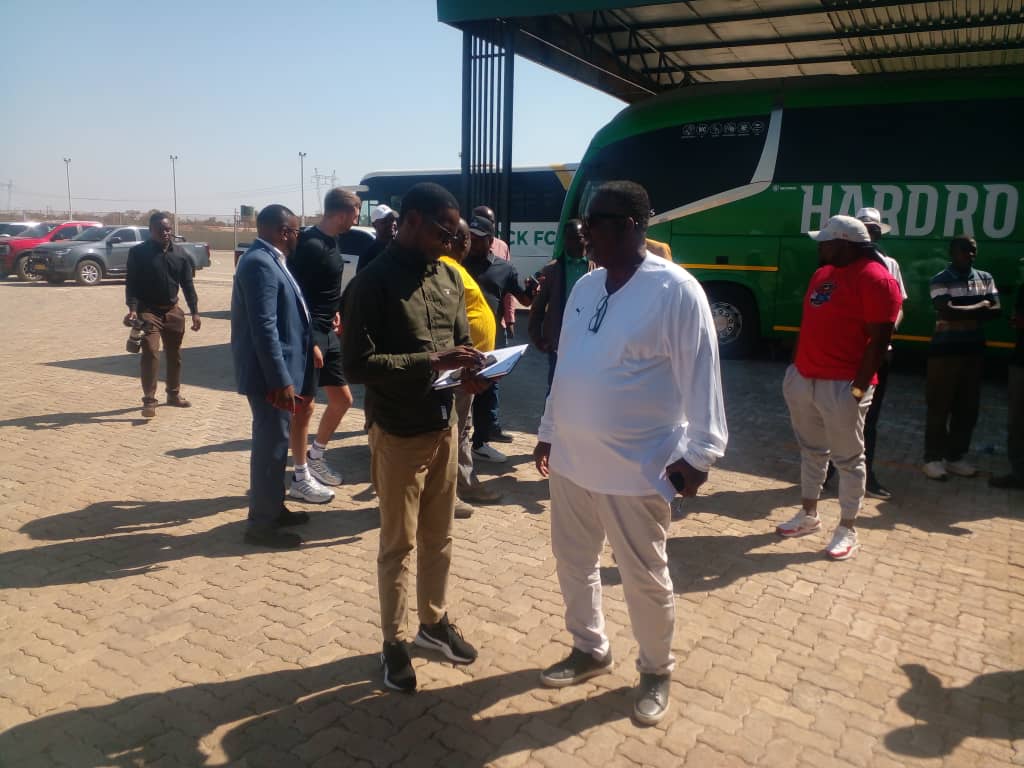
CAF team in Kwekwe for Chahwanda Stadium inspection
Tongai Mashonga [email protected] A three-member CAF inspection team has arrived in Kwekwe to conduct a homologation assessment of Chawanda Stadium. The delegation includes CAF Safety and Security Officer Ettoh Claude,…