


 Online Reporter
Rutendo Nyeve, Sunday News Reporter
BULAWAYO residents are set to endure severe water shortages for the next two to three weeks as the local authority awaits crucial spare parts for damaged pumps that are being sourced outside the country.
With the main pumping stations operating at only 50 percent capacity, daily water supply has dropped from 90 million litres to 45 million litres, severely impacting reservoirs and high-lying suburbs.
The Criterion reservoir which is the primary source that supplies Magwegwe, 6J and Hillside reservoirs is receiving half its usual volume due to pump failures.
In a notice on Friday, Bulawayo Town Clerk Mr Christopher Dube said as a result of the operational challenges, areas such as Emganwini, Nkulumane, and Pumula are particularly affected as they rely on off-takes from the struggling Magwegwe reservoir.
He said when Magwegwe’s levels dropped below 50-70 percent, households in elevated areas face prolonged dry taps.
“Restoring water supply under these circumstances is extremely difficult due to several factors including filling main reservoirs. The reduced flow from Criterion means it takes much longer to fill up the main reservoirs (Magwegwe, 6J and Hillside). Recharging pipelines is also another factor as the pipelines are empty for extended periods, they need to be completely refilled before water can reach residential properties. This process takes time.
“Another challenge is the household Jojo tanks. While beneficial, the widespread use of Jojo tanks complicates restoration. When water supply resumes, these tanks often fill up first, reducing the pressure and flow available to other households on the network. Lastly, normal household water usage further strains the already limited supply,” said Mr Dube.
The situation is compounded by low water levels in the city’s supply dams with Bulawayo Mayor, Councillor David Coltart having advised that the water shedding programme will stay as the city’s dams did not get substantial amounts of water from the rainfall season.
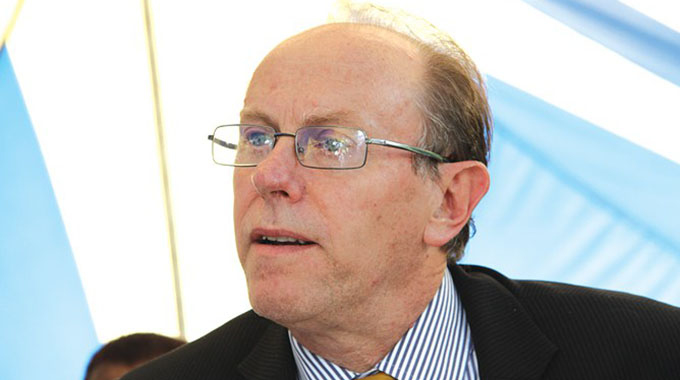
Speaking during a full council meeting on Wednesday Clr Coltart said there was a need for the council to exercise caution in revising the city’s water-shedding schedule, citing the precarious state of the water supply.
“As you know, our dams are sitting at around 48 or 49 percent full. They are not substantially higher. We are all affected by this water shedding to different degrees.
“We have to be very cautious as a council in revising the water-shedding programme. It is very clear to me that we cannot abandon the water-shedding programme, but it may be that we lessen it slightly,” said Clr Coltart.
He spoke on the importance of preparing for worst-case scenarios, particularly given the unpredictability of future rainfall.
“We have to work with the worst possible scenarios; we cannot, for example, be over-optimistic about what the next rainy season will give us. We have to take seriously the 21-month rule, which has been part of this council’s policy for decades,” said Clr Coltart.
To address the crisis in the medium to long term, Clr Coltart said there was a need for additional raw water sources, particularly the completion of the Glassblock Bopoma Dam project.
He also pointed out to stalled upgrades to key pipelines, including those from Mtshabezi to Umzingwane from Insiza which are expected to improve water delivery to Criterion and Tuli treatment plants.
He said what is compounding the crisis is the city’s inability to deploy water bowsers to assist residents in high-lying areas and during emergencies such as funerals with as all the seven bowsers are non-functional.
The lack of functional bowsers has left residents in dire situations, with many forced to rely on unsafe water sources or expensive private suppliers.



 Bongani Ndlovu