

 admin
admin
Stanely Mushava: Features Correspondent
Finance and Economic Development Minister Patrick Chinamasa announced in his mid-term fiscal policy review last week plans to cut 25 000 civil service jobs in order to contain runaway government expenditure, largely gobbled up by salaries.
The anticipated job cuts, likely the most sweeping in living memory, are aimed at trimming the wage bill to spare funding for operational costs and education reform projects.
The Higher and Tertiary Education, Science and Technology Development Ministry and the Primary and Secondary Education Ministry are currently bent to ambitious projects with a view of aligning the sector to the economic and cultural needs of the country.
Their shape-shifting agenda, Science, Technology, Engineering and Mathematics (STEM) and the Curriculum Framework for Primary and Secondary Education respectively, saw Treasury allocate more funding for the sector in its budget estimates for 2016.
“Budget expenditures to June 2016 of US$547.8 million in the education sector remained heavily skewed towards wage costs for the employment level of 123 563 staff, mostly teaching,” said Minister Chinamasa. This left only US$6.6 million towards expenditures for operational support, mainly for schools’ supervision and monitoring by provincial and district inspectors, as well as payment of utility bills,” he said.
Although the economy is not at its best, Government has promises to keep to the millennials. Getting things right in the education sector will deploy new life into the economy and guarantee sustainable development.
In this edition, the education segment of Herald Review assesses what Minister Chimanasa’s estimates mean for one of the country’s pillar sectors.
Curriculum Review
The Primary and Education Ministry recently published the revised curriculum but implementation has been spread over seven years, from 2015 to 2022. The new curriculum, informed by the need to equip students with skills sets and exit profiles equal to the challenges of a globalised century, will take up more funds particularly in the area of teacher training.
It sets forth new learning areas and cross-cutting themes expected to build accomplished citizens while driving national development in an increasingly competitive global context.
Teachers are undergoing training to upgrade their competencies to the demands of the new curriculum and Government has committed itself to partly shoulder the costs.
However, Treasury has failed to meet this obligation during the elapsed half of 2016, deferring it to the second half of the year. “Educational programmes, including in-service teacher training of 2 500 teachers already enrolled for ICT, Mathematics and Science degree programmes at five state universities, could not be supported due to budgetary constraints,” Minister Chinamasa said.
“The total cost for these programmes amounts to US$2.4 million, for the period to end of June 2016, and disbursements will be prioritised during the second half of the year,” he pointed out.
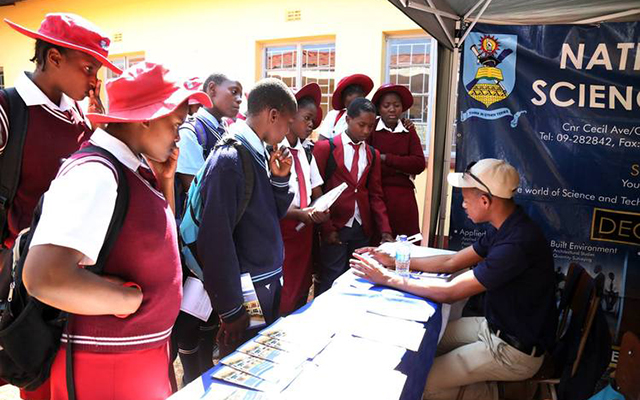
The Primary and Education Ministry has extended the hand of fellowship to education development partners whom they say must align their contributions to the needs of the new curriculum.
Minister Chinamasa revealed that the curriculum review has benefited from the disbursement of $10.6 million under the Education Development Fund administered by UNICEF. He lauded the review for facilitating a platform to address skills shortages in science and technology, mathematics and ICTs.
STEM
Treasury also has promises to keep with respect to spending for the Science, Technology, Engineering and Mathematics (STEM) project conceived by President Mugabe and steered by the Ministry of Higher and Tertiary Education.
More than 5 000 students’ learning expenses are currently covered by the initiative which aims to incentivise interest in STEM subjects.
Like teacher training and capacitation programmes, STEM is one of the programmes where the mandates of the Higher Education Ministry and Primary and Secondary Education Ministry blend into each other.
“The country is recording positive strides on the Science, Technology, Engineering and Mathematics (STEM) initiative, a human capital development strategy initiated by His Excellency the President as far back as 2007,” Minister Chinamasa said.
“Under the STEM initiative, US$2.8 million was disbursed through the Zimbabwe Development Fund (ZIMDEF) towards the payment of first and second term school fees for around 5 132 A-level students, studying Mathematics, Physics, Biology and Chemistry,” he said.
Subjects under the science, technology, engineering and mathematics learning areas share emphasis on practical application and equipping students with skills sets that prime them for competent engagement in the knowledge economy.
“There is solid evidence that the fastest growing and highest earning jobs in future will be in STEM fields, and employees and employers will need to utilise STEM skills in problem-solving in a wide range of industries, to address issues of unemployment, empower the young, promote innovation and industrialisation of the economy,” observes the Higher Education Ministry on its STEM Students website.
The ministry laments that most high school students are not equipped to take up STEM programmes at tertiary level, enter a science-themed workforce or create new technologically proficient spaces.
President Mugabe set off the STEM revolution in earnest when he merged the then Higher and Tertiary Education Ministry with the Science and Technology Development Ministry in 2013 to align industrial imperatives with academic training.
However, if the initiative is the crying need of the local industry at the moment, with its view of developing strategic human capital, then its slanted gender distribution is a cause for concern.
Minister Chinamasa pointed out that the gender distribution of the total enrolled students on the STEM initiative is at 3 347 (65 percent) male students, and 1 785 (35 percent) female students.
Hopefully, as the Higher Education Ministry works on the STEM policy strategy to direct the initiative over the next decade, skewed gender distribution will be reviewed.
Skills Survey and Teacher Capacitation
Treasury is also considering financing a national skills survey, 34 years after the last Survey was carried out in 1982. Minister Chinamasa pointed out in his mid-term fiscal policy review that auditing the country’s skills complement will assist Government in identifying skills gaps.
The survey will inform the STEM policy strategy and other Government manpower development plans.
The minister observed that Government’s ongoing emphasis on a technologically oriented educational and manpower revolution was consistent with the African Union (AU) Agenda 2063’s industrialisation and modernisation thrust.
A foundational area of concern will be the teaching complement of the civil service targeted by the anticipated job cuts.
These come at a time when the Higher and Tertiary Education Minister Professor Jonathan Moyo has revealed a gap in qualified teachers for STEM subjects.
There are 900 vacancies for maths teachers in schools. Government is bent on the training of these teachers, with 1000 set to be recruited in the next two years.
“Our ministry will work with the Ministry of Primary and Secondary Education to design in-service teacher capacitation programmes to ensure that every teacher has a practical competence in Mathematics,” Prof Moyo said.
But the gap is not particular to the STEM initiative.
The basic education curriculum review has brought about new subjects such as expressive arts (including music, painting and theatre), physical education, civic education, family, religious and moral education, international languages such as Swahili, Mandarin, French and Portuguese, and the previously marginalised complement of Zimbabwe’s 16 official languages.
These spheres can only be neglected at Zimbabwe’s cultural and economic demise. Keeping up with the needs of the new curriculum will require more teachers for these areas.
Assigning those already in the field to take up the challenge may mitigate Treasury’s impending job cuts and facilitate the creation of new spaces while incentivising and professionalising the country’s largely underutilised creative industries.
The two education ministries are currently involved in a teacher capacitation programme.
Bindura University of Science Education is training teachers in science and technology; Great Zimbabwe University, languages, and early childhood development (ECD); University of Zimbabwe, infrastructure development, technical and vocational education; Zimbabwe Open University, ECD and teacher education; Midlands State University, teacher education and information and communication technology (ICT); and Lupane State University, teacher education and agriculture.
Last term, Primary and Secondary Education Minister Dr Lazarus Dokora told Parliament that his ministry had been given the green light by Treasury to recruit 10 000 teachers for deployment in rural areas and resettlement where there is a shortage of qualified teachers.
The gap must be plugged to enable equal access to education and reverse the skewed situation which currently privileges urban areas, thereby jeopardising upward mobility for rural students. Rationalisation should not find this area negligible.
Education Infrastructure
Dr Dokora recently pointed out that his ministry needed 2 000 more schools in response to Zimbabwe’s growing population.
He stressed the need to collaborate with partners in the area of infrastructure development. “We have mission schools and company schools in the country. We need their infrastructure to expand and accommodate the growing population,” he said.
“I am also going to engage the Chinese more aggressively so that while they are doing other things in the country, they can be investing in our education, building schools for us,” he added.
Minister Chinamasa weighed in with his mid-term fiscal policy review, although he did not specify how much Treasury will commit.
“Our constrained fiscal environment is inhibiting progress in dealing with the infrastructure gaps that exist at primary and secondary schools, including tertiary institutions, as well as the provision of science laboratories and library services,” he said.
He added that Government was seeking ways to attract private sector funding for schools’ infrastructure, leveraging on student fees and other charges.
“The ministries responsible for education are currently identifying consultants to assist in project structuring, including developing the revenue stream framework conducive to commercially finance,” Minister Chinamasa said.
He also reported significant headway with processes required for drawdown under the US$20 million OPEC fund loan which is expected to commence the construction of 17 rural schools.
Government will have to maintain its laudable efforts to democratise ICTs which have become indispensable as media of instruction, learning areas and cross-cutting themes.
Rural students are currently short-changed by the sluggish pace of the rural electrification programme which limits their access to ICTs as these are normally powered by electricity and good connectivity.
Government needs to deploy resources at hand to get things right in the education sector. Every other sector depends on it.
Feedback: [email protected]



 Online Reporter